
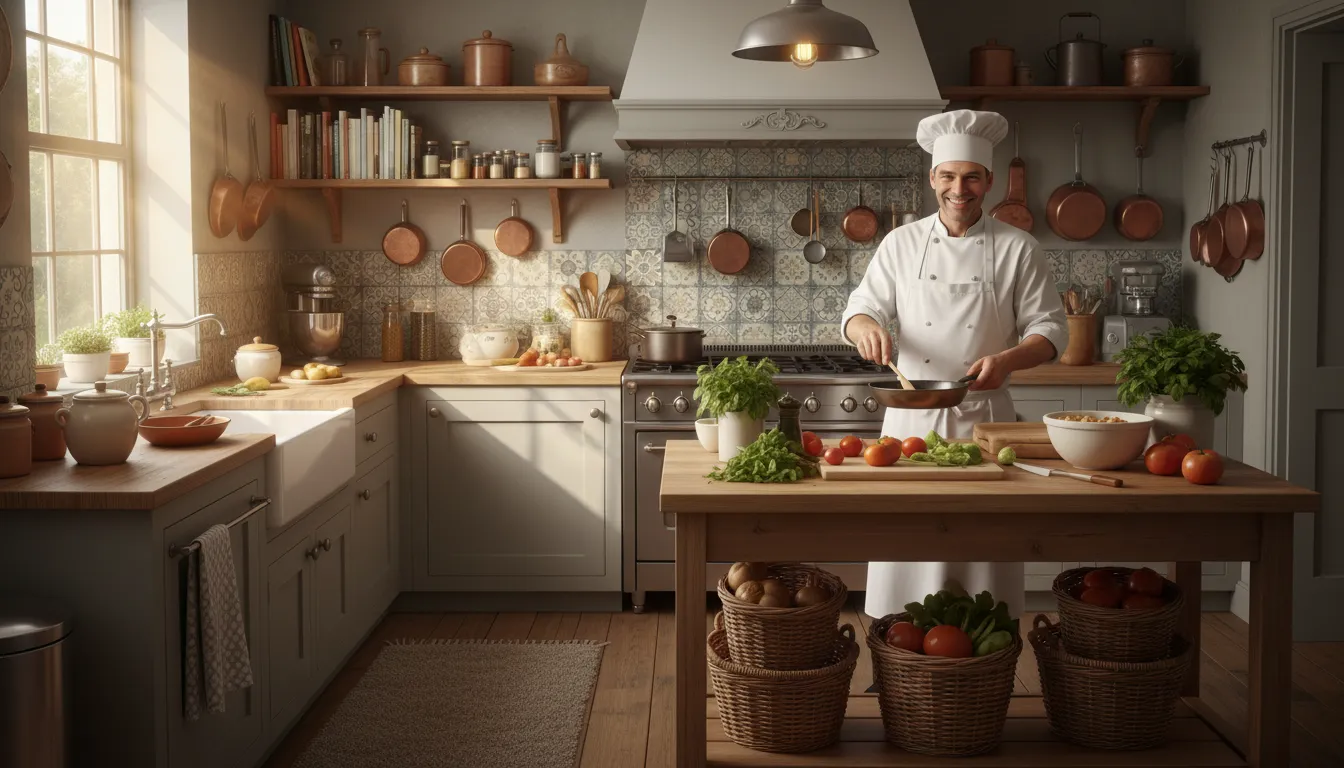
If you’re a home cook in the UK with a small kitchen, you might be surprised to learn that your compact cooking space could be a goldmine. That’s right — small kitchens (under 10 sq m) are generating £300 to £2,000 per month for savvy food entrepreneurs.
The key is finding the right small-space business model and mastering the art of batch cooking. In this guide, we’ll explore the most profitable small kitchen ventures, break down the economics, and share inspiring real-world examples to help you turn your culinary skills into a thriving side hustle.
What Is a Small Kitchen Business?
A small kitchen business is a food-based enterprise operated out of a compact home kitchen, typically less than 10 square meters in size. These micro-businesses leverage the power of batch cooking and smart space utilization to transform a small cooking area into a profitable venture.
Unlike commercial kitchens or larger home-based food businesses, small kitchen enterprises focus on products that can be efficiently produced in limited space. This often includes baked goods, sauces and condiments, and meal prep services — items that can be made in batches and packaged for sale.
The beauty of a small kitchen business is that it allows home cooks to monetize their culinary skills and passion without the significant overhead of renting a commercial kitchen or investing in expensive equipment. With a little creativity and business savvy, a tiny home cooking space can become a thriving income stream.
Step-by-Step Guide to Starting a Small Kitchen Business
1. Identify Your Niche and Products
The first step is to determine what you’ll sell. Focus on items that are well-suited for small-scale batch production, such as:
– Baked goods (e.g., brownies, cakes, cookies)
– Sauces, condiments, and specialty food products
– Prepared meals and meal prep services
Consider your own cooking strengths and local market demands to find the sweet spot. Research competitors and gauge customer interest through social media or local foodie groups.
2. Optimize Your Tiny Kitchen
Once you’ve settled on your product lineup, it’s time to make the most of your compact cooking space. Invest in space-saving appliances, storage solutions, and efficient workflows to maximize your productivity. Incorporate features like:
– Compact convection ovens
– Vertical shelving and wall-mounted racks
– Modular prep stations and mobile workspaces
– Dedicated packaging and labeling areas
Optimizing your small kitchen will allow you to handle larger batches with ease, boosting your output and profitability.
3. Nail the Batch Cooking Process
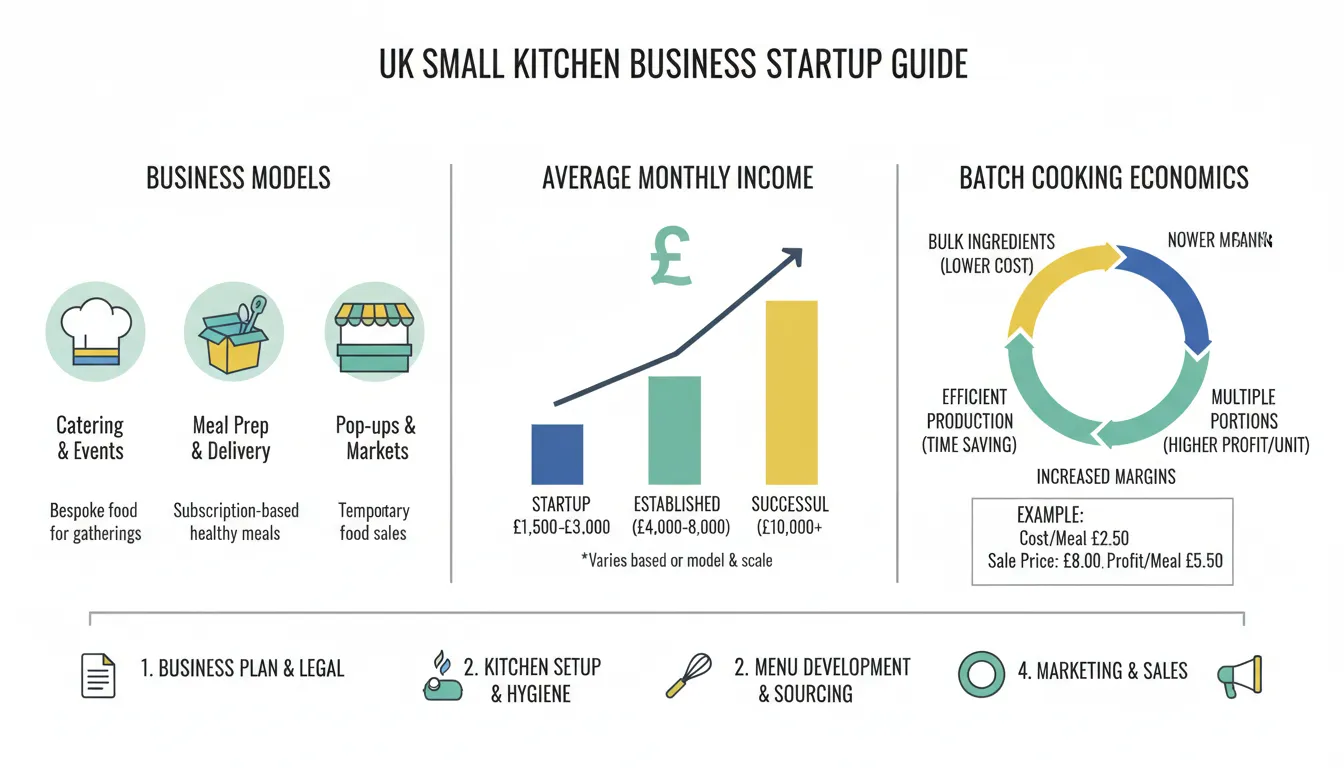
Mastering batch cooking is the key to turning a tiny kitchen into a moneymaker. The economics of batch cooking are simple: Invest £50 in ingredients, and you can produce 20 individual portions that sell for £8 each, yielding £160 in revenue and £110 in profit.
To optimize your batch cooking, focus on efficiency through:
– Standardized recipes and portion sizes
– Simultaneous prep and cooking techniques
– Streamlined packaging and labeling workflows
By honing your batch cooking skills, you can maximize your kitchen’s output and increase your earning potential.
4. Build Your Brand and Marketing
A strong brand and effective marketing are essential for a successful small kitchen business. Invest time in developing an appealing visual identity, engaging social media presence, and targeted promotional strategies.
Some effective tactics include:
– High-quality product photography and lifestyle imagery
– Engaging social media content (recipes, behind-the-scenes, etc.)
– Local community outreach (farmers markets, pop-ups, etc.)
– Online sales channels (e-commerce, meal delivery platforms)
Consistent branding and strategic marketing will help you stand out in a crowded market and attract loyal customers.
5. Scale Sustainably
As your small kitchen business grows, it’s important to scale in a way that maintains quality and efficiency. This may involve:
– Gradually expanding your product line
– Optimizing packaging and logistics
– Outsourcing non-core tasks (e.g., shipping, accounting)
– Exploring co-packing or shared kitchen arrangements
Careful planning and smart growth strategies will allow you to scale your small kitchen business without compromising its profitability or your work-life balance.

Tools, Resources, and Cost Breakdown
Starting a small kitchen business requires some upfront investment, but the barriers to entry are relatively low compared to a traditional food business. Here’s a breakdown of the key costs:
– Kitchen equipment and upgrades: £500–£2,000
– Ingredients and packaging: £50–£200 per batch
– Licenses and permits: £100–£500 (depending on your location and product type)
– Marketing and branding: £200–£1,000 (for a professional website, photography, etc.)
Many of these costs can be phased in gradually as your business grows. Additionally, there are a wealth of free and low-cost resources available to help you get started, including:
– Online tutorials and small business forums
– Local enterprise support programs
– Shared kitchen and co-packing facilities
– Accounting and invoicing software (e.g., FreshBooks, Xero)
With careful planning and resourceful use of tools and services, you can launch a profitable small kitchen business with a relatively small investment.
Key Takeaways
Pros and Cons of a Small Kitchen Business
Pros:
– Low startup costs and overhead
– Flexible schedule and work-life balance
– Ability to test and iterate quickly
– Potential for high-profit margins
– Opportunity to monetize your cooking skills
Cons:
– Limited production capacity and scalability
– Potential challenges with food safety and regulations
– Increased reliance on efficient workflows and batch cooking
– Competition from larger commercial kitchens
– Potential difficulty in building brand awareness and customer base
Overall, a small kitchen business offers an attractive option for UK home cooks looking to turn their culinary talents into a profitable side hustle. With the right strategy and execution, a tiny cooking space can become a thriving income stream.

Real-World Examples: 7 Inspiring Small Kitchen Businesses
Let’s take a look at seven UK-based small kitchen businesses that are finding success in their compact cooking spaces:
1. Bea’s Brownies: Bea started her small-batch brownie business in her 8 sq m kitchen, perfecting her recipes and building a loyal following through local markets and online sales. She now earns £500–£800 per month.
2. Sauce Queen: Samantha specializes in artisanal sauces and condiments, producing batches of her signature hot sauce, pesto, and marinades in her 9 sq m kitchen. She generates £300–£600 per month in revenue.
3. Meal Prep Masters: Husband-and-wife team Tom and Sarah offer a weekly meal prep service, crafting nutritious, portion-controlled meals in their 7 sq m kitchen. Their business brings in £800–£1,200 per month.
4. Cupcake Cottage: Emily runs a thriving cupcake business from her 6 sq m kitchen, selling beautifully decorated treats at local events and through online orders. Her monthly income ranges from £400 to £800.
5. Spice Blends by Anya: Anya creates and sells custom spice blends and seasoning mixes, leveraging her 9 sq m kitchen to produce batches that she sells through her e-commerce store and local markets. She earns £300–£600 per month.
6. Gluten-Free Goodies: After being diagnosed with celiac disease, Olivia started a small kitchen business offering gluten-free baked goods. Operating out of her 8 sq m kitchen, she generates £500–£900 per month.
7. Homemade Jams by Jen: Jen’s passion for preserving local produce has led to a thriving jam-making business in her 7 sq m kitchen. She sells her jars of jam through online orders and at artisanal markets, earning £400–£800 per month.
These examples showcase the diverse range of small kitchen businesses that UK home cooks are successfully building. By focusing on high-demand products, optimizing their workflows, and leveraging smart marketing, these entrepreneurs are proving that a tiny cooking space can be a big moneymaker.
FAQ
How much can I realistically earn from a small kitchen business?
According to our research, UK home cooks with small kitchens (under 10 sq m) are generating between £300 and £2,000 per month from their food-based side hustles. The exact income will depend on factors like your product offerings, production capacity, and marketing efforts.
What are the best small kitchen business ideas?
Some of the most profitable small kitchen business models include:
– Baked goods (e.g., brownies, cakes, cookies)
– Sauces, condiments, and specialty food products
– Prepared meals and meal prep services
These product categories are well-suited for efficient batch cooking and packaging in a compact space.
How do I get started with a small kitchen business?
To launch a successful small kitchen business, focus on these key steps:
1. Identify your niche and product lineup
2. Optimize your tiny kitchen for maximum efficiency
3. Master the art of batch cooking
4. Build a strong brand and effective marketing
5. Scale sustainably as your business grows
With the right strategy and execution, you can turn your home cooking skills into a thriving side hustle.
What licenses and permits do I need for a small kitchen business?
The specific licenses and permits required will depend on your location and the type of food products you plan to sell. Common requirements may include a food handler’s certificate, food business registration, and potentially a cottage food license or home-based food business permit. Be sure to research the regulations in your area.
How can I find shared kitchen or co-packing facilities?
Shared kitchen spaces and co-packing arrangements can be great resources for small kitchen businesses looking to expand their production capacity. Search for local “incubator kitchens,” “commercial kitchens for rent,” or “co-packing services” in your area. Many cities and regions have online directories or programs to connect small food businesses with these types of facilities.
Conclusion: Unlock the Potential of Your Tiny Kitchen
If you’re a home cook in the UK with a small kitchen, you’re sitting on a hidden goldmine. By leveraging the power of batch cooking and finding the right business model for your compact cooking space, you can turn your culinary skills into a thriving side hustle.
Whether you dream of selling homemade baked goods, specialty food products, or meal prep services, the path to small kitchen success is within your reach. With the right strategy and a bit of entrepreneurial spirit, you can join the ranks of UK home cooks earning £300 to £2,000 per month from their tiny but mighty cooking spaces.
Ready to unlock the income potential of your small kitchen? Start exploring the opportunities today and take the first step towards building your own profitable food business. The delicious rewards await.
Advertisement
