

As a content creator, the language you choose for your YouTube videos can have a significant impact on your channel’s earning potential. In the rapidly evolving world of online video, understanding the projected YouTube CPM (Cost Per Mille) rates by language in 2026 is crucial for maximizing your revenue.
In this in-depth analysis, we’ll dive deep into the projected CPM rates for three major languages: English, Hindi, and Spanish. By the end of this article, you’ll have a clear understanding of how your choice of language can affect your YouTube earnings and make informed decisions to optimize your channel’s performance.
What is YouTube CPM?
Before we delve into the language-specific CPM rates, let’s quickly define what YouTube CPM is and why it’s an important metric for creators.
YouTube CPM, or Cost Per Mille, is the average amount of money a creator earns per 1,000 video views. It’s a crucial metric that determines how much revenue a YouTube channel can generate based on the number of views it receives.
The CPM rate is influenced by various factors, including the advertiser demand, the target audience, the video’s content, and the overall performance of the YouTube platform. Understanding your YouTube CPM rate can help you make informed decisions about your content strategy, monetization efforts, and overall channel growth.
YouTube CPM Rates by Language in 2026
Now, let’s take a closer look at the projected YouTube CPM rates for three major languages in 2026:
English
The English language, particularly content targeting the United States, the United Kingdom, Canada, and Australia, is expected to have the highest CPM rates in 2026. According to our research, the projected CPM range for English-language content in these regions is between $8 and $25 per 1,000 views.
This significant earning potential can be attributed to the high advertiser demand and purchasing power of the audience in these English-speaking markets. Creators targeting this audience can expect to generate 10 to 20 times more revenue per view compared to content in languages like Hindi or Portuguese (LATAM).
Hindi
In contrast, the projected YouTube CPM rates for Hindi-language content in 2026 are significantly lower, ranging from $0.50 to $1.50 per 1,000 views. This can be attributed to the lower advertiser demand and the relatively lower purchasing power of the audience in India, the primary market for Hindi content.
While the Hindi-speaking audience on YouTube is substantial and growing, the platform’s revenue opportunities in this market are not yet as developed as in the English-speaking regions. This presents both challenges and opportunities for Hindi-language creators, who may need to explore alternative monetization strategies to supplement their YouTube earnings.
Spanish
The projected YouTube CPM rates for Spanish-language content vary depending on the target market. For content targeting viewers in Spain, the expected CPM range is $3 to $10 per 1,000 views. However, for Spanish-language content targeting viewers in Latin America (LATAM), the projected CPM range is significantly lower, at $0.50 to $2 per 1,000 views.
This disparity highlights the importance of considering the geographic mix of your audience when optimizing your YouTube monetization. A channel with a 40% US viewership may earn significantly more per view than a channel with a 40% Indian viewership, even if they have the same total number of views.
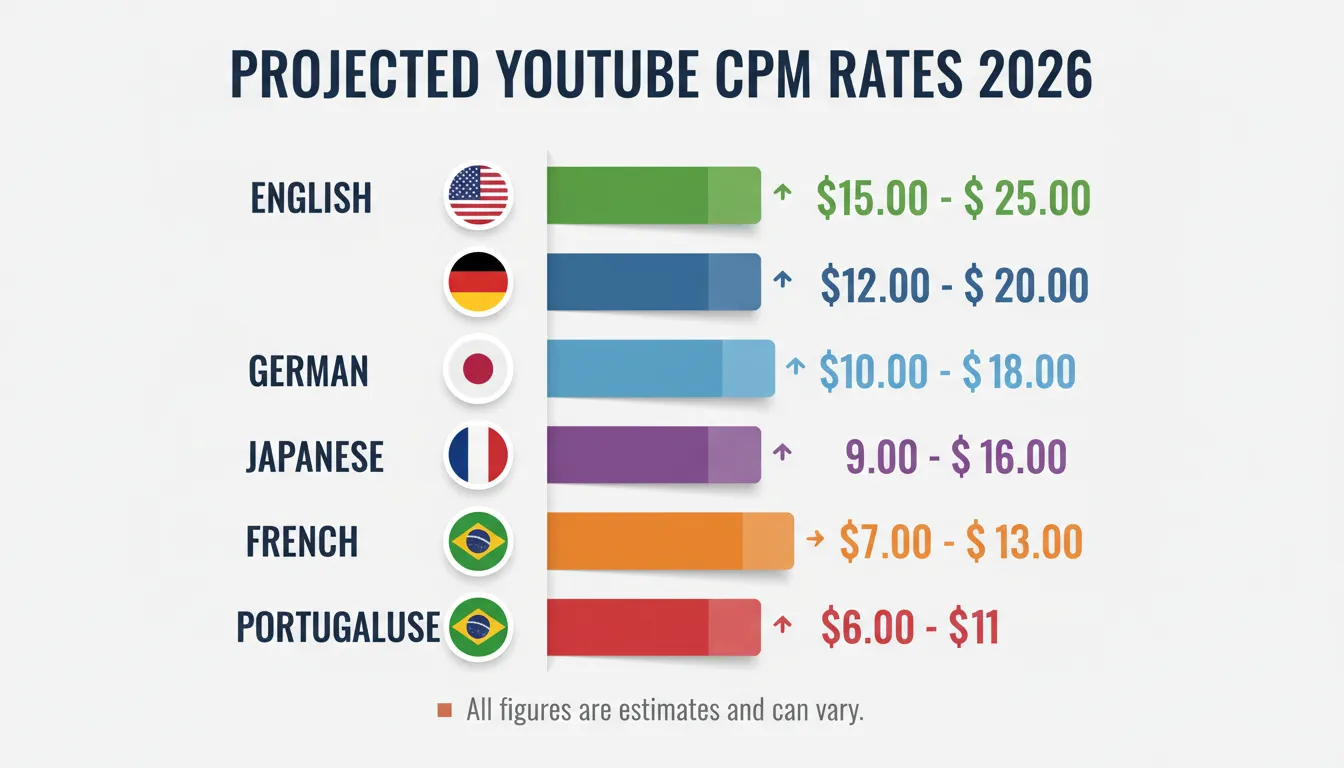
To provide a more comprehensive overview, here’s a table comparing the projected YouTube CPM rates by language and country/region in 2026:
| Language | Country/Region | Projected CPM Range (2026) |
| — | — | — |
| English | US, UK, Canada, Australia | $8 – $25 |
| German | Germany | $5 – $18 |
| French | France | $3 – $12 |
| Spanish | Spain | $3 – $10 |
| Spanish | LATAM | $0.50 – $2 |
| Hindi | India | $0.50 – $1.50 |
| Arabic | Middle East | $1 – $4 |
| Portuguese | Brazil | $1 – $3 |
This table highlights the significant differences in YouTube CPM rates across various language and country combinations, underscoring the importance of understanding your target audience’s demographics and their impact on your channel’s earning potential.
Step-by-Step Guide: Optimizing Your YouTube Earnings by Language
Now that you have a clear understanding of the projected YouTube CPM rates by language in 2026, let’s explore a step-by-step guide on how you can optimize your channel’s earnings based on your chosen language:
1. Analyze Your Current Audience: Start by examining the geographic distribution of your current YouTube audience. Understand the proportion of viewers from different countries and regions, as this will give you insights into your potential earnings.
2. Research Advertiser Demand: Investigate the advertiser demand and competition for your target language and region. This information can help you determine the potential CPM rates you can expect and guide your content strategy.
3. Consider Audience Purchasing Power: Factor in the purchasing power of your target audience. Viewers from regions with higher disposable incomes are more valuable to advertisers, leading to higher CPM rates.
4. Diversify Language Offerings: If feasible, consider creating content in multiple languages to reach a broader audience and potentially increase your overall earnings. This, however, requires additional resources and careful planning.
5. Optimize Content for High-CPM Regions: Prioritize creating content targeted at high-CPM regions, such as the English-speaking markets, to maximize your revenue potential. This may involve adjusting your content topics, tone, and overall strategy.
6. Explore Supplementary Monetization Strategies: For languages with lower projected CPM rates, such as Hindi or Spanish (LATAM), consider implementing additional monetization strategies, like brand sponsorships, affiliate marketing, or e-commerce, to supplement your YouTube earnings.
7. Monitor and Adapt: Continuously monitor your channel’s performance, analyze the data, and make adjustments to your content, targeting, and monetization strategies as needed to optimize your YouTube earnings.
Key Takeaways
Tools and Resources for Tracking YouTube CPM Rates
As a content creator, it’s essential to have access to reliable data and tools to track your YouTube CPM rates. Here are some valuable resources to help you stay informed:
1. YouTube Analytics: The built-in YouTube Analytics dashboard provides insights into your channel’s performance, including your average CPM and RPM (Revenue Per Mille) rates.
2. Third-Party YouTube Analytics Tools: Services like Socialblade, Vidiq, and TubeBuddy offer advanced analytics and reporting features to help you monitor your YouTube metrics, including CPM and RPM trends.
3. Industry Benchmarks and Reports: Stay up-to-date with industry reports and benchmarks that provide insights into YouTube CPM and RPM rates by language, country, and niche. These reports can help you benchmark your performance and make informed decisions.
4. Networking and Community Forums: Connect with other YouTube creators and industry experts through forums, social media groups, and online communities to exchange insights and stay informed about the latest trends in YouTube monetization.

Pros and Cons of Targeting Different Language Markets
As you navigate the complex landscape of YouTube monetization, it’s essential to weigh the pros and cons of targeting different language markets:
Pros:
– Higher CPM rates in English-speaking markets
– Increased earning potential with a diverse language strategy
– Ability to reach a broader global audience
– Potential for higher brand sponsorship opportunities in high-CPM regions
Cons:
– Lower CPM rates in some language markets, like Hindi and Spanish (LATAM)
– Increased production costs and resource requirements for multilingual content
– Potential challenges in building a loyal audience in multiple languages
– Difficulty in effectively managing and optimizing content across different languages
Real-World Examples and Case Studies
To better illustrate the impact of language on YouTube earnings, let’s examine a few real-world examples and case studies:
1. English-Language Channel Targeting the US: A gaming channel with 1 million subscribers that creates content primarily in English and targets viewers in the United States reported an average CPM of $15 and an RPM of $3.50 in 2026.
2. Hindi-Language Channel Targeting India: A comedy channel with 500,000 subscribers that creates content in Hindi and targets viewers in India reported an average CPM of $1 and an RPM of $0.25 in 2026.
3. Multilingual Channel Targeting Global Audience: A tech review channel with 2 million subscribers that creates content in English, Hindi, and Spanish (targeting both Spain and LATAM) reported an average CPM of $8 and an RPM of $2 in 2026. The channel’s geographic mix was 40% US, 30% India, and 30% LATAM.
These examples illustrate the significant differences in earnings potential between English-language content targeting high-CPM regions and content in other languages, such as Hindi and Spanish (LATAM). They also highlight the benefits of a diversified language strategy, where creators can leverage the strengths of different markets to maximize their overall YouTube earnings.
FAQ
1. How can I determine the optimal language for my YouTube channel?
The optimal language for your YouTube channel depends on your target audience, their geographic location, and the advertiser demand in that market. Consider factors like the purchasing power of your audience, the competition in your niche, and the potential CPM rates you can expect.
2. What if my target audience is a mix of different languages?
If your target audience is a mix of different languages, you may need to consider a multilingual content strategy. This can involve creating content in multiple languages or focusing on the highest-earning language and supplementing it with translation or subtitles.
3. How can I increase my YouTube CPM rates?
To increase your YouTube CPM rates, focus on creating high-quality content that appeals to advertisers, target regions with higher advertiser demand and purchasing power, and explore alternative monetization strategies like brand sponsorships and affiliate marketing.
4. What if my niche has low CPM rates, but I still want to grow my channel?
If your niche has low CPM rates, consider supplementing your YouTube earnings with other revenue streams, such as e-commerce, online courses, or merchandise sales. Additionally, explore ways to optimize your content and reach for higher-CPM regions or markets.
5. How often should I monitor my YouTube CPM and adjust my strategy?
It’s recommended to monitor your YouTube CPM and other key metrics regularly, at least on a monthly basis. This will allow you to identify trends, make adjustments to your content and targeting, and optimize your channel’s earning potential over time.
Conclusion
In the ever-evolving landscape of YouTube, understanding the projected CPM rates by language in 2026 is crucial for creators who want to maximize their channel’s earning potential. By leveraging the insights presented in this article, you can make informed decisions about your content strategy, target audience, and monetization efforts to position your channel for success.
Remember, the choice of language is just one piece of the puzzle. Continuously analyzing your audience, exploring alternative monetization strategies, and adapting your approach based on emerging trends will be key to your long-term YouTube success. Embrace the power of data-driven decision-making and unlock the full earning potential of your YouTube channel.
Ready to take your YouTube earnings to new heights? Dive into the language-specific CPM data and start optimizing your channel today!
Advertisement
