

As a content creator, one of your primary goals is to maximize the revenue generated from your YouTube channel. With the rapidly evolving digital landscape, understanding the trends and benchmarks for YouTube earnings in the United States is crucial for staying ahead of the curve. In this comprehensive guide, we’ll explore the latest forecasts for YouTube RPM (revenue per mille) in the US market, segmented by different industries and channel sizes, to help you unlock your full earning potential in 2026.
What is YouTube RPM?
YouTube RPM, or revenue per mille, refers to the average amount of money a creator earns per 1,000 video views. This metric is influenced by various factors, including the advertiser demand, the competitiveness of the niche, the viewer demographics, and the overall ad performance on the platform.
YouTube RPM Benchmarks for the US Market in 2026
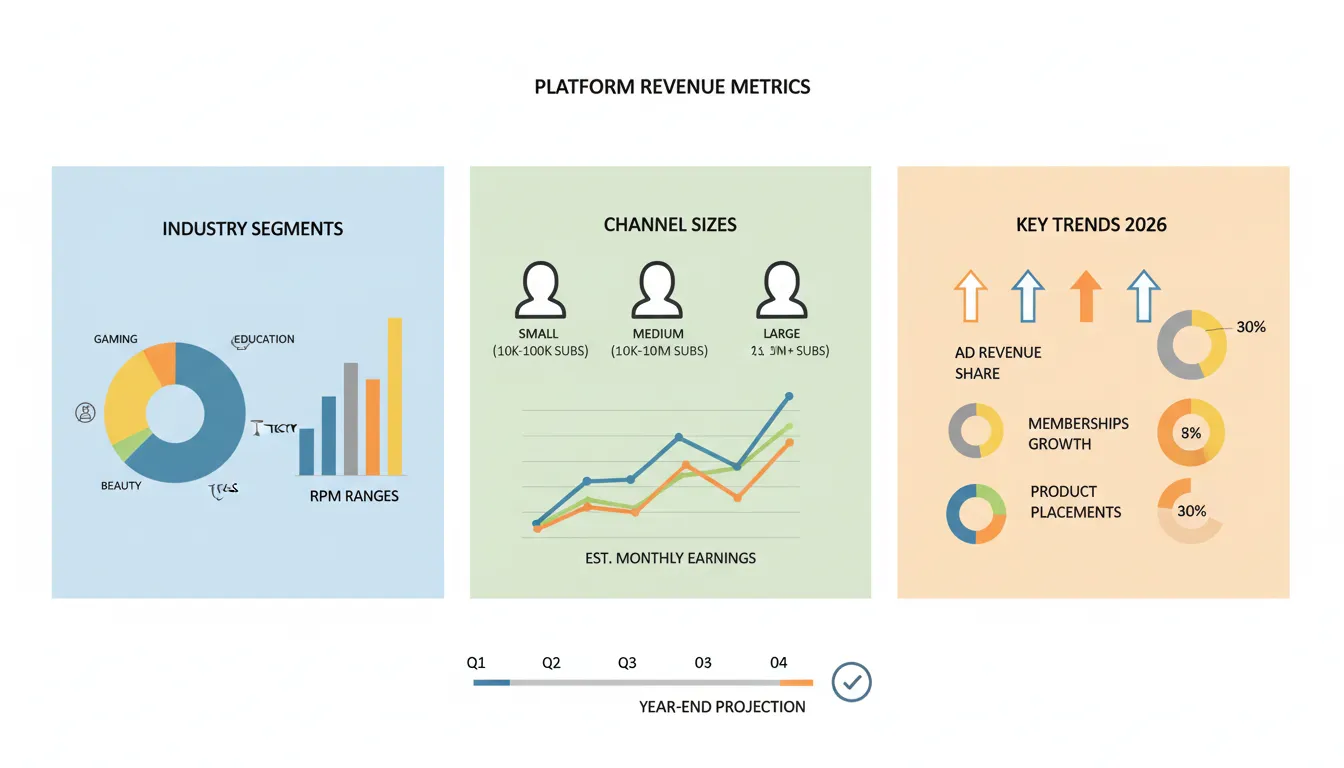
According to our research, the United States is poised to remain the highest-paying market for YouTube creators in 2026. Here’s a breakdown of the expected RPM ranges across different industries:
1. Finance: $8 – $25 per 1,000 views
2. Insurance: $12 – $40 per 1,000 views
3. Legal: $10 – $30 per 1,000 views
4. Tech/SaaS: $8 – $20 per 1,000 views
5. Health: $6 – $18 per 1,000 views
6. General: $3 – $8 per 1,000 views
7. Gaming: $1.50 – $4 per 1,000 views
8. Entertainment: $0.80 – $2 per 1,000 views
It’s important to note that these ranges are influenced by various factors, and individual channels may experience variations based on their specific niche, audience, and content quality.

Segmenting by Channel Size
In addition to the industry-specific benchmarks, the size of your YouTube channel also plays a significant role in your RPM. Here’s a breakdown of the expected RPM ranges based on channel size:
1. 1,000 – 10,000 subscribers: $2 – $5 RPM
2. 10,000 – 100,000 subscribers: $3 – $8 RPM
3. 100,000+ subscribers: $5 – $15 RPM
As your channel grows, the RPM typically increases due to factors such as improved audience engagement, higher advertiser interest, and enhanced video optimization.
Key Takeaways
Scenario-Based Earnings Projections
Let’s consider a hypothetical scenario to illustrate the potential earnings you could achieve with an optimized YouTube channel:
Imagine you have a finance-focused channel with 50,000 monthly views. Based on the RPM benchmarks, you could expect to earn around $10 per 1,000 views. This would translate to approximately $500 per month in revenue.
Now, let’s say you’re able to scale your channel to 500,000 monthly views. Applying the same $10 RPM, your monthly earnings would increase to a substantial $5,000.
It’s important to note that these figures are subject to seasonal variations. For example, the RPM typically experiences a 30-50% drop in January compared to the peak in December, so you’ll need to factor in these fluctuations when planning your content strategy and revenue projections.

Tools and Resources for Maximizing Your YouTube RPM
To help you optimize your YouTube earnings, here are some valuable tools and resources:
1. YouTube RPM Calculator: Use an online RPM calculator to estimate your potential earnings based on your channel’s metrics and the industry-specific benchmarks.
2. YouTube Analytics: Dive deep into your channel’s performance data to identify opportunities for improvement and make data-driven decisions.
3. Niche Research: Thoroughly research your target industry and competition to understand the factors that influence RPM in your niche.
4. Content Optimization: Implement best practices for video content creation, SEO, and viewer engagement to maximize your earning potential.
5. Monetization Strategies: Explore alternative revenue streams, such as sponsorships, merchandise sales, and fan funding, to complement your YouTube earnings.
Pros and Cons of Focusing on YouTube RPM
Pros:
1. Increased earning potential: By understanding and optimizing your YouTube RPM, you can significantly boost your channel’s revenue.
2. Sustainable growth: Focusing on RPM encourages the creation of high-quality, engaging content that retains viewers and attracts new subscribers.
3. Competitive advantage: Staying ahead of the curve in terms of RPM trends can give you an edge over other creators in your niche.
Cons:
1. Potential content quality trade-offs: Excessive focus on RPM may lead to compromising the quality or authenticity of your content.
2. Dependency on external factors: YouTube’s algorithm and advertiser preferences can fluctuate, affecting your RPM beyond your control.
3. Potential burnout: The constant pursuit of RPM optimization can be mentally and emotionally draining if not balanced with other aspects of your creator journey.
Real-World Examples and Case Studies
To provide a more tangible understanding of the impact of optimized YouTube RPM, let’s explore a few real-world examples:
1. Tech Niche: A SaaS-focused channel with 100,000 subscribers consistently maintains an RPM of $15, resulting in monthly earnings of $15,000 from 1 million video views.
2. Finance Niche: A personal finance channel with 50,000 subscribers enjoys an RPM of $12, generating $6,000 per month from 500,000 views.
3. Gaming Niche: A popular gaming channel with 1 million subscribers achieves an RPM of $3, earning $30,000 per month from 10 million monthly views.
These examples illustrate how creators in different industries can leverage the power of optimized YouTube RPM to drive significant and sustainable revenue growth.
FAQ
1. How can I accurately predict my YouTube RPM in 2026?
– While we’ve provided industry-specific benchmarks, your actual RPM will depend on factors like your niche, audience demographics, content quality, and platform changes. Use the RPM calculator, analyze your channel’s historical data, and stay up-to-date with industry trends to make more accurate projections.
2. What strategies can I implement to improve my YouTube RPM?
– Focus on creating high-quality, engaging content that resonates with your target audience. Optimize your videos for search, improve viewer retention, and experiment with different monetization tactics. Regularly monitor your analytics to identify opportunities for optimization.
3. How do seasonal fluctuations impact YouTube RPM, and how can I prepare for them?
– The YouTube advertising market experiences significant seasonal variations, with a peak in Q4 (October-December) and a drop in Q1 (January-March). Plan your content and monetization strategies accordingly, and diversify your revenue sources to mitigate the impact of these fluctuations.
4. What are the key factors that influence YouTube RPM in the US market?
– The main factors influencing US YouTube RPM include advertiser demand, industry competitiveness, viewer demographics, video content and performance, and platform algorithm changes. Stay informed about these factors to make more informed decisions.
5. How can I compare my YouTube RPM to the industry benchmarks?
– Regularly track your channel’s RPM and compare it to the industry averages provided in this guide. This will help you identify areas for improvement and set realistic goals for your channel’s growth and revenue optimization.
Conclusion
As the YouTube landscape continues to evolve, staying ahead of the curve in terms of earnings potential is crucial for creators. By understanding the latest RPM benchmarks for the US market in 2026, you can make informed decisions, optimize your content and monetization strategies, and unlock your full earning potential on the platform.
Remember, the key to success lies in a balanced approach that prioritizes both content quality and revenue optimization. By leveraging the tools, resources, and strategies outlined in this guide, you can position your YouTube channel for long-term growth and financial sustainability. Start optimizing your RPM today and take your creator journey to new heights!
Advertisement
