

In the ever-evolving landscape of the UK’s food industry, a new culinary revolution is taking shape. Driven by a growing appetite for unique and intimate dining experiences, the home-based restaurant business has emerged as a flourishing niche, offering aspiring chefs and food enthusiasts the opportunity to transform their passion into a successful entrepreneurial venture.
Whether it’s the allure of an exclusive supper club, the personalized touch of a private chef service, or the interactive joy of in-home cooking classes, the home-based restaurant model is captivating the hearts and palates of food-loving Britons. In this comprehensive guide, we’ll delve into the world of home-based restaurants, exploring the essential steps, legal requirements, and strategies to help you turn your culinary dreams into a thriving reality.
What is a Home-Based Restaurant Business?
A home-based restaurant business encompasses a range of culinary ventures that operate out of a private residence, offering a unique dining experience to guests. This can take various forms, including:
1. Supper Clubs: Intimate, invitation-only dining events hosted in a home, where a select group of diners enjoy a multi-course meal prepared by a skilled chef.
2. Private Chef Services: Experienced chefs who offer their services to prepare bespoke meals for individuals or small groups within the comfort of a client’s home.
3. Cooking Classes: In-home workshops where aspiring home cooks can learn new techniques, explore global cuisines, and hone their culinary skills.
These home-based models are often seen as a more personalized and exclusive alternative to traditional restaurant dining, catering to a growing demand for unique gastronomic experiences.
The Legal and Regulatory Landscape
Before embarking on your home-based restaurant journey, it’s crucial to navigate the legal and regulatory requirements. In the UK, the key considerations include:
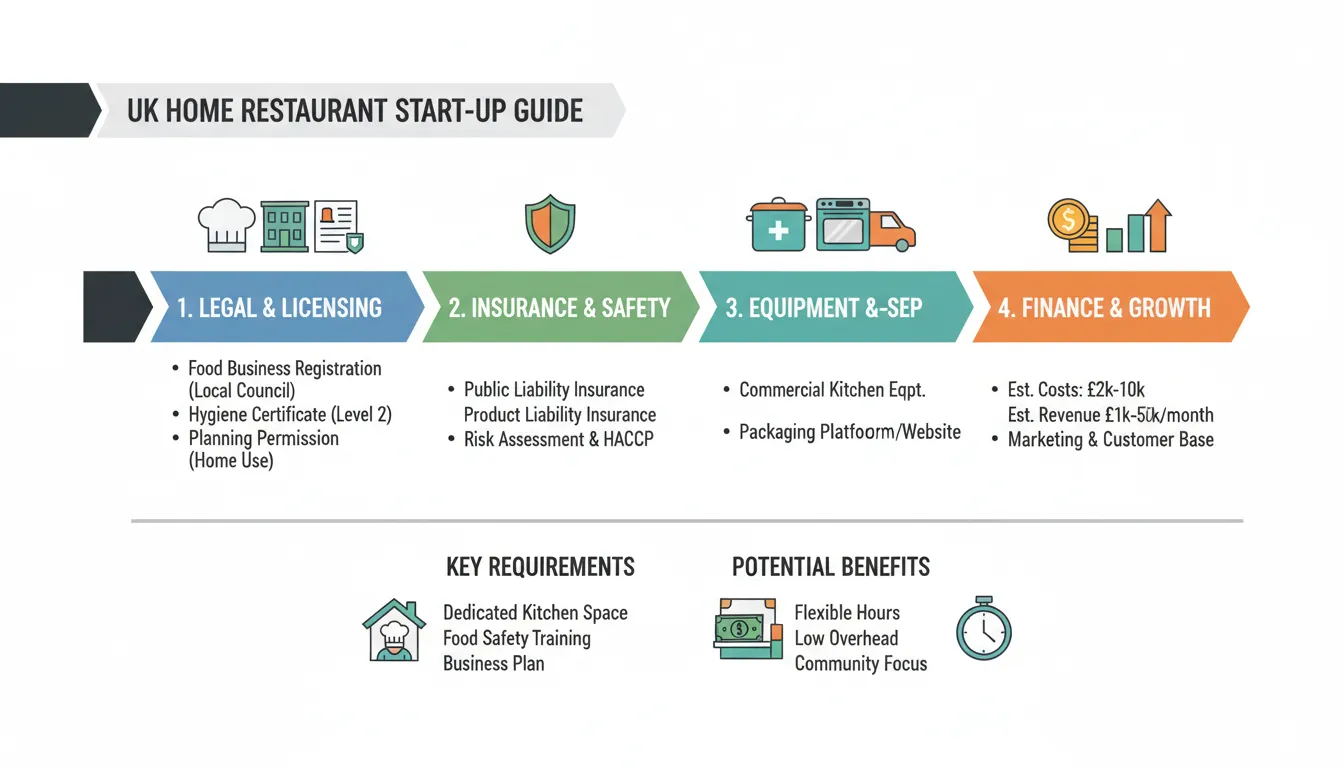
1. Council Approval: Depending on your local authority, you may need to obtain planning permission or a license to operate a home-based restaurant business. This can involve adhering to zoning regulations and ensuring compliance with health and safety standards.
2. Public Liability Insurance: Protecting your business and guests is a top priority. Most local councils will require you to have a minimum of £1 million in public liability insurance, which typically costs between £100 and £200 per year.
3. Food Hygiene Certification: Ensuring the safe handling and preparation of food is essential. Obtaining a Food Hygiene Certificate, often through an accredited training provider, is a crucial step in the process.
4. Tax Considerations: As with any business venture, you’ll need to consider the tax implications, such as registering for self-employment or as a limited company, and understanding your obligations regarding income tax, National Insurance contributions, and value-added tax (VAT).
By familiarizing yourself with the legal landscape and taking the necessary steps to ensure compliance, you can set the foundation for a successful and sustainable home-based restaurant business.
Step-by-Step Guide to Starting a Home-Based Restaurant Business
Embarking on your home-based restaurant journey requires careful planning and a strategic approach. Here’s a step-by-step guide to help you navigate the process:
1. Identify Your Culinary Niche
Determine the specific type of home-based restaurant business you’d like to pursue, whether it’s a supper club, private chef services, or cooking classes. Consider your culinary expertise, the unique experiences you can offer, and the target market you aim to serve.
2. Develop Your Menu and Concept
Craft a compelling menu that showcases your culinary skills and aligns with the dining experience you want to provide. Ensure your offerings are diverse, seasonally inspired, and cater to a range of dietary preferences.
3. Secure the Necessary Licenses and Permits
Research the local council requirements in your area and obtain the necessary licenses and permits to operate your home-based restaurant business. This may include planning permission, a food hygiene certificate, and public liability insurance.
4. Optimize Your Home Kitchen
Ensure your home kitchen is equipped to handle the demands of your business. This may involve upgrading appliances, installing additional prep areas, and ensuring compliance with health and safety regulations.
5. Build Your Brand and Marketing Strategy
Develop a strong brand identity that reflects the unique experience you offer. This includes creating a visually appealing website, engaging with potential customers on social media, and leveraging platforms like Eatwith and Cookening to list your home-based restaurant offerings.
6. Establish Pricing and Revenue Streams
Determine the appropriate pricing for your services, factoring in the cost of ingredients, labor, and overhead. Consider additional revenue streams, such as hosting private events, offering cooking classes, or selling specialty food items.
7. Optimize Operations and Streamline Processes
Implement efficient systems and processes to manage bookings, menu planning, guest communications, and logistics. Leverage technology tools to automate tasks and enhance the overall customer experience.
8. Continuously Adapt and Evolve
Regularly review your business performance, gather feedback from customers, and make strategic adjustments to your menu, pricing, and marketing efforts. Stay attuned to industry trends and be prepared to pivot as the market evolves.
By following this step-by-step guide, you’ll be well on your way to launching a thriving home-based restaurant business that captures the hearts and palates of discerning diners in the UK.
Key Takeaways
Tools, Resources, and Cost Breakdown
To get your home-based restaurant business up and running, you’ll need to invest in a range of tools and resources. Here’s a breakdown of the essential elements and their associated costs:
1. Kitchen Equipment and Upgrades: Depending on the current state of your home kitchen, you may need to invest in new appliances, additional prep surfaces, and specialized cooking equipment. Expect to spend anywhere from £5,000 to £15,000 on these upgrades.
2. Branding and Website Development: Crafting a professional brand identity and website can cost between £1,000 and £5,000, depending on the complexity and the services of a web design agency or freelancer.
3. Marketing and Advertising: Allocate a budget for digital marketing, social media, and targeted advertising campaigns. This can range from £500 to £2,000 per month, depending on the scale of your efforts.
4. Licenses and Permits: The cost of obtaining necessary licenses and permits can vary widely, typically ranging from £100 to £500, depending on your local council’s requirements.
5. Public Liability Insurance: As mentioned earlier, expect to pay between £100 and £200 per year for a minimum of £1 million in public liability coverage.
6. Food Hygiene Certification: The cost of a recognized food hygiene training course can range from £30 to £100 per person.
7. Ongoing Operational Expenses: Factor in the cost of ingredients, utilities, transportation, and any additional staff you may need to hire. These ongoing expenses can account for 60-70% of your overall revenue.
By carefully planning and budgeting for these essential elements, you’ll be well-positioned to launch and sustain a successful home-based restaurant business.

Pros and Cons of a Home-Based Restaurant Business
Like any entrepreneurial venture, the home-based restaurant business comes with its own set of advantages and challenges. Here’s a breakdown of the key pros and cons to consider:
Pros:
– Lower startup and overhead costs compared to a traditional restaurant
– Increased flexibility in terms of operating hours and menu offerings
– Opportunity to offer a more intimate and personalized dining experience
– Potential for higher profit margins per event or service
– Ability to build a loyal customer base and generate repeat business
– Potential to scale the business through catering, cooking classes, or expansion to multiple locations
Cons:
– Navigating the complex legal and regulatory requirements can be time-consuming
– Limited seating capacity and dining space in a home setting
– Potential for noise complaints or other issues with neighbors
– Reliance on personal reputation and word-of-mouth marketing
– Increased difficulty in maintaining consistent quality and service as the business grows
– Potential challenges in sourcing and storing ingredients in a residential kitchen
By carefully weighing the pros and cons, you can develop a well-informed strategy to mitigate the challenges and capitalize on the unique advantages of a home-based restaurant business.
Real-World Examples and Case Studies
To further illustrate the potential of a home-based restaurant business, let’s explore a few real-world examples and case studies:
The Clocktower Supper Club, London
Launched in 2015, The Clocktower Supper Club in London has become a renowned destination for intimate, multi-course dining experiences. With a focus on seasonal, locally sourced ingredients, the supper club hosts up to 12 guests per event, offering a unique and exclusive culinary journey. The business has built a loyal following and expanded to host events at other private residences, generating an average revenue of £40-£60 per guest.
The Secret Supper Club, Bristol
Based in Bristol, The Secret Supper Club offers a unique dining experience that blends gourmet cuisine with an element of mystery. Guests are invited to a secret location, where they enjoy a meticulously crafted, multi-course meal prepared by a team of experienced chefs. With an average charge of £60-£80 per person, the club has successfully carved out a niche in the home-based restaurant market, attracting discerning diners from across the region.
Chef Alex’s Private Dining, Manchester
Renowned chef Alex, based in Manchester, has built a thriving private chef business, offering bespoke dining experiences in the comfort of clients’ homes. With a focus on high-quality, locally sourced ingredients and personalized menus, Chef Alex’s services have garnered a loyal following, with average bookings ranging from £80 to £120 per person for intimate gatherings of up to 10 guests.
These real-world examples demonstrate the diverse range of home-based restaurant models and the potential for success in this burgeoning industry. By drawing inspiration from these case studies and implementing best practices, you can position your own home-based restaurant business for long-term growth and profitability.
Frequently Asked Questions
1. What licenses and permits do I need to operate a home-based restaurant business in the UK?
The specific requirements can vary depending on your local council, but typically you’ll need to obtain planning permission, a food hygiene certificate, and public liability insurance. It’s recommended to research the regulations in your area and consult with your local authorities to ensure compliance.
2. How much can I expect to earn with a home-based restaurant business?
The earning potential can vary widely, depending on factors such as the type of business, the number of guests, your pricing, and the frequency of events or services. However, a well-established home-based restaurant business in the UK can generate an average monthly revenue of £1,500 to £5,000.
3. How do I market and promote my home-based restaurant business?
Effective marketing strategies for a home-based restaurant business include leveraging social media platforms, creating a visually appealing website, participating in online platforms like Eatwith and Cookening, and building a strong presence in local foodie communities. Word-of-mouth referrals and guest reviews can also be powerful drivers of new business.
4. What are the key challenges I might face in running a home-based restaurant?
Some of the common challenges include navigating the legal and regulatory landscape, managing limited dining space and seating capacity, maintaining consistent quality and service, and ensuring compliance with health and safety standards. Additionally, securing a reliable supply of high-quality ingredients and managing operational costs can be ongoing challenges.
5. Can I expand my home-based restaurant business beyond my private residence?
Absolutely! Many successful home-based restaurant owners have expanded their operations by hosting events at alternative locations, such as private venues or rented commercial kitchens. This can allow you to accommodate larger groups, offer more varied dining experiences, and potentially increase your revenue streams.
By addressing these frequently asked questions, you’ll be better equipped to make informed decisions and tackle the unique challenges of starting and growing a thriving home-based restaurant business in the UK.
Conclusion
In the vibrant culinary landscape of the UK, the home-based restaurant business has emerged as a captivating and lucrative opportunity for aspiring food entrepreneurs. By leveraging the intimate setting of a private residence, you can craft unique dining experiences that cater to the growing demand for personalized, high-quality gastronomic adventures.
Whether you envision hosting exclusive supper clubs, offering personalized private chef services, or leading interactive cooking classes, this guide has provided you with the essential tools and strategies to turn your culinary dreams into a reality. By navigating the legal requirements, developing a compelling concept, and implementing effective marketing and operational strategies, you can position your home-based restaurant business for long-term success.
So, what are you waiting for? It’s time to don your apron, sharpen your culinary skills, and embark on an exciting journey to become the UK’s next home-based restaurant sensation. Read the home restaurant guide and take the first steps toward a thriving and fulfilling entrepreneurial venture.
Advertisement
