
The UK’s home bakery market is estimated to be worth over £500 million, and it’s not hard to see why. With the rise of Instagram-worthy cakes and the increasing demand for high-quality, artisanal baked goods, more and more people are discovering the joys and profits of running a bakery business from their own home.
Whether you’re an aspiring home baker, a cake seller looking to expand your reach, or a budding bakery entrepreneur, this comprehensive guide will show you how to turn your passion for baking into a thriving home-based business.
What Is a Home Bakery Business?
A home bakery business is a small-scale, home-based enterprise that specializes in producing and selling baked goods, such as cakes, cookies, breads, and pastries. Unlike traditional bakeries, which operate out of a dedicated commercial kitchen, a home bakery utilizes the baker’s own home kitchen to prepare and bake their products.
Home bakers in the UK can take advantage of the growing demand for artisanal, locally-sourced baked goods, as well as the increasing popularity of online marketplaces and social media platforms to reach customers. By operating out of their own homes, aspiring bakery owners can keep startup costs low and focus on perfecting their recipes and building their brand.
Step-by-Step Guide to Starting a Home Bakery Business in the UK
1. Obtain the Necessary Licenses and Certifications
Before you can start baking and selling your goods, there are a few legal requirements you’ll need to fulfill:
1. Register with Your Local Council: All home-based food businesses in the UK must register with their local council’s Environmental Health department. This process is typically straightforward and inexpensive, with most councils charging a nominal fee.
2. Acquire a Food Hygiene Certificate: To ensure food safety, you’ll need to complete a Level 2 Food Hygiene course, which covers topics like food preparation, storage, and handling. These courses can be found online or through local training providers and typically cost around £25.
3. Obtain the Necessary Insurance: As a home-based bakery, you’ll need to obtain public liability insurance to protect your business in case of any accidents or incidents involving customers or the public. You may also want to consider product liability insurance to cover any issues with the quality or safety of your baked goods.
2. Set Up Your Home Bakery
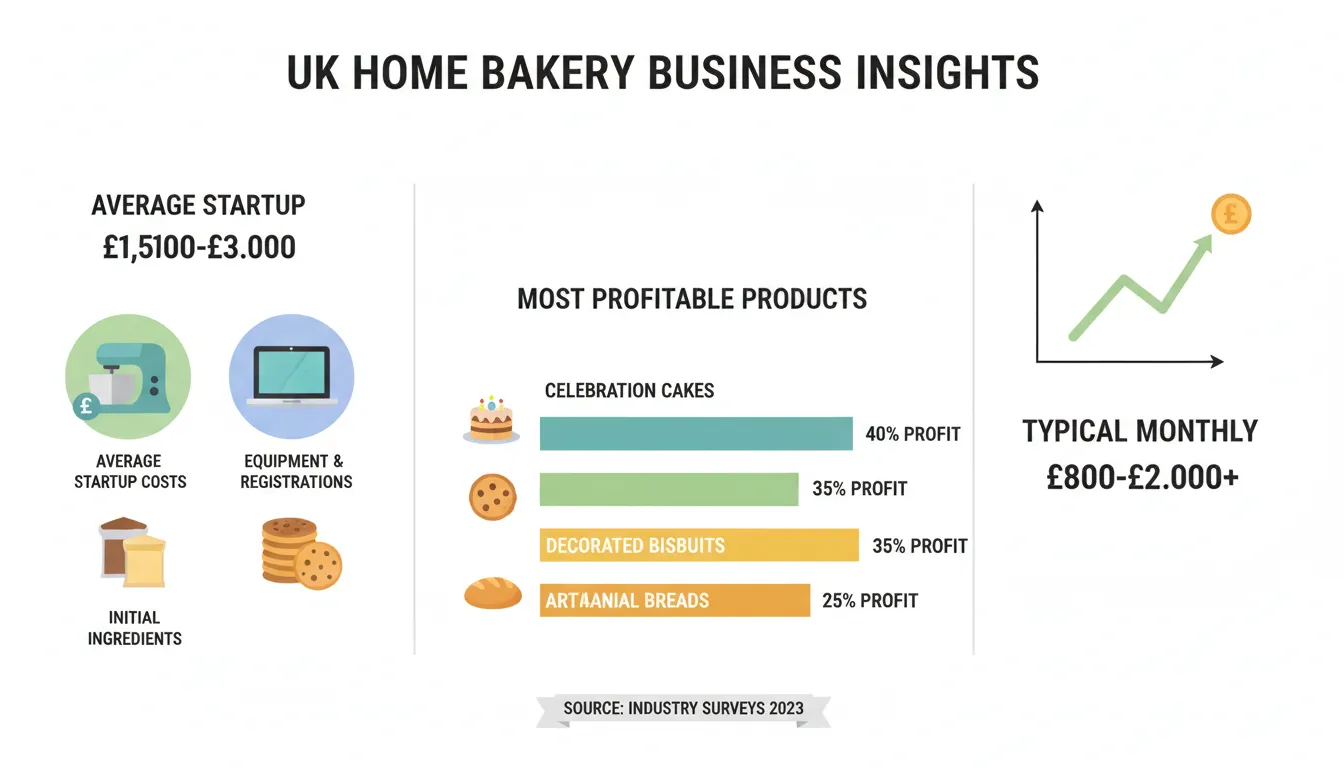
Once you’ve taken care of the legal requirements, it’s time to set up your home bakery. The startup costs for a home-based bakery business can range from £500 to £2,000, depending on the equipment you need to purchase.
At a minimum, you’ll likely need the following:
– A high-quality stand mixer (£300-£600)
– Baking trays, pans, and sheets (£50-£150)
– Piping bags, tips, and other decorating tools (£50-£100)
– Packaging materials (boxes, bags, labels, etc.) (£100-£300)
You may also want to invest in additional items like a dough mixer, a convection oven, or a refrigerator, depending on the scope of your bakery operations.
3. Develop Your Product Offerings
One of the key advantages of running a home bakery is the ability to focus on a select range of high-quality, specialty baked goods. Instead of trying to be a “jack of all trades,” identify the products that you’re most passionate about and excel at producing.
Some of the most profitable home bakery products in the UK include:
1. Wedding Cakes: These can sell for £300 to £800 or more, depending on the size and complexity of the design.
2. Celebration Cakes: Birthday, anniversary, and other special occasion cakes typically range from £60 to £200.
3. Biscuit Boxes: Beautifully packaged boxes of homemade biscuits and cookies can sell for £25 to £45.
4. Specialty Breads: Artisanal loaves, rolls, and pastries can command premium prices in local markets.
When developing your product offerings, be sure to consider factors like ingredient costs, baking time, and the level of skill required. Use a simple pricing formula, such as ingredients × 3 + time, to ensure you’re charging enough to cover your costs and turn a profit.
4. Build Your Online Presence and Market Your Business
In today’s digital landscape, a strong online presence is essential for any home bakery business. Start by creating a visually appealing Instagram account to showcase your products and connect with potential customers. You can also join local Facebook groups and community forums to promote your business and take orders.
For a more formal online presence, consider setting up an Etsy shop or your own e-commerce website. These platforms allow you to list your products, process orders, and manage your bakery’s branding and marketing.
When it comes to marketing, focus on highlighting the quality, freshness, and uniqueness of your baked goods. Offer promotions, discounts, and seasonal specials to drive sales and build customer loyalty. Don’t forget to encourage your satisfied customers to leave reviews and share your business with their friends and family.

Tools and Resources for Home Bakers
As you embark on your home bakery journey, there are a few essential tools and resources that can help you streamline your operations and increase your profitability:
1. Baking and Decorating Supplies: In addition to the essential equipment mentioned earlier, consider investing in high-quality baking tools like silicone mats, offset spatulas, and specialized cake decorating tips.
2. Packaging and Labeling Supplies: Invest in attractive, branded packaging materials to make your baked goods stand out. This can include boxes, bags, stickers, and tags.
3. Accounting and Inventory Software: Use a simple accounting app or spreadsheet to track your expenses, revenues, and inventory. This will help you make informed pricing decisions and manage your finances effectively.
4. Online Ordering and Delivery Services: Services like Uber Eats, Deliveroo, and Just Eat can help you reach a wider customer base and streamline your order fulfillment process.
5. Food Photography Courses: Improving your food photography skills can make a big difference in how your products are presented online. Consider taking an online course or investing in a quality camera and lighting setup.
Key Takeaways
Pros and Cons of Starting a Home Bakery Business
Pros:
– Low Startup Costs: With a home bakery, you can get started for as little as £500, making it a more accessible option than opening a traditional commercial bakery.
– Flexible Schedule: Working from home allows for a more flexible schedule, enabling you to balance your bakery business with other commitments.
– Personalized Touch: Home bakers can offer a more personalized, artisanal experience that resonates with customers seeking unique, high-quality baked goods.
– Scalable Growth: As your home bakery business grows, you can gradually expand your operations, invest in more equipment, and potentially even transition to a commercial kitchen space.
Cons:
– Limited Production Capacity: The size of your home kitchen and equipment may limit the volume of baked goods you can produce at one time.
– Licensing and Regulations: Navigating the licensing, certification, and food safety requirements for a home-based food business can be time-consuming and complex.
– Lack of Dedicated Workspace: Working in a shared home kitchen can present challenges, such as maintaining cleanliness and managing workflow.
– Potential Noise and Odor Concerns: Baking can generate noise and odors that may be disruptive to your household or neighbors, depending on your living situation.
Real-World Examples and Case Studies
Emma’s Bespoke Cakes, Northampton
Emma started her home bakery business, Emma’s Bespoke Cakes, in 2018 after leaving her corporate job. Initially operating out of her small home kitchen, Emma quickly built a loyal customer base by focusing on creating high-quality, custom-designed wedding and celebration cakes.
As her business grew, Emma invested in a larger stand mixer, a dedicated baking oven, and additional decorating tools. She also built a strong online presence, with an Instagram account showcasing her stunning cake designs. Today, Emma’s Bespoke Cakes generates over £2,000 in monthly revenue, with her wedding cakes selling for an average of £600 each.
Natalie’s Homemade Biscuits, Nottingham
Natalie, a stay-at-home mom, started her home bakery, Natalie’s Homemade Biscuits, as a way to supplement her family’s income. She began by baking and selling beautifully packaged boxes of her signature shortbread and ginger biscuits at local farmers’ markets and craft fairs.
Natalie’s business quickly gained a loyal following, and she expanded her product line to include seasonal flavors and specialty biscuit tins. By leveraging her existing network and joining local Facebook groups, Natalie was able to build a thriving online ordering business, generating an average of £800 per month in revenue.
FAQ
1. What is the average monthly income for a home bakery business in the UK?
The average monthly income for a part-time home bakery business in the UK can range from £600 to £2,500, depending on factors such as the products sold, the number of orders, and the baker’s experience and marketing efforts.
2. How much does it cost to start a home bakery business in the UK?
The startup costs for a home bakery business in the UK can range from £500 to £2,000, depending on the equipment and supplies needed. This typically includes the cost of a high-quality stand mixer, baking trays, packaging materials, and any necessary licenses or certifications.
3. What are the most profitable products to sell in a home bakery business?
Some of the most profitable home bakery products in the UK include wedding cakes (£300 to £800+), celebration cakes (£60 to £200), and biscuit boxes (£25 to £45). Specialty breads and pastries can also command premium prices in local markets.
4. Do I need a food hygiene certificate to sell baked goods from home?
Yes, in the UK, all home-based food businesses are required to have at least a Level 2 Food Hygiene certificate. This ensures that you have the necessary knowledge and skills to handle, prepare, and store food safely.
5. How do I market and sell my home bakery products?
Effective marketing strategies for a home bakery business in the UK include building a strong online presence on platforms like Instagram, joining local Facebook groups, and setting up an Etsy shop or e-commerce website. Offering promotions, discounts, and seasonal specials can also help drive sales and build customer loyalty.
Conclusion
Starting a home bakery business in the UK can be a rewarding and profitable venture, allowing you to turn your passion for baking into a thriving enterprise. By following the steps outlined in this guide, aspiring home bakers can navigate the legal requirements, set up their home kitchens, develop a portfolio of high-quality products, and leverage online platforms to reach a wide customer base.
With the right mindset, dedication, and a bit of elbow grease, you can transform your home kitchen into a thriving bakery business, earning an additional £600 to £2,500 per month. So why wait? Start your home bakery journey today and sweet-talk your way to success.
Advertisement
