

As a YouTube creator, understanding the factors that influence your channel’s revenue is crucial for maximizing your earning potential. One of the most important metrics to track is your YouTube RPM (revenue per mille), which directly impacts your overall income.
In 2026, the YouTube ecosystem is expected to undergo significant changes, and the factors driving RPM rates by country will play a pivotal role in shaping creators’ earnings. In this comprehensive guide, we’ll dive deep into the 3 biggest factors that will influence YouTube RPM in the years to come, and provide actionable strategies for creators to optimize their monetization.
What Is YouTube RPM?
Before we delve into the key factors, let’s first define what YouTube RPM is and how it’s calculated.
YouTube RPM is a metric that represents the revenue generated per 1,000 video views. It’s calculated by dividing your total revenue by the total number of views, and then multiplying that number by 1,000. The formula looks like this:
RPM = (Revenue / Views) x 1,000
This metric is particularly important for creators because it provides a clear indication of the earning potential of their content. By understanding their RPM, creators can make more informed decisions about the type of content they produce, the audience they target, and the overall monetization strategy for their channel.
The 3 Biggest Factors Driving YouTube RPM in 2026
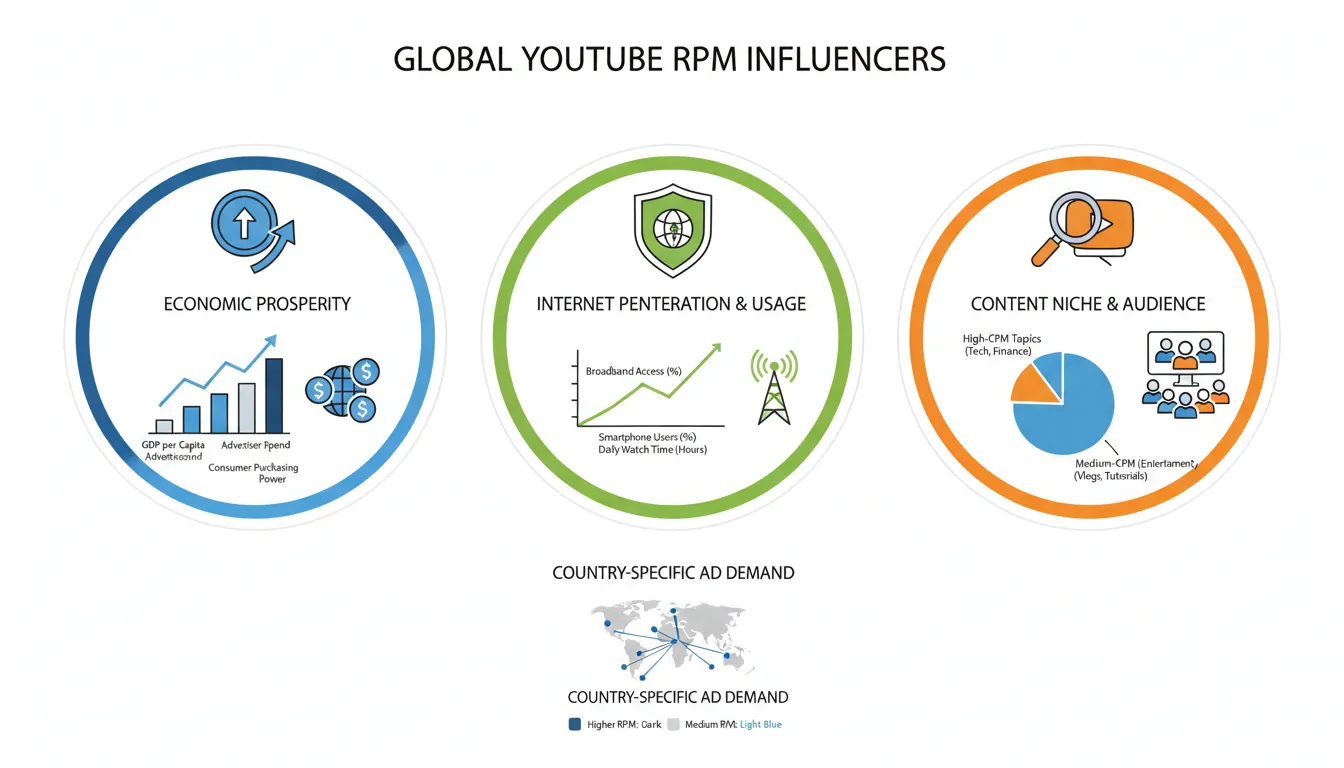
As we look ahead to 2026, there are three primary factors that will have the most significant impact on YouTube RPM rates across different countries:
1. Viewer Location
2. Niche and Ad Category
3. Content Format and Length
Let’s explore each of these factors in detail:
1. Viewer Location
One of the most crucial factors that will influence YouTube RPM in 2026 is the location of your viewers. The value of a single view can vary significantly based on the country or region from which the viewer is accessing your content.
For example, a view from a viewer in the United States can be worth 5 to 10 times more than a view from a viewer in India. This is because advertisers in the US are generally willing to pay higher rates to reach their target audience, resulting in higher CPM (cost per mille) and RPM for creators.
On the other hand, viewers from countries with lower economic development or less advertiser competition may generate significantly lower RPM for creators. It’s important to note that this trend is expected to continue in 2026, with the disparity between high-earning and low-earning viewer locations potentially widening even further.
2. Niche and Ad Category
The specific niche or topic of your content, as well as the ad category it falls under, can also have a significant impact on your YouTube RPM in 2026.
Certain niches, such as finance, technology, or e-commerce, are often more lucrative for advertisers due to the higher perceived value of the audience. These “premium” niches can command CPM rates ranging from $5 to $20, resulting in significantly higher RPM for creators.
In contrast, more “mainstream” or entertainment-focused niches, such as gaming, lifestyle, or comedy, may only generate CPM rates between $0.50 and $2. This can lead to lower RPM for creators in these categories, despite potentially having larger audiences.
It’s important for creators to carefully consider the monetization potential of their niche when planning their content strategy for 2026 and beyond.
3. Content Format and Length
The format and length of your YouTube content can also play a crucial role in determining your RPM in 2026.
Long-form video content (8 minutes or longer) is generally more favorable for monetization, as it allows for the incorporation of mid-roll ads. These mid-roll ads can boost your RPM by 30% to 50% compared to shorter videos that only feature pre-roll or post-roll ads.
Additionally, longer watch time per viewer is typically associated with higher RPM, as it enables more ad impressions and a greater overall revenue share. Conversely, shorter-form content, such as YouTube Shorts (under 60 seconds), may generate significantly lower RPM due to the limited ad opportunities and reduced watch time per viewer.
Creators should aim to strike a balance between producing high-quality, engaging long-form content and experimenting with shorter formats like Shorts to cater to different viewer preferences and maximize their overall earning potential.

Tools, Resources, and Cost Breakdown
To help creators better understand and estimate their potential YouTube RPM in 2026, there are a variety of online tools and resources available:
1. RPM Calculators: These online tools allow creators to input their current metrics, such as views, revenue, and niche, and receive an estimated RPM projection based on industry trends and forecasts.
2. Niche-Specific RPM Data: Specialized blogs and industry reports often provide detailed RPM data broken down by specific content niches, enabling creators to benchmark their performance against industry standards.
3. Country-Level RPM Analyses: Comprehensive guides and case studies outlining the expected RPM trends for different countries can help creators identify the most lucrative geographic markets to target in 2026.
When it comes to the cost of optimizing your YouTube channel for higher RPM, the primary investments may include:
– Content Production: Investing in higher-quality cameras, lighting, and editing software to create more engaging, longer-form videos.
– Audience Research: Conducting market research to better understand your target audience’s preferences and pain points, allowing you to create more valuable content.
– Advertising Optimization: Experimenting with different ad formats, placements, and targeting strategies to maximize your ad revenue.
– Channel Branding: Developing a cohesive brand identity and visual style to attract and retain a loyal audience.
The exact costs will vary depending on your specific needs and the resources available to you, but a well-planned investment in your YouTube channel can yield significant long-term returns in the form of higher RPM and overall revenue.
Key Takeaways
Pros and Cons of Focusing on YouTube RPM
Pros:
– Higher RPM directly translates to increased earning potential for creators
– Focusing on RPM optimization can lead to the creation of more engaging, higher-quality content
– Understanding RPM trends can help creators make more informed decisions about their content strategy and target audience
– Maximizing RPM can contribute to the overall financial sustainability of a creator’s business
Cons:
– Excessive focus on RPM optimization may lead to a decline in creative freedom and authenticity
– Chasing high-RPM niches or viewer locations may result in a disconnect with a creator’s core audience
– Relying too heavily on RPM as the sole metric of success can overshadow other important factors, such as audience growth and engagement
– Changes in YouTube’s algorithm or advertiser policies can significantly impact RPM rates, making it a volatile metric to rely on
It’s important for creators to strike a balance between RPM optimization and maintaining the artistic integrity and audience connection that are crucial to long-term success on the platform.
Real-World Examples and Case Studies
To provide a more tangible understanding of how YouTube RPM can vary by country and niche, let’s explore a few real-world examples:
Example 1: Finance Niche in the US
A creator in the finance niche, producing high-quality, long-form (10-minute) videos targeting viewers in the United States, can expect an average RPM of $8 to $20. The lucrative finance ad category, combined with the high-value US audience, results in a significantly higher earning potential compared to other niches.
Example 2: Entertainment Niche in India
A creator in the entertainment niche, producing shorter-form (3-minute) content targeting viewers in India, may only achieve an average RPM of $0.05 to $0.20. The lower ad rates in the entertainment category, coupled with the relatively lower-value Indian audience, result in a much lower earning potential for this creator.
Example 3: Tech Niche in Canada
A creator in the tech niche, producing long-form (12-minute) videos targeting viewers in Canada, could potentially earn an average RPM of $5 to $12. While the tech niche is considered a premium category, the Canadian audience is not as valuable as the US market, resulting in a slightly lower RPM range.
These examples illustrate how a combination of viewer location, niche, and content format can significantly impact a creator’s YouTube RPM and overall earnings. By understanding these factors and tailoring their content strategy accordingly, creators can maximize their revenue potential in 2026 and beyond.
FAQ
1. How can creators accurately forecast their YouTube RPM in 2026?
Creators can use a variety of tools and resources to forecast their potential YouTube RPM in 2026, including online RPM calculators, industry reports, and niche-specific data analyses. By inputting their current metrics and projecting future trends, creators can estimate their earning potential and make more informed decisions about their content strategy.
2. What are the secondary factors that can influence YouTube RPM?
In addition to the 3 primary factors we’ve discussed, there are several secondary factors that can also impact YouTube RPM, including:
– Watch time: Longer average watch time per viewer typically results in higher RPM.
– Click-through rate (CTR) on ads: Higher ad engagement leads to increased revenue.
– Ad suitability score: YouTube’s algorithm favors content that is deemed suitable for advertising.
– Seasonality: RPM often peaks during the fourth quarter (Q4) due to increased advertiser spending.
3. How can creators optimize their content for higher RPM in 2026?
To optimize for higher YouTube RPM in 2026, creators should consider the following strategies:
– Targeting high-value viewer locations, such as the US, Canada, and parts of Europe
– Producing content in premium niches like finance, technology, and e-commerce
– Creating longer-form videos (8 minutes or more) to enable mid-roll ads
– Experimenting with different ad formats and placements to maximize revenue
– Improving audience engagement and watch time through compelling content
– Staying up-to-date with YouTube’s policies and algorithm changes
4. What are the potential risks of focusing too heavily on YouTube RPM?
While optimizing for higher YouTube RPM can be a valuable strategy, there are some potential risks to consider:
– Overemphasis on RPM may lead to a decline in creative freedom and authenticity
– Chasing high-RPM niches or viewer locations may result in a disconnect with a creator’s core audience
– Relying too heavily on RPM as the sole metric of success can overshadow other important factors, such as audience growth and engagement
– Changes in YouTube’s algorithm or advertiser policies can significantly impact RPM rates, making it a volatile metric to rely on
5. How can creators diversify their revenue streams beyond YouTube RPM?
To create a more sustainable and diversified income model, creators should consider exploring additional revenue streams beyond just YouTube RPM, such as:
– Sponsorships and brand partnerships
– Merchandise sales
– Patreon or other fan subscription models
– Affiliate marketing and referral programs
– Online courses or digital products
– Live events and meetups
By diversifying their income sources, creators can reduce their reliance on a single metric like YouTube RPM and build a more resilient and thriving creator business.
Conclusion
As we look ahead to 2026, understanding the key factors that will influence YouTube RPM rates by country will be crucial for creators looking to maximize their earning potential on the platform. By focusing on viewer location, niche and ad category, and content format and length, creators can make more informed decisions about their content strategy and monetization tactics.
By leveraging the tools, resources, and strategies outlined in this guide, creators can position themselves for success in the evolving YouTube landscape of 2026 and beyond. Remember, while optimizing for higher RPM is important, it’s equally crucial to maintain the creative integrity and audience connection that are the foundation of a sustainable and fulfilling creator career.
Ready to take your YouTube earnings to new heights? Start exploring the resources and implement the strategies discussed in this guide to unlock the true potential of your channel in 2026 and beyond.
Advertisement
