

As a YouTube creator, understanding the nuances of your platform’s earnings landscape is crucial for maximizing your revenue. One key metric that deserves close attention is the Cost Per Mille (CPM) – the amount advertisers pay per 1,000 video impressions. In 2026, the YouTube CPM landscape is set to undergo significant shifts, presenting both challenges and opportunities for savvy creators.
What is YouTube CPM?
CPM, or Cost Per Mille, is the amount advertisers pay for every 1,000 video impressions on YouTube. This metric represents the pre-revenue share rate, as YouTube takes a 45% cut before passing on the earnings to creators.
In contrast, Revenue Per Mille (RPM) is the amount creators actually earn per 1,000 video views, after YouTube’s revenue share. The formula for calculating RPM is:
RPM ≈ CPM × 0.55 × monetization coverage rate
Where:
– CPM is the advertiser’s pre-revenue share rate
– 0.55 represents YouTube’s 45% revenue share
– Monetization coverage rate is the average percentage of views that are monetized (ads are shown)
For example, if a creator has a $10 CPM, their RPM would be approximately:
$10 CPM × 0.55 (YouTube’s 45% share) × 0.50 (50% monetization coverage rate) = $2.75 RPM
It’s important to note that CPM does not include revenue from YouTube Premium, channel memberships, or Super Chat/Super Stickers. These additional revenue streams are factored into the creator’s overall RPM.
Factors Driving YouTube CPM Changes in 2026
As the YouTube ecosystem continues to evolve, several key factors will influence the CPM landscape in 2026:
1. Advertiser Competition: The level of competition among advertisers bidding for ad placements on YouTube directly impacts CPM rates. As more brands and businesses compete for user attention, CPM is likely to rise.
2. Viewer Targeting and Ad Relevance: Advertisers are willing to pay higher CPMs for highly targeted ads that are relevant to the viewer’s interests and browsing behavior. Advances in machine learning and data analysis will enable more precise ad targeting in 2026.
3. Viewer Location: The country and region where your viewers are located can have a significant impact on your CPM. Certain regions, such as the United States, Canada, and Western Europe, tend to have higher CPM rates compared to other parts of the world.
4. Content Niche and Quality: YouTube’s algorithm favors high-quality, engaging content that aligns with advertiser preferences. Creators who produce content in lucrative niches and maintain a consistent, professional standard are more likely to command higher CPMs.
5. Platform Maturity and Monetization Options: As YouTube continues to evolve, the platform’s monetization options and the overall maturity of the ecosystem will influence CPM rates. Expanded monetization features and increased advertiser confidence in YouTube’s ad platform can drive higher CPMs.

YouTube CPM by Country in 2026
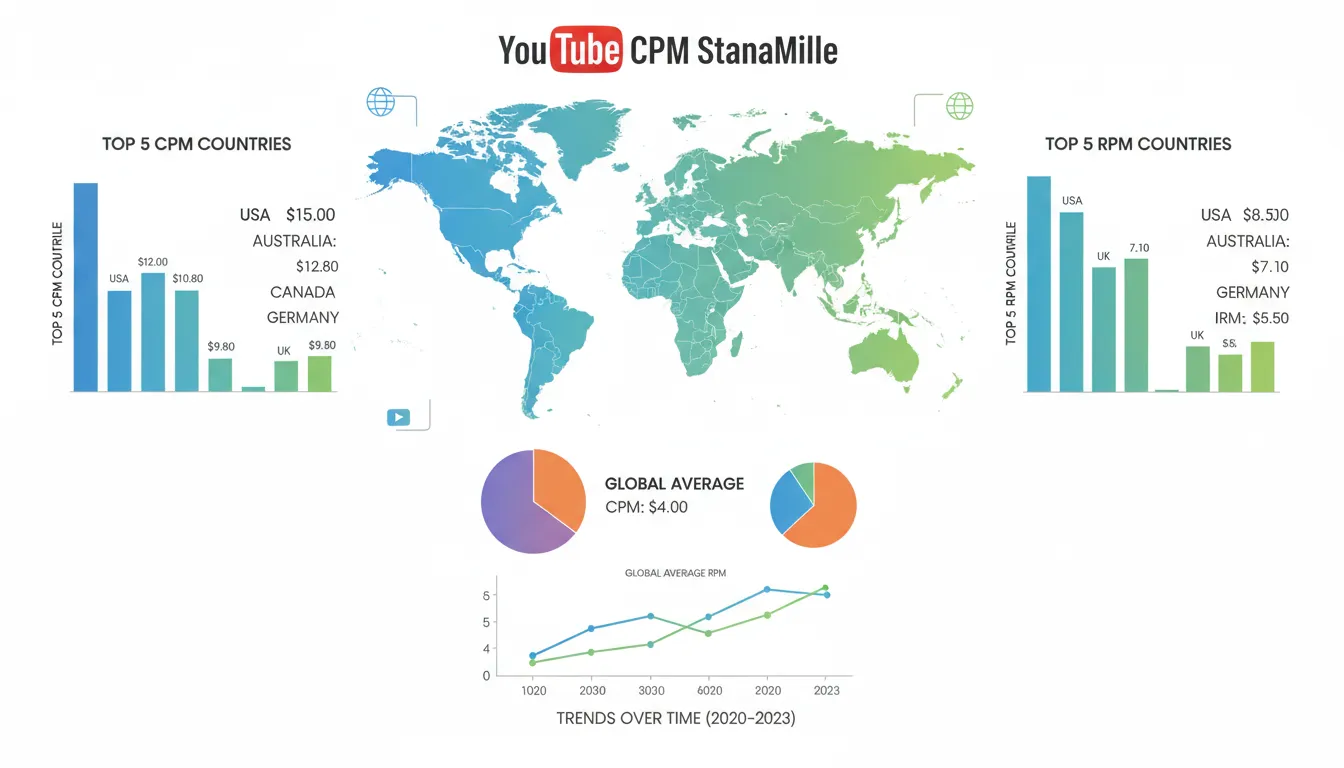
Analyzing the projected YouTube CPM by country in 2026 can provide valuable insights for creators looking to optimize their revenue streams. Here’s a breakdown of some key countries and their expected CPM performance:
| Country | Projected 2026 CPM |
| — | — |
| United States | $15 – $25 |
| Canada | $12 – $20 |
| United Kingdom | $10 – $18 |
| Germany | $8 – $15 |
| Australia | $8 – $14 |
| France | $7 – $12 |
| Japan | $7 – $12 |
| India | $4 – $8 |
| Brazil | $3 – $6 |
As you can see, the United States and Canada are expected to maintain the highest CPM rates in 2026, while emerging markets like India and Brazil have lower projected CPMs. This disparity highlights the importance of understanding your audience’s geographic composition and tailoring your content strategy accordingly.
Key Takeaways
Step-by-Step Guide to Maximizing Your YouTube CPM in 2026
To ensure you’re taking full advantage of the changing CPM landscape in 2026, follow these steps:
1. Analyze Your Audience Demographics: Regularly review your YouTube Analytics to identify the geographic distribution of your viewers. This will help you understand which countries and regions are contributing the most to your overall CPM and RPM.
2. Optimize for High-CPM Locations: If your audience is primarily located in high-CPM countries like the United States or Canada, focus on creating content that resonates with these viewers. This may involve adjusting your tone, topics, and production values to align with the preferences of these higher-paying audiences.
3. Diversify Your Audience: While targeting high-CPM regions is essential, don’t neglect the potential of lower-CPM markets. Expand your reach by creating content that caters to international audiences, particularly in emerging markets. This can help you maintain a balanced revenue stream and potentially unlock new growth opportunities.
4. Leverage YouTube’s Monetization Features: Explore and utilize all of YouTube’s available monetization features, including Super Chat, channel memberships, and YouTube Premium revenue. These additional revenue streams can supplement your ad-based earnings and contribute to your overall RPM.
5. Maintain High-Quality, Engaging Content: Consistently produce high-quality, engaging content that aligns with advertiser preferences. This will not only help you command higher CPMs but also improve your overall YouTube performance and discoverability.
6. Monitor and Adapt: Continuously monitor your YouTube analytics, including CPM and RPM trends, and adjust your content strategy accordingly. Stay informed about industry changes and be prepared to pivot your approach as the YouTube ecosystem evolves.

Pros and Cons of High CPM vs. High Coverage
When it comes to maximizing your YouTube earnings, the balance between high CPM and high monetization coverage can be a delicate one. Consider the following pros and cons:
Pros of High CPM:
– Potential for higher overall revenue per view
– Ability to command premium advertising rates
– Attractiveness to brands and advertisers
Cons of High CPM:
– Potentially lower overall monetization coverage
– Narrower audience and content appeal
– Increased competition for high-CPM audiences
Pros of High Monetization Coverage:
– Consistent and stable revenue stream
– Broader audience and content appeal
– Lower barrier to entry for advertisers
Cons of High Monetization Coverage:
– Lower overall revenue per view
– Potential for lower advertiser interest and CPM rates
The ideal scenario is to strike a balance between high CPM and high monetization coverage, tailoring your content and audience strategy to maximize both metrics. This may involve creating a diverse portfolio of content that caters to various audience segments and advertiser preferences.
Real-World Examples: YouTube CPM and RPM in Action
To illustrate the impact of viewer location on YouTube earnings, let’s consider two hypothetical channels with different audience compositions:
Channel A: High CPM, Low Monetization Coverage
– Audience: 80% United States, 20% Canada
– CPM: $20
– Monetization Coverage: 50%
– RPM: $20 × 0.55 × 0.50 = $5.50
Channel B: Lower CPM, Higher Monetization Coverage
– Audience: 60% India, 40% United States
– CPM: $8
– Monetization Coverage: 65%
– RPM: $8 × 0.55 × 0.65 = $2.86
In this example, Channel A has a higher CPM due to its primarily North American audience, but a lower monetization coverage rate. Conversely, Channel B has a lower CPM but a higher monetization coverage, resulting in a lower overall RPM.
The lesson here is that creators must consider both CPM and monetization coverage when optimizing their YouTube revenue. A balanced approach that targets high-CPM regions while maintaining broad audience appeal can lead to the most sustainable and profitable outcomes.
FAQ
1. How can I determine the current CPM and RPM for my YouTube channel?
To determine your current CPM and RPM, navigate to the YouTube Analytics section of your Creator Studio. There, you’ll find detailed metrics on your ad earnings, including your average CPM and RPM. This data can help you understand your current performance and identify areas for improvement.
2. What factors influence YouTube CPM rates the most?
The primary factors that influence YouTube CPM rates include advertiser competition, viewer targeting and ad relevance, viewer location, content niche and quality, and the overall maturity and monetization options available on the platform.
3. How can I increase my YouTube CPM in 2026?
To increase your YouTube CPM in 2026, focus on the following strategies:
– Analyze your audience demographics and optimize for high-CPM regions
– Diversify your audience to include international viewers
– Leverage all of YouTube’s monetization features
– Maintain high-quality, engaging content that aligns with advertiser preferences
– Continuously monitor and adapt your content and audience strategy
4. What is the difference between CPM and RPM, and why is it important to understand both?
CPM (Cost Per Mille) is the amount advertisers pay per 1,000 video impressions, while RPM (Revenue Per Mille) is the amount creators earn per 1,000 video views, after YouTube’s 45% revenue share. Understanding both metrics is crucial because CPM represents the pre-revenue share rate, while RPM reflects the actual earnings creators receive. Optimizing for both can help creators maximize their overall YouTube earnings.
5. How can creators with a global audience balance the differences in CPM across countries?
Creators with a global audience can balance the differences in CPM across countries by:
– Analyzing their audience demographics to understand the geographic distribution of their viewers
– Prioritizing content creation for high-CPM regions while also diversifying their reach to include lower-CPM markets
– Leveraging YouTube’s monetization features, such as channel memberships and Super Chat, to supplement their ad-based earnings
– Continuously monitoring their analytics and adjusting their content and audience strategy accordingly
Conclusion
As the YouTube ecosystem continues to evolve, understanding the nuances of CPM and RPM will be crucial for creators looking to maximize their revenue in 2026. By analyzing audience demographics, targeting high-CPM regions, diversifying your reach, and maintaining high-quality content, you can position your channel for success and unlock the highest-paying opportunities on the platform.
Remember, the key is to strike a balance between CPM and monetization coverage, ensuring a sustainable and profitable revenue stream. Stay informed, adapt your strategy, and embrace the changing landscape of YouTube earnings – the path to financial success awaits.
Advertisement
