

As a YouTube creator, understanding the revenue share percentage across different monetization features is crucial for maximizing your channel’s earning potential. In 2026, the landscape of YouTube creator revenue share is expected to evolve, with changes in the partner program, Shorts, and other monetization options.
In this comprehensive guide, we’ll dive deep into the latest YouTube creator revenue share percentages for ads, Shorts, channel memberships, and more, providing you with the insights you need to make the most of your YouTube monetization strategy.
What Is YouTube Creator Revenue Share?
YouTube creator revenue share refers to the percentage of revenue that creators receive from the various monetization features available on the platform. This includes revenue generated from advertisements, Shorts, channel memberships, Super Chat, and YouTube Premium.
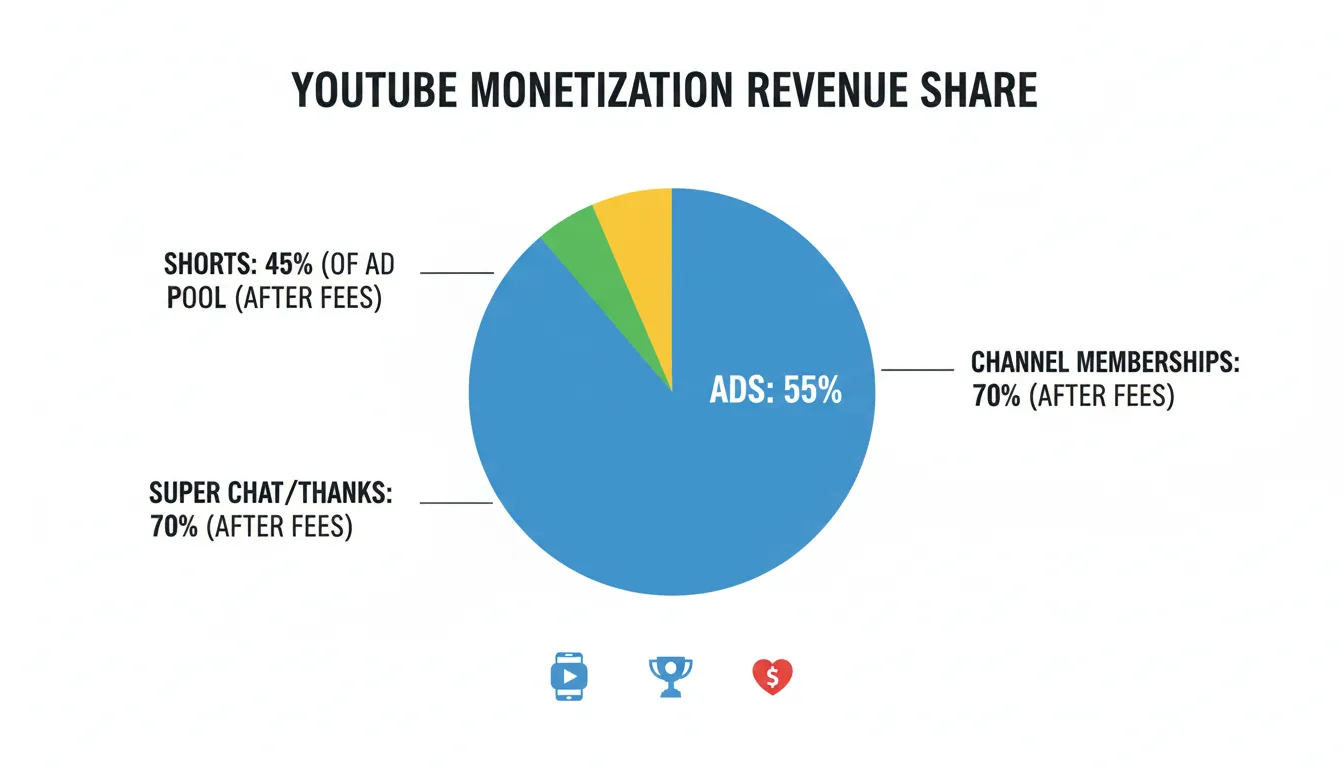
The YouTube Partner Program (YPP) is the primary way for creators to monetize their content. Under this program, creators keep 55% of the ad revenue generated on their videos, while YouTube retains the remaining 45%.
However, the revenue share model can vary across different monetization features, as we’ll explore in the sections below.
YouTube Creator Revenue Share Percentages in 2026
Ads
– Creator Share: 55%
– YouTube Share: 45%
– Notes: The traditional YouTube Partner Program revenue share for ads remains the same in 2026.
YouTube Shorts
– Creator Share: 45%
– YouTube Share: 55%
– Notes: The revenue share for Shorts is different from the long-form video ad revenue split, with creators keeping a smaller percentage.
Channel Memberships
– Creator Share: 70%
– YouTube Share: 30%
– Notes: Creators keep a larger portion of the revenue generated through channel memberships, which allow fans to access exclusive content and perks.
Super Thanks/Super Chat
– Creator Share: 70%
– YouTube Share: 30%
– Notes: Similar to channel memberships, creators receive 70% of the revenue from Super Thanks and Super Chat, which are viewer-initiated payments during live streams and premieres.
YouTube Premium
– Creator Share: Proportional to watch time
– YouTube Share: N/A
– Notes: YouTube Premium revenue is distributed among creators based on the proportion of watch time their content receives from Premium subscribers.
To better understand the differences, let’s compare the revenue share percentages in a table format:
| Feature | Creator % | YouTube % | Notes |
| — | — | — | — |
| Ads | 55% | 45% | Traditional YouTube Partner Program revenue share |
| Shorts | 45% | 55% | Different revenue split from long-form video ads |
| Channel Memberships | 70% | 30% | Creators keep a larger portion of membership revenue |
| Super Thanks/Super Chat | 70% | 30% | Creators receive 70% of viewer-initiated payments |
| YouTube Premium | Proportional to watch time | N/A | Revenue distributed based on watch time from Premium subscribers |
It’s important to note that the revenue share percentages mentioned above are expected to be in effect by 2026. However, YouTube may adjust these figures in the future based on market conditions, creator feedback, and platform updates.
Understanding RPM vs. CPM
When discussing YouTube creator revenue, it’s crucial to understand the difference between RPM (Revenue Per Mille) and CPM (Cost Per Mille).
RPM is the post-revenue-share metric, representing the actual amount a creator earns per 1,000 video views. This figure takes into account the revenue share percentages, meaning it’s the amount you’ll see in your YouTube Analytics.
On the other hand, CPM is the pre-revenue-share advertiser cost, which represents the amount an advertiser pays per 1,000 ad impressions. This is the figure that advertisers and media buyers typically use when planning their campaigns.
By understanding the distinction between RPM and CPM, you can better interpret your YouTube analytics and make more informed decisions about your monetization strategy.
YouTube Creator Revenue Share: Maximizing Your Earnings
To maximize your YouTube creator revenue share, consider the following strategies:
1. Diversify your monetization sources: Utilize a mix of ad revenue, Shorts, channel memberships, Super Thanks/Super Chat, and YouTube Premium to create a well-rounded monetization strategy.
2. Optimize for ad placements and engagement: Ensure your videos are optimized for ad placement and viewer engagement, as this can directly impact your ad revenue.
3. Encourage channel memberships and Super Chat/Super Thanks: Actively promote your channel memberships and engage with your audience during live streams and premieres to generate additional revenue.
4. Produce high-quality Shorts content: Invest time and resources into creating compelling Shorts content, as this can contribute to your overall revenue share, even though the split is less favorable than long-form ads.
5. Analyze and adjust your strategy: Regularly review your YouTube analytics to identify opportunities for improvement and make data-driven decisions about your monetization approach.
By understanding the latest YouTube creator revenue share percentages and leveraging the right strategies, you can maximize your earning potential and build a sustainable, profitable YouTube channel.
Key Takeaways
Real-World Examples
Case Study: Successful Shorts Creator
Sarah, a popular YouTuber, has been consistently creating high-performing Shorts content. Despite the lower 45% revenue share for Shorts, Sarah has managed to generate a significant portion of her overall income from this format. By leveraging Shorts to drive audience engagement and cross-promote her long-form content, Sarah has seen a steady increase in her overall YouTube earnings.
Case Study: Diversified Monetization Approach
John, a mid-sized YouTuber, has adopted a diversified monetization strategy. In addition to optimizing his videos for ad revenue, he has also actively grown his channel membership program and encouraged his audience to participate in Super Chat and Super Thanks during live streams. By utilizing multiple revenue streams, John has been able to maintain a healthy and consistent income from his YouTube channel, even as the platform’s policies and features evolve over time.

Frequently Asked Questions
1. What is the current YouTube creator revenue share percentage for ads?
– The current YouTube creator revenue share for ads is 55%, with YouTube retaining the remaining 45%.
2. How does the revenue share for YouTube Shorts differ from long-form videos?
– The revenue share for YouTube Shorts is 45% for creators and 55% for YouTube, which is different from the 55/45 split for long-form video ads.
3. Can creators earn more from channel memberships and Super Chat/Super Thanks?
– Yes, creators can earn a higher percentage of revenue from channel memberships (70% for creators) and Super Chat/Super Thanks (also 70% for creators) compared to the traditional ad revenue split.
4. How is YouTube Premium revenue distributed among creators?
– YouTube Premium revenue is distributed among creators based on the proportion of watch time their content receives from Premium subscribers. Creators do not have a fixed percentage, but rather earn a share proportional to their watch time.
5. What is the difference between RPM and CPM, and why is it important to understand?
– RPM (Revenue Per Mille) is the post-revenue-share metric that represents the actual amount a creator earns per 1,000 video views. CPM (Cost Per Mille) is the pre-revenue-share advertiser cost, which represents the amount an advertiser pays per 1,000 ad impressions. Understanding the difference between these two metrics can help creators better interpret their YouTube analytics and make more informed decisions about their monetization strategy.
Conclusion
As the YouTube platform continues to evolve, understanding the latest creator revenue share percentages is crucial for maximizing your earning potential. By diversifying your monetization sources, optimizing your content for engagement, and leveraging the unique features of the platform, you can position your YouTube channel for long-term success.
Remember to stay informed about the latest changes and trends in the YouTube creator economy, and regularly review your analytics to identify opportunities for growth. With the right strategy and a commitment to creating high-quality content, you can thrive in the ever-changing world of YouTube monetization.
To learn more about YouTube creator monetization, be sure to check out our [Monetization Glossary](https://mykitchenincome.com/youtube-monetization-glossary/), where you’ll find in-depth explanations of key concepts and terms.
Advertisement
