

Unlock the AI Advantage: The Practical Tool Stack for UK Small Businesses in 2026
In the rapidly evolving world of technology, artificial intelligence (AI) has become a game-changer for businesses of all sizes. For UK-based small and medium enterprises (SMEs), the potential of AI to streamline operations, enhance decision-making, and drive growth is more accessible than ever before.
What AI Tools Can Do for SMEs
As an SME owner or solo founder in the UK, you may be wondering how AI can benefit your business. The truth is, AI tools can help in a variety of ways:
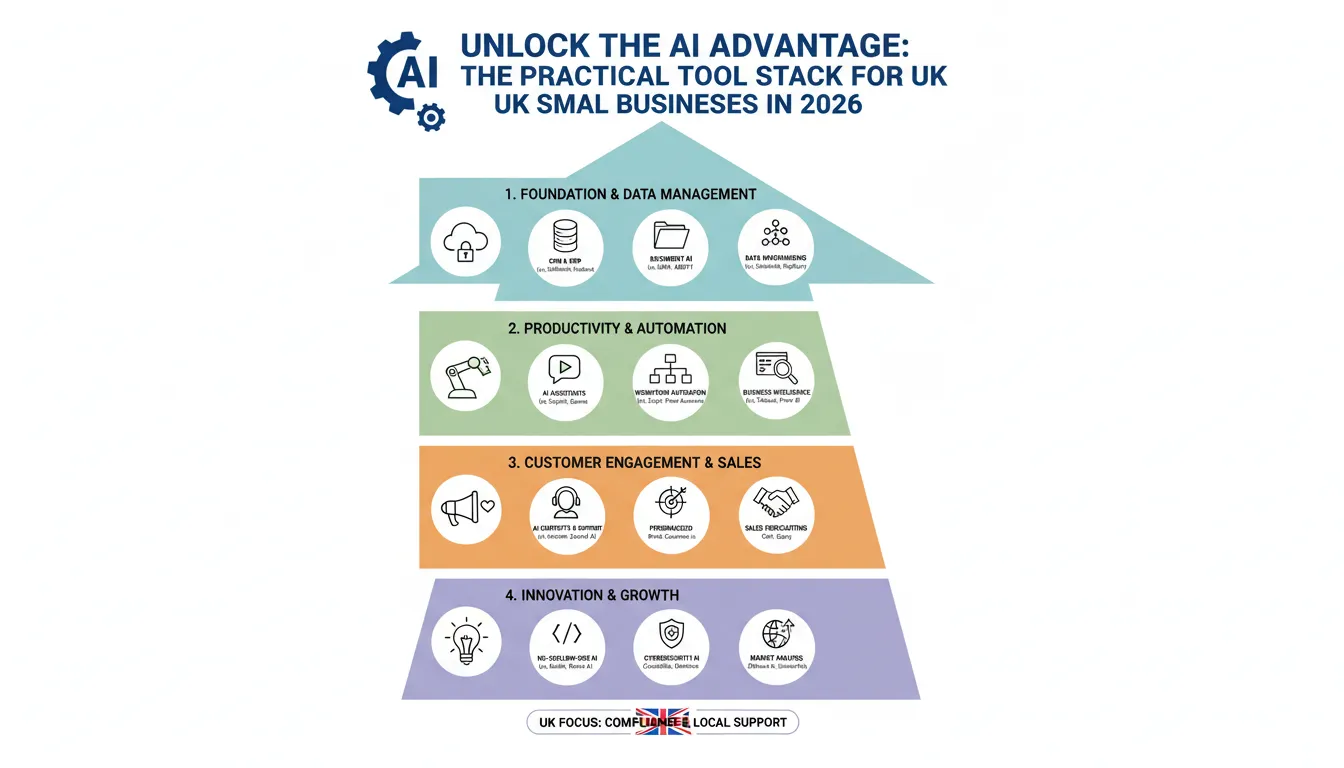
Automation: AI-powered tools can automate repetitive tasks, such as customer service, scheduling, and data entry, freeing up your time to focus on more strategic aspects of your business.
Analytics: AI can provide deep insights into your data, helping you make more informed decisions about marketing, sales, and operations.
Content Creation: AI-powered tools can assist with generating high-quality content, such as blog posts, social media updates, and even product descriptions, saving you valuable time and resources.
The Best AI Tools by Job Function
Now that you understand the potential of AI for your UK-based small business, let’s dive into some of the best tools for specific job functions:
Marketing
– Chatbots (e.g., Dialogflow, Chatfuel) for automated customer engagement
– AI-powered content creation (e.g., Jasper, GPT-3) for blog posts, social media, and more
– Predictive analytics (e.g., Google Analytics, Mixpanel) to optimize your marketing campaigns
Customer Service
– Chatbots (e.g., Intercom, Drift) for 24/7 customer support
– Sentiment analysis (e.g., Repustate, Lexalytics) to understand customer feedback
– Automated ticket triage and assignment (e.g., Zendesk, Freshdesk)
Operations
– Intelligent automation (e.g., Zapier, IFTTT) to streamline workflows
– AI-powered scheduling (e.g., Calendly, x.ai) to optimize appointments and meetings
– Invoice and expense management (e.g., Receipt Bank, Dext) with AI-powered data extraction
Analytics
– Predictive analytics (e.g., Tableau, Power BI) to forecast trends and identify opportunities
– Natural Language Processing (e.g., Linguamatics, spaCy) to analyze unstructured data
– Anomaly detection (e.g., Dataiku, Outlier) to identify potential issues or areas for improvement
How to Pick the Right AI Tools
When selecting AI tools for your UK small business, consider the following factors:
Cost: Look for tools that fit within your budget, whether that’s a free or low-cost option or a more enterprise-level solution.
Setup Time: Choose tools that are easy to implement and integrate with your existing systems, minimizing the time and effort required to get up and running.
Data Sensitivity: If you’re handling sensitive customer or financial data, ensure that the AI tools you select comply with GDPR regulations and have robust data protection measures in place.
The Starter AI Stack for UK SMEs
If you’re new to AI tools, here’s a suggested “starter stack” to get you going:
Free/Cheap Options:
– Chatbots: Dialogflow (Google) or Chatfuel
– Content Creation: Jasper or Rytr
– Automation: Zapier or IFTTT
– Analytics: Google Analytics or Mixpanel
Paid Tools:
– Customer Service: Intercom or Freshdesk
– Predictive Analytics: Tableau or Power BI
– Invoice Management: Receipt Bank or Dext
Remember, the best AI tools for your UK small business will depend on your specific needs and goals. Start with the basics, and as your business grows, you can explore more advanced solutions to help you stay ahead of the curve.
FAQ
1. How much time and money can AI tools really save my UK small business?
The time and cost savings from AI tools can be significant. For example, automating routine tasks like customer service or data entry can free up several hours per week, allowing you to focus on higher-value work. Additionally, AI-powered analytics can provide insights that lead to more informed decisions, ultimately boosting your bottom line.
2. Is it difficult to set up and use AI tools in my UK small business?
Many AI tools are designed to be user-friendly, with intuitive interfaces and step-by-step guidance. While the initial setup may require some time and effort, the long-term benefits often outweigh the initial investment. Look for tools that integrate seamlessly with your existing systems and provide good customer support to help you get up and running.
3. How do I ensure my UK small business is GDPR-compliant when using AI tools?
When using AI tools that handle sensitive customer or financial data, it’s crucial to ensure compliance with GDPR regulations. Look for tools that have robust data protection measures, such as end-to-end encryption, secure data storage, and transparency around data usage. Additionally, be sure to review your own data handling processes and obtain the necessary consent from your customers.
4. What are the best AI tools for UK small businesses in specific industries?
The best AI tools for your UK small business will depend on your industry and specific needs. For example, service-based businesses may benefit more from chatbots and customer service automation, while e-commerce businesses could leverage AI-powered product recommendations and content generation. It’s always a good idea to research and test different tools to find the ones that work best for your unique business.
Advertisement
