

The UK property market has long been a reliable source of investment returns, and as we move into 2026, the opportunities for savvy investors continue to grow. Whether you’re a seasoned landlord or a newcomer to the world of real estate, this comprehensive guide will provide you with the insights and strategies you need to maximize your profits in the UK property market.
What Is Property Investment?
Property investment refers to the acquisition of real estate with the goal of generating income or capital appreciation. In the UK, there are several popular investment strategies, including buy-to-let, house flipping, and real estate investment trusts (REITs). Each approach offers its own unique set of benefits and challenges, and the best strategy for you will depend on your investment goals, risk tolerance, and financial resources.
Buy-to-Let: Generating Rental Income
One of the most well-known and established property investment strategies in the UK is buy-to-let. This involves purchasing a residential property, typically a flat or house, and renting it out to tenants. The primary goal of buy-to-let is to generate a steady stream of rental income, which can then be used to cover the mortgage payments and other expenses associated with the property.
According to Rightmove, the average buy-to-let gross rental yield in the UK was 6.3% in 2025. However, some regions, such as Liverpool (8.9%), Manchester (7.4%), and Sheffield (7.1%), have consistently higher rental yields, making them attractive options for buy-to-let investors.
To succeed in the buy-to-let market, it’s essential to carefully research the local market, identify properties with strong rental potential, and manage the property efficiently. This may involve finding reliable tenants, handling maintenance and repairs, and navigating the legal and tax implications of being a landlord.

House Flipping: Capitalizing on Property Appreciation
Another popular property investment strategy in the UK is house flipping, which involves purchasing a property, renovating or improving it, and then selling it for a profit. The goal of house flipping is to capitalize on the potential for property appreciation, taking advantage of the difference between the purchase price and the sale price.
According to industry data, the average profit from a house flipping deal in the UK can range from £30,000 to £60,000, depending on the property’s location, condition, and the extent of the renovations. However, it’s important to note that house flipping also carries additional risks, such as unexpected construction costs, delays, and fluctuations in the housing market.
To succeed in house flipping, investors need to have a keen eye for undervalued properties with significant potential for improvement, as well as the financial resources and project management skills to execute a successful renovation.
Key Takeaways
Real Estate Investment Trusts (REITs)
For investors who want to gain exposure to the UK property market without the hands-on responsibilities of managing a physical asset, real estate investment trusts (REITs) can be a compelling option. REITs are publicly traded companies that own and operate income-producing real estate, such as office buildings, shopping malls, and apartment complexes.
Investing in a REIT allows individuals to participate in the potential growth and returns of the UK property market, without the need for a large upfront investment or the day-to-day management of a property. REITs can be purchased through a stockbroker or investment platform, and they typically offer the potential for regular dividend payments.

Property Crowdfunding
Another innovative way to invest in the UK property market is through property crowdfunding platforms. These platforms allow individuals to pool their resources and invest in shares of investment properties, often with a lower barrier to entry than traditional property investment.
Property crowdfunding platforms can offer investors the opportunity to diversify their portfolio, gain exposure to the property market, and potentially earn returns through rental income and capital appreciation. However, it’s important to carefully research the platform, understand the risks involved, and seek professional advice before investing.
Comparing Investment Returns
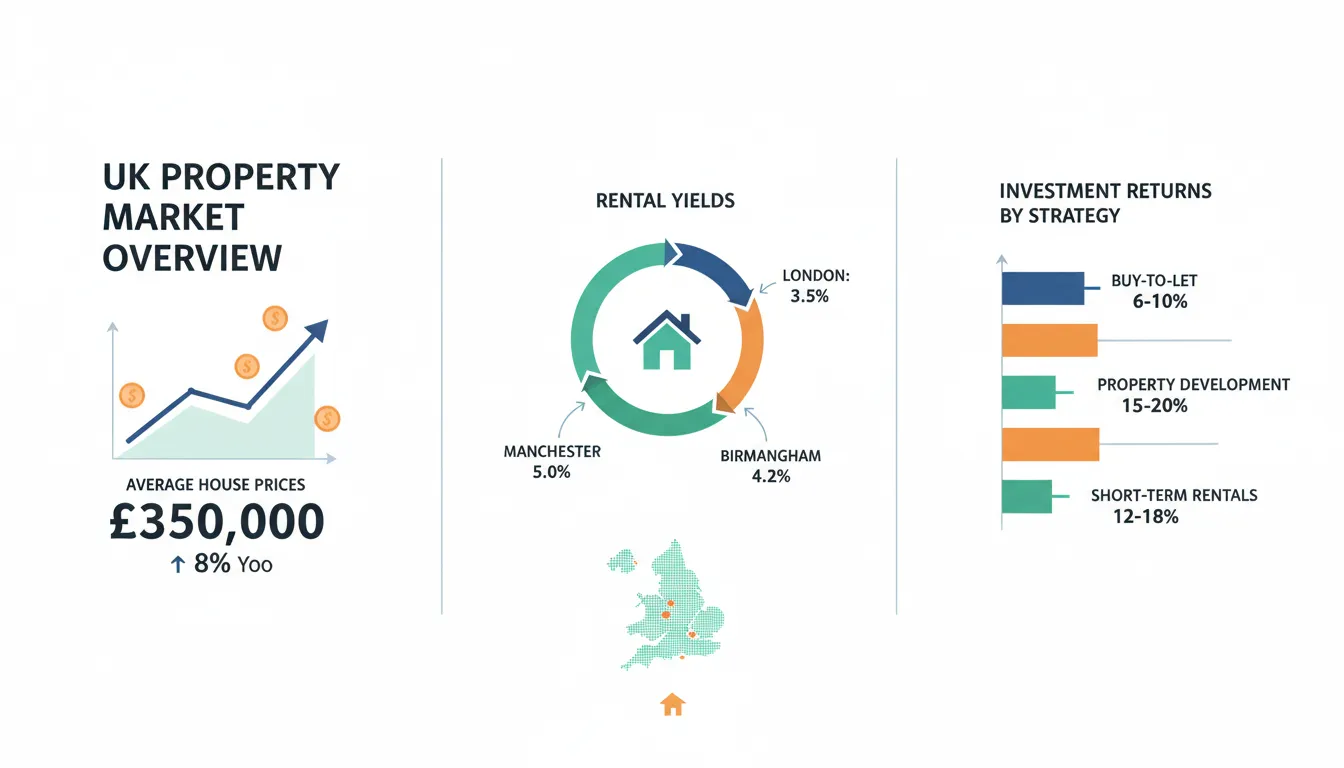
When it comes to property investment in the UK, the potential returns can vary significantly depending on the strategy you choose. To help you compare the different options, let’s take a look at a high-level comparison of the potential returns for each approach:
| Investment Strategy | Potential Returns |
| — | — |
| Buy-to-Let | 6-9% annual rental yield, plus potential for capital appreciation |
| House Flipping | £30,000 – £60,000 average profit per deal |
| REITs | Typically 3-7% annual dividend yield, plus potential for capital appreciation |
| Property Crowdfunding | 5-8% annual returns, plus potential for capital appreciation |
It’s important to note that these figures are meant to provide a general overview and can vary depending on numerous factors, such as location, market conditions, and individual investment performance.
Pros and Cons of UK Property Investment
As with any investment, property investment in the UK comes with its own set of advantages and disadvantages. Let’s take a closer look at the key pros and cons:
Pros:
– Potential for stable and consistent rental income
– Opportunity for capital appreciation as property values increase
– Diversification of investment portfolio
– Potential tax benefits for certain investment strategies
– Tangible asset that can be actively managed
Cons:
– High upfront investment required for property purchases
– Ongoing maintenance and management responsibilities
– Exposure to market fluctuations and changes in the housing market
– Potential for tenant-related issues, such as late payments or property damage
– Regulatory and legal complexities associated with being a landlord
Real-World Examples and Case Studies
To provide a more concrete understanding of the potential of UK property investment, let’s explore a few real-world examples and case studies:
Case Study: Buy-to-Let Investment in Liverpool
In 2025, Sarah, a first-time landlord, purchased a two-bedroom flat in Liverpool for £150,000. After conducting market research, she determined that the property could be rented out for £850 per month. With a mortgage payment of £550 per month and other expenses, Sarah’s net rental income was £200 per month, resulting in an annual yield of 8.0%.
Over the next five years, the property’s value increased by 15%, and Sarah was able to sell it for £172,500, generating an additional capital gain of £22,500.
Case Study: House Flipping in Manchester
In 2024, John, an experienced property investor, purchased a three-bedroom house in Manchester for £200,000. He invested an additional £40,000 in renovations, transforming the dated property into a modern, desirable home. After six months, John sold the property for £280,000, realizing a profit of £40,000.
John’s success in the house flipping project was due to his ability to accurately assess the property’s potential, manage the renovation process effectively, and time the sale to coincide with favorable market conditions.
Case Study: REIT Investment in London
In 2025, Sarah, a busy professional, decided to invest in the UK property market through a REIT. She selected a well-established REIT that specializes in commercial real estate, such as office buildings and shopping centers in London.
Over the course of the year, Sarah’s REIT investment generated a 5.2% dividend yield, and the share price also increased by 8%, resulting in a total return of 13.2%. Sarah was able to participate in the growth of the UK property market without the hands-on responsibilities of managing a physical asset.
Frequently Asked Questions
1. What is the current state of the UK property market?
According to the latest data from the Land Registry, the average UK house price in January 2026 was £268,000, reflecting a steady increase over the past few years. The market has remained relatively stable, with strong demand driving price growth in many regions, particularly in urban centers and areas with good transport links.
2. How can I get started in property investment in the UK?
To get started in property investment, it’s important to educate yourself on the different investment strategies, understand the legal and tax implications, and develop a solid investment plan. This may involve conducting market research, exploring financing options, and seeking advice from experienced investors or professionals, such as mortgage brokers, solicitors, and accountants.
3. What are the key considerations for a successful buy-to-let investment?
When investing in a buy-to-let property, some key considerations include location, property condition, rental demand, and the potential for capital appreciation. It’s also important to understand the legal and tax requirements for landlords, as well as the ongoing responsibilities of property management, such as finding reliable tenants and handling maintenance and repairs.
4. How can I minimize the risks of house flipping?
To minimize the risks of house flipping, it’s essential to thoroughly research the property, budget accurately for the renovation costs, and have a clear exit strategy in place. It’s also important to factor in market fluctuations, unexpected delays, and the potential for cost overruns. Seeking advice from experienced flippers or working with a trusted contractor can also help mitigate the risks.
5. What are the benefits of investing in a REIT?
Investing in a REIT offers several benefits, including exposure to the UK property market without the need for direct ownership or management responsibilities. REITs typically provide regular dividend payments, the potential for capital appreciation, and the ability to diversify your investment portfolio. However, it’s important to carefully research the REIT, its management team, and its investment strategies before investing.
Conclusion
The UK property market continues to offer a range of investment opportunities for those looking to generate income and build wealth. Whether you’re interested in buy-to-let, house flipping, REITs, or property crowdfunding, there are numerous strategies and approaches to explore.
By carefully researching the market, understanding the risks and rewards of each investment type, and seeking professional advice, you can position yourself for success in the UK property investment landscape. So, what are you waiting for? Start your journey to financial freedom through property investment today!
Advertisement
