

Starting a food business from home in the UK can be an exciting and rewarding venture, but navigating the legal and licensing landscape can feel daunting. Whether you’re dreaming of launching a thriving home-based catering service, a cottage industry baked goods business, or an online food delivery empire, it’s crucial to understand the mandatory requirements and regulations you’ll need to follow.
In this comprehensive guide, we’ll dive deep into the essential kitchen business license requirements for home food entrepreneurs in the UK. From mandatory registration with your local council to essential food hygiene training and allergen labeling, we’ve got you covered. By the end, you’ll have a clear roadmap to ensure your new food venture starts on the right foot and stays compliant every step of the way.
What Is a Kitchen Business License?
In the UK, there is no single “kitchen business license” per se. Instead, the legal and regulatory requirements for starting a food business from home fall under a few key categories:
1. Registration with Local Council: All home food businesses in the UK must register with their local council or authority before beginning operations. This process is free and must be completed at least 28 days before your intended start date.
2. Food Hygiene Training: Any individual handling or preparing food for sale must complete a recognized food hygiene training course, typically the Level 2 Award in Food Safety. This ensures you have the knowledge to maintain proper food safety and hygiene standards.
3. Allergen Labeling: Under Natasha’s Law, which came into effect in October 2021, all prepacked for direct sale (PPDS) food items must display a full list of ingredients, including any allergens present.
4. Compliance with Food Standards Agency (FSA) Guidelines: As a home food business, you’ll need to follow the FSA’s regulations and recommendations for safe food preparation, storage, and handling.
While there’s no single “license” per se, ensuring you meet all these requirements is essential for legally operating a kitchen-based food business in the UK. Failure to comply can result in fines or even prosecution.
Step-by-Step Guide to Getting Your Kitchen Business License
Ready to turn your culinary dreams into a thriving reality? Let’s walk through the key steps to getting your kitchen business up and running in the UK:
1. Register with Your Local Council
The first and most crucial step is to register your home food business with your local council or authority. This mandatory process is free and must be completed at least 28 days before you begin operations.
To register, you’ll typically need to provide details about your business, the types of food you’ll be producing, and the facilities you’ll be using. Your local council may also want to inspect your kitchen to ensure it meets their food safety standards.
Once registered, you’ll receive a confirmation that can be used as proof of your legal status as a food business.
2. Complete Food Hygiene Training
All individuals involved in handling or preparing food for sale must hold a valid food hygiene certificate. The most common qualification is the Level 2 Award in Food Safety, which typically takes a day to complete and costs around £25.
This training covers essential topics like food contamination, personal hygiene, safe food preparation, and more. By demonstrating your knowledge of food safety best practices, you’ll not only meet legal requirements but also give your customers peace of mind.
3. Comply with Allergen Labeling Rules
In October 2021, the UK introduced Natasha’s Law, which requires all prepacked for direct sale (PPDS) food items to display a full list of ingredients, including any allergens present. This applies to any food you produce and sell directly to consumers, whether online, at a market, or from your home.
To comply, you’ll need to carefully review the contents of your recipes, identify any potential allergens, and ensure this information is clearly labeled on your packaging. Maintaining detailed records of your ingredients and processes is also recommended.
4. Follow Food Standards Agency (FSA) Guidelines
As a home food business, you’ll need to adhere to the Food Standards Agency’s (FSA) regulations and recommendations for safe food preparation, storage, and handling. This includes:
– Maintaining appropriate temperature controls for perishable foods
– Implementing robust cleaning and sanitization procedures
– Ensuring proper pest control measures are in place
– Providing adequate hand-washing facilities
– Keeping detailed records of your processes and procedures
The FSA provides comprehensive guidance on their website to help home food businesses like yours stay compliant.
5. Consider Business Rates and Tax Implications
Depending on the scale and turnover of your home food business, you may also need to factor in business rates and tax obligations. As a general rule:
– If your annual turnover exceeds £15,000, you may be liable for business rates. Check with your local council for the latest thresholds and requirements.
– For self-employed individuals, the HMRC’s trading allowance provides a £1,000 tax-free threshold before self-assessment tax returns are required.
Be sure to research the specific tax and financial implications for your home food business and consult with an accountant or tax professional if needed.

Tools and Resources for UK Home Food Businesses
As you navigate the legal and regulatory landscape of starting a kitchen-based food business in the UK, there are a number of helpful tools and resources to support you:
1. Local Council Websites: Your local council or authority’s website will be your go-to source for information on the registration process, food safety requirements, and any specific guidelines or forms you’ll need to complete.
2. Food Standards Agency (FSA): The FSA’s website is a wealth of information, offering detailed guidance on food hygiene, allergen labeling, and other legal obligations for home food businesses.
3. Food Hygiene Training Providers: Look for recognized training providers that offer the Level 2 Award in Food Safety, either in-person or online. This will ensure your certification meets the required standards.
4. Business Support Organizations: Groups like the Federation of Small Businesses (FSB) and Enterprise Nation can provide valuable advice and resources for starting and growing a home-based food venture.
5. Industry Associations: Joining relevant industry associations, such as the National Association of Catering Businesses (NACB) or the Craft Bakers Association, can connect you with a network of fellow home food entrepreneurs.
6. Legal and Financial Advisors: Consulting with a solicitor or accountant who specializes in small businesses and food enterprises can help ensure you’re fully compliant and set up for long-term success.
Remember, taking the time to thoroughly research and prepare for the legal and regulatory requirements of a home food business is an essential investment in your future success.
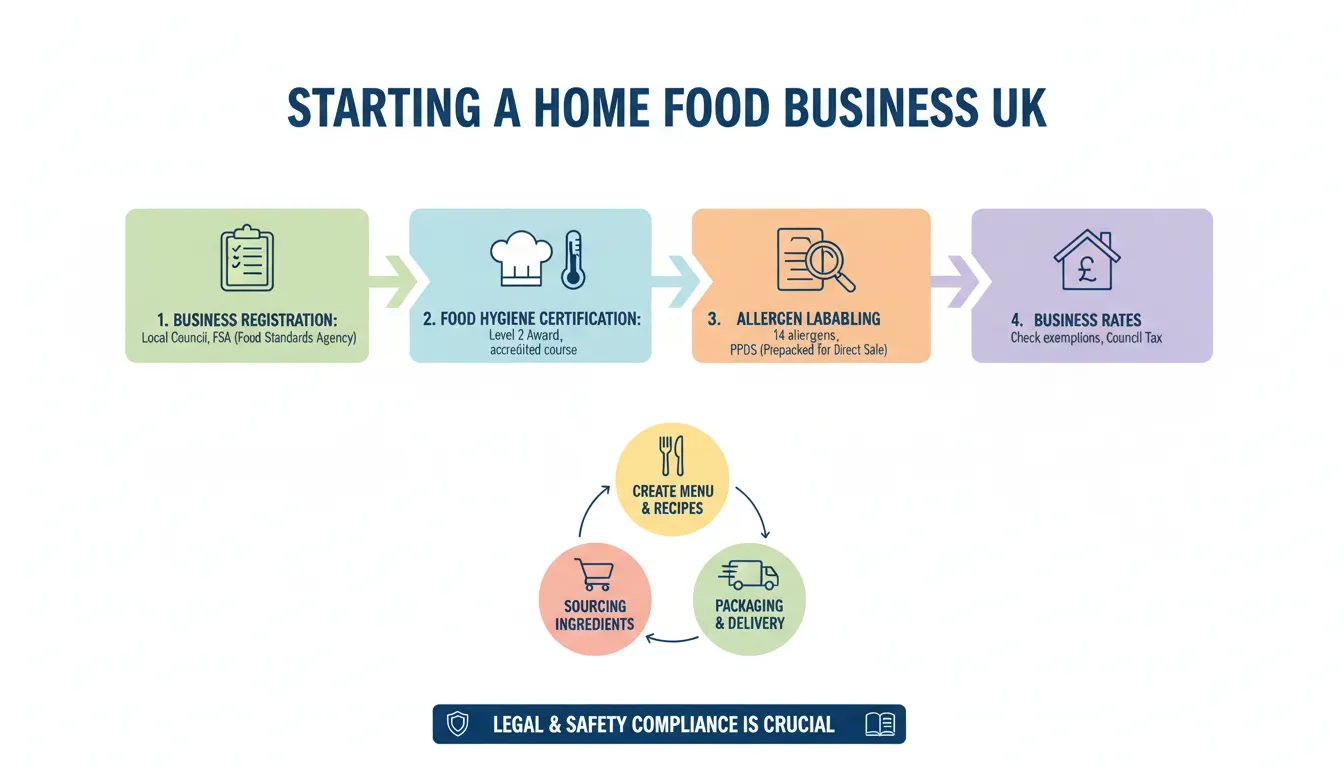
Key Takeaways
Pros and Cons of Starting a Kitchen Business in the UK
As with any entrepreneurial venture, starting a kitchen-based food business in the UK comes with its own set of advantages and challenges. Let’s take a closer look:
Pros:
– Low Startup Costs: Many home food businesses can be launched with a relatively modest investment, especially compared to opening a traditional brick-and-mortar restaurant.
– Flexibility and Work-Life Balance: Operating a food business from your home can offer greater flexibility and the ability to better balance work and personal responsibilities.
– Tapping into Growing Trends: The demand for homemade, artisanal, and locally sourced food products continues to rise, giving home food entrepreneurs a prime opportunity to capitalize on these trends.
– Potential for High Profit Margins: Depending on your product offerings and target market, home food businesses can potentially achieve impressive profit margins.
Cons:
– Navigating Legal and Regulatory Requirements: Ensuring full compliance with registration, food safety, and labeling regulations can be time-consuming and require ongoing diligence.
– Limited Production Capacity: The scale and output of a home-based kitchen may be constrained compared to a dedicated commercial facility.
– Potential for Zoning or Licensing Restrictions: Depending on your location, your local council may have specific zoning laws or additional licensing requirements for home-based food businesses.
– Increased Competition: As the home food business trend continues to grow, you may face stiff competition from other entrepreneurs in your local market.
Overall, the pros of starting a kitchen-based food business in the UK can outweigh the cons, especially for entrepreneurs willing to invest the time and effort to understand and comply with the necessary legal and regulatory requirements.

Real-World Examples of Successful UK Home Food Businesses
Curious to see how other home food entrepreneurs in the UK have navigated the licensing and legal landscape? Let’s take a look at a few inspiring real-world examples:
Gourmet Brownie Co.
Launched in 2016, Gourmet Brownie Co. is a home-based baking business founded by Jess Seagrief in Nottinghamshire. After completing her food hygiene training and registering with the local council, Jess began selling her artisanal brownie creations online and at local markets. Today, Gourmet Brownie Co. has a thriving e-commerce business and a growing wholesale client base, all while operating out of Jess’s home kitchen.
The Spice Pioneer
Based in London, The Spice Pioneer is an online retailer of premium spice blends and seasonings, founded by husband-and-wife team Nicky and Olivier. To comply with the UK’s food business regulations, they registered their home-based operations with their local council, obtained the necessary food hygiene certifications, and ensured their packaging met allergen labeling requirements. The Spice Pioneer has since grown into a successful e-commerce brand with a loyal customer base.
Artisan Preserves
Launched in 2018, Artisan Preserves is a home-based small-batch jam and chutney business run by Julie Thornton from her kitchen in Cumbria. After completing her food safety training and registering with the local authority, Julie began selling her preserves at farmers’ markets and through an online shop. Artisan Preserves has since expanded its product range and distribution, all while maintaining its commitment to high-quality, locally sourced ingredients.
These examples demonstrate that with the right knowledge, preparation, and dedication to food safety and compliance, home-based food entrepreneurs in the UK can build thriving, scalable businesses. By following the key licensing and regulatory steps outlined in this guide, you too can turn your culinary passion into a successful kitchen-based venture.
FAQ
Do I need a license to sell homemade food in the UK?
Yes, all home food businesses in the UK must be registered with the local council or authority, at minimum 28 days before starting operations. This free registration process is a legal requirement, along with obtaining a food hygiene certificate and complying with allergen labeling rules.
How much does it cost to get a food business license in the UK?
The registration process with your local council is typically free for home food businesses. However, you may need to factor in the cost of food hygiene training (around £25 for the Level 2 Award) and any potential business rates if your annual turnover exceeds £15,000.
What food hygiene certificate do I need for a home business in the UK?
The most common qualification is the Level 2 Award in Food Safety, which covers essential food hygiene and safety practices. This one-day training course is required for any individual handling or preparing food for sale in the UK.
Do I need a food hygiene certificate to sell homemade food from home?
Yes, a valid food hygiene certificate is a mandatory requirement for anyone involved in the production and sale of homemade food items in the UK, whether operating from a home kitchen or a commercial facility.
How do I register a food business from home in the UK?
To register your home food business, you’ll need to contact your local council or authority. They will typically require details about your business, the types of food you’ll be producing, and information about your kitchen facilities. Once registered, you’ll receive confirmation that can be used as proof of your legal status.
Conclusion: Take the First Step to Launching Your UK Home Food Business
Starting a kitchen-based food business in the UK is an exciting entrepreneurial journey, but navigating the legal and regulatory landscape is crucial to ensuring long-term success. By understanding the key requirements – from mandatory registration to food hygiene training and allergen labeling – you’ll be well on your way to turning your culinary dreams into a thriving reality.
Remember, taking the time to properly prepare and comply with all the necessary steps is an investment in the future of your business. With the right knowledge, resources, and dedication, you can establish a home food venture that not only meets legal standards but also delights your customers and stands the test of time.
So, what are you waiting for? Take the first step today and get your kitchen business license in the UK. With the information and guidance provided in this comprehensive guide, you’ll be on your way to launching a successful, compliant, and delicious home food enterprise. Good luck!
Advertisement
