

South Korean creators are leaving money on the table. A typical Korean-language YouTube channel earns between ₩3,500 and ₩8,000 per 1,000 views in 2026, but the same creator switching to English content could see earnings jump to ₩7,000-₩15,000+. That’s not a coincidence—it’s a fundamental shift in how YouTube’s advertising algorithm values different markets. For Korean creators, understanding RPM (Revenue Per Mille) isn’t just about knowing your earnings; it’s about knowing which content strategies could double or triple your income. In this guide, we’ll break down YouTube RPM in South Korea for 2026, show you real KRW examples, compare Korean versus English channels, and reveal which niches pay the highest rates. If you’re a Korean creator serious about monetization, this data could change your entire content strategy.
What is YouTube RPM and Why It Matters for Korean Creators
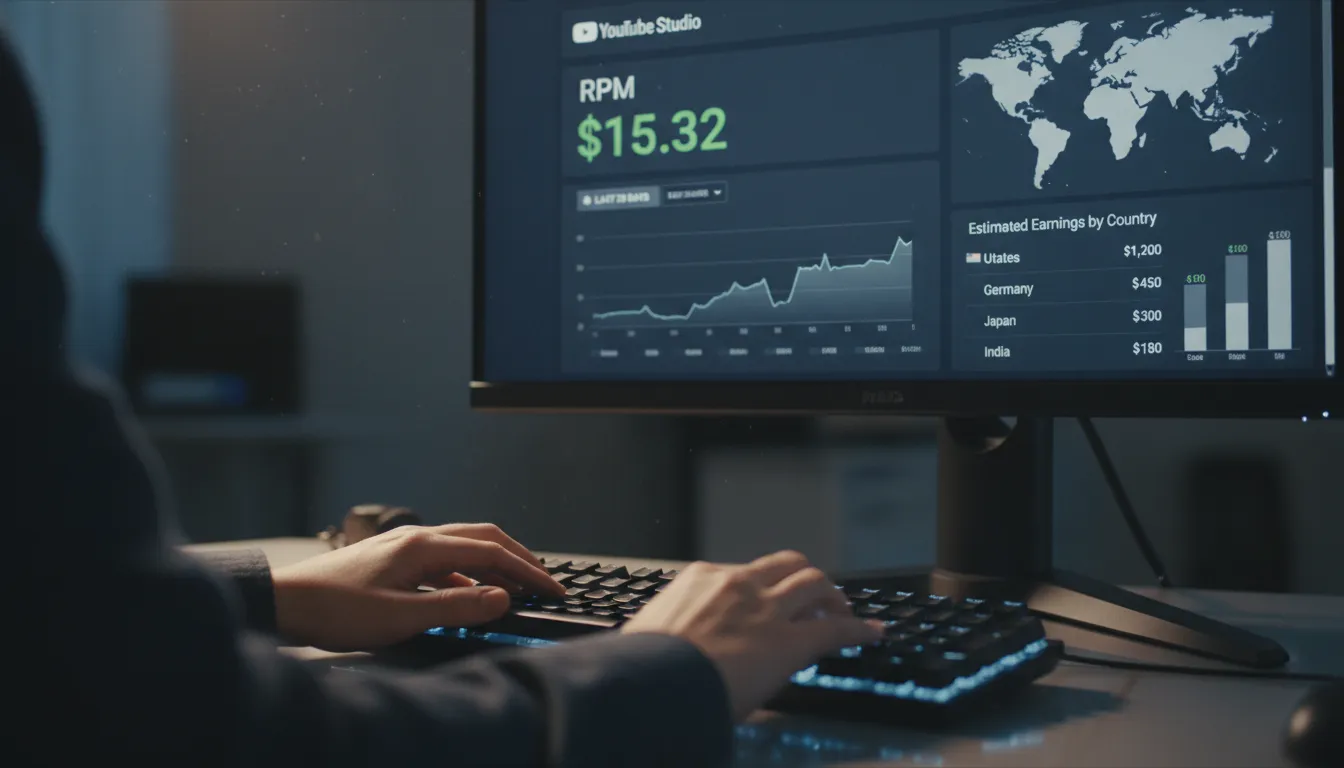
RPM stands for Revenue Per Mille, which is the amount you earn per 1,000 views after YouTube takes its 45% cut. Unlike CPM (Cost Per Mille), which is what advertisers pay, RPM is what lands in your pocket. Understanding this distinction is critical for Korean creators because South Korea operates in a unique position: it’s a high-income country with strong purchasing power, but YouTube’s advertising market in Korea is smaller than in the US, UK, or Australia.
For example, if you have 100,000 views on a video and your RPM is ₩5,000, you’ll earn ₩500,000 (approximately $375 USD at current exchange rates). The same 100,000 views on an English channel with ₩10,000 RPM would earn ₩1,000,000. That difference compounds quickly. Over a year, the RPM gap between Korean and English channels can mean the difference between ₩6 million ($4,500 USD) and ₩20 million ($15,000 USD) annually.
YouTube’s algorithm determines your RPM based on several factors: audience location and wealth, advertiser demand, content category, watch time, and whether viewers are from Tier 1 countries (US, Canada, UK, Australia). South Korea ranks as a Tier 2 market, which means lower baseline ad rates. However, certain niches in South Korea perform exceptionally well because they attract high-spending advertisers targeting Korean consumers directly.
The 2026 landscape has shifted again. With increased competition from short-form content and changing advertiser budgets, Korean creators need to be strategic about niche selection. Some niches—particularly finance, technology, and lifestyle—command significantly higher RPM rates in South Korea than general entertainment content.
YouTube RPM Ranges in South Korea 2026: Korean vs. English Channels
The data tells a clear story: language choice matters dramatically for YouTube earnings in South Korea.
Korean-Language Channels (₩ per 1,000 views):
– General Entertainment / Vlog: ₩2,000-₩4,000
– Gaming / Gaming Commentary: ₩3,000-₩6,000
– Lifestyle / Fashion: ₩3,500-₩7,000
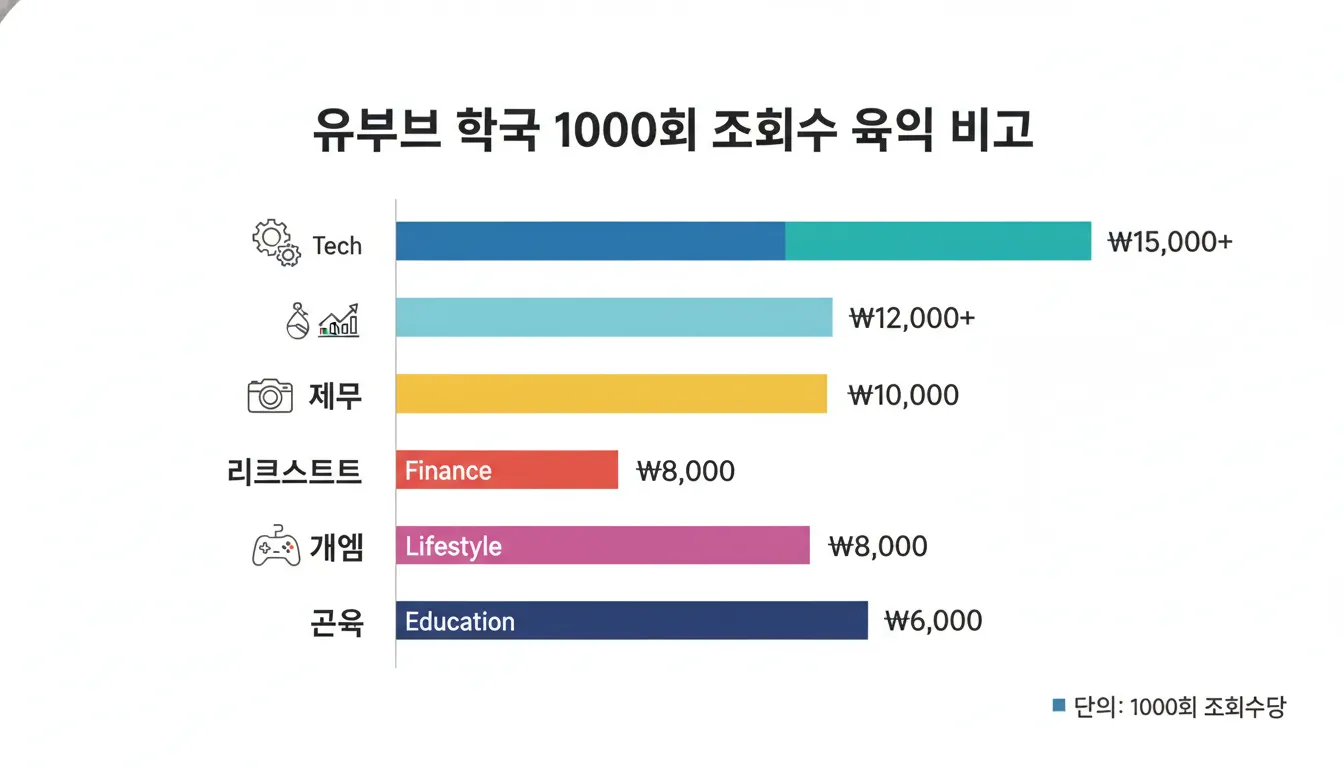
– Technology / Gadget Reviews: ₩5,000-₩10,000
– Finance / Investing: ₩6,000-₩12,000
– Education / Study Content: ₩4,000-₩8,000
– Food / Cooking: ₩3,000-₩6,500
English-Language Channels (from Korea, ₩ per 1,000 views):
– General Entertainment / Vlog: ₩4,000-₩8,000
– Gaming / Gaming Commentary: ₩6,000-₩12,000
– Lifestyle / Fashion: ₩7,000-₩14,000
– Technology / Gadget Reviews: ₩9,000-₩18,000
– Finance / Investing: ₩10,000-₩20,000
– Education / Study Content: ₩7,000-₩15,000
– Food / Cooking: ₩5,000-₩11,000
Notice the pattern: English channels consistently earn 2-2.5x more per 1,000 views. Why? Because English-language content reaches global audiences, attracts advertisers with larger budgets (particularly US and UK brands), and viewers from these regions have higher purchasing power. However, English channels also face stronger competition. It’s easier to rank well in a smaller Korean market than to compete globally in English.
Real KRW Example Calculation:
Consider two Korean creators, both receiving 50,000 views monthly:
Creator A: Korean-Language Tech Channel
– Monthly Views: 50,000
– RPM: ₩7,500 (mid-range for Korean tech content)
– Monthly Earnings: 50,000 ÷ 1,000 × ₩7,500 = ₩375,000 (~$280 USD)
– Annual Earnings: ₩4,500,000 (~$3,360 USD)
Creator B: English-Language Tech Channel (from Korea)
– Monthly Views: 50,000
– RPM: ₩14,000 (mid-range for English tech content)
– Monthly Earnings: 50,000 ÷ 1,000 × ₩14,000 = ₩700,000 (~$525 USD)
– Annual Earnings: ₩8,400,000 (~$6,300 USD)
The difference is ₩3,900,000 annually—nearly double. This is why many Korean creators are experimenting with English content, even if it’s not their native language. For those committed to Korean-language content, the strategy becomes niche selection and audience targeting.
High-Paying Niche Ideas for Korean Creators in 2026
Not all content is created equal when it comes to RPM. Certain niches attract premium advertisers willing to pay significantly more for access to Korean audiences.
1. Personal Finance & Cryptocurrency (₩8,000-₩15,000 RPM)
Korea has one of the world’s highest per-capita investments in cryptocurrency and stock trading. Niche ideas include:
– Stock market basics for beginners (한국 주식 투자 기초)
– Cryptocurrency trading strategies specific to Korean exchanges
– Real estate investment guides for Korean properties
– Retirement planning for Korean workers
– Side hustle ideas for supplementary income
Advertisers targeting Korean investors (brokerages, fintech apps, investment education platforms) pay premium rates. A 100,000-view video in this niche could earn ₩800,000-₩1,500,000 from a Korean creator—far higher than general entertainment.
2. Technology & Gadget Reviews (₩7,000-₩14,000 RPM)
South Korea is a tech-forward nation. Koreans are early adopters of smartphones, laptops, gaming gear, and smart home devices. Niche ideas:
– Unboxing and reviews of latest smartphones (with Korean release focus)
– Gaming PC builds for Korean gamers
– Mechanical keyboard reviews and comparisons
– Smart home automation for Korean apartments
– Tech product comparisons: Korean brands vs. international brands
– AI tool reviews and tutorials
Electronics retailers, tech brands, and e-commerce platforms advertise heavily in this space. Your audience is also more likely to click affiliate links for tech products.
3. Online Business & Digital Marketing (₩7,000-₩13,000 RPM)
More Korean entrepreneurs are starting online businesses. Content ideas:
– Building a side business while working full-time
– E-commerce strategies for Korean sellers on international platforms
– YouTube monetization strategies (meta, but high-performing)
– Social media marketing for small Korean businesses
– Dropshipping and import-export business models
– Freelancing platforms and how to earn money online
This niche attracts educational course creators and business software companies willing to pay for access to Korean entrepreneurs.
4. Language Learning & Education (₩6,000-₩12,000 RPM)
Education is a massive industry in Korea. Niche ideas:
– Teaching English to Korean audiences (reverse trend)
– Korean language teaching for international learners (global reach with local expertise)
– Test prep (TOEFL, IELTS, SAT) specifically for Korean students
– University entrance exam (수능) preparation strategies
– Study techniques backed by neuroscience
EdTech companies, tutoring platforms, and language app developers spend significant ad budgets reaching Korean learners.
5. Health, Fitness & Mental Wellness (₩6,500-₩12,000 RPM)
With increasing health consciousness among Korean millennials and Gen Z, health content performs well. Ideas:
– Korean diet modifications (Korean cuisine + healthy eating)
– Mental health and stress management (직장인 스트레스)
– Fitness routines for office workers and students
– Sleep optimization and circadian rhythm
– Supplement and nutrition science (avoiding pseudoscience)
Healthcare companies, fitness apps, and supplement brands target health-conscious Korean audiences with premium ad budgets.
6. Career Development & Job Search (₩7,000-₩11,000 RPM)
Korean job market is highly competitive. Content ideas:
– Resume and cover letter tips for Korean job seekers
– Interview preparation strategies for Korean companies
– Career transitions and side hustles
– Salary negotiation tactics in Korea
– Company reviews and workplace culture (회사 후기)
Recruitment platforms, career coaching services, and professional development companies advertise heavily here.
7. K-Culture for International Audiences (₩8,000-₩16,000 RPM)
This is a unique opportunity for Korean creators with English language skills:
– Korean cooking explained for international audiences
– Korean fashion trends explained
– Korean beauty techniques and product reviews
– Korean history and culture education
– Learning Korean language (targeting global learners)
Global brands, educational institutions, and tourism boards advertise to this audience. The RPM is often higher because you’re reaching English-speaking audiences interested in Korean content.
Key Takeaways
Step-by-Step Guide: Calculating Your YouTube RPM in South Korea
Understanding how to calculate and track your own RPM is essential for optimizing your content strategy. Here’s a detailed walkthrough.
Step 1: Access YouTube Studio Analytics
Log into YouTube Studio. In the left menu, click “Analytics,” then “Revenue.” This dashboard shows your real-time earnings, ad revenue, and estimated RPM. YouTube displays RPM, CPM, and CPC all in one place. For Korean creators, YouTube Studio defaults to displaying earnings in USD, but you can convert to KRW using current exchange rates.
Step 2: Identify Your Channel’s Current RPM
In the Revenue tab, look for “estimated earnings” and “monetized playbacks.” Divide your total earnings by the number of monetized playbacks (in thousands). For example:
– Total Earnings: $150 USD (approximately ₩200,000 KRW)
– Monetized Playbacks: 25,000
– RPM = ($150 / 25) = $6 USD per 1,000 views (approximately ₩8,000 KRW)
Note: YouTube doesn’t show exact RPM in the dashboard—you’ll calculate it manually using earnings and view counts.
Step 3: Compare Your RPM by Content Type
Create a simple spreadsheet tracking:
– Video title and upload date
– Total views
– Estimated earnings
– Calculated RPM
– Content category
– Primary audience location (Korean or international)
After 20-30 videos, patterns emerge. You’ll see which content types and niches consistently earn higher RPM. This data is more valuable than industry averages because it’s specific to your audience and content style.
Step 4: Track RPM Trends Over Time
RPM fluctuates seasonally. In South Korea:
– Q4 (October-December): RPM peaks as companies increase advertising budgets for year-end sales
– Q1 (January-March): RPM remains strong due to New Year spending momentum
– Q2 (April-June): RPM dips slightly as advertising budgets tighten
– Q3 (July-September): RPM is lowest; advertisers reduce spending before Q4
Compare your RPM month-to-month, not just video-to-video. A decrease might reflect seasonal trends rather than content quality decline.
Step 5: Benchmark Against Korean YouTube Standards
Use this reference table to understand where your channel stands:
| Performance Level | Korean-Language RPM | English-Language RPM | Typical View Range |
|—|—|—|—|
| Below Average | ₩1,500-₩3,500 | ₩3,000-₩6,000 | 10K-50K views/month |
| Average | ₩3,500-₩6,000 | ₩6,000-₩10,000 | 50K-200K views/month |
| Above Average | ₩6,000-₩9,000 | ₩10,000-₩15,000 | 200K-1M views/month |
| High Performing | ₩9,000+ | ₩15,000+ | 1M+ views/month |
Step 6: Use an RPM Calculator
Rather than manual calculations, use a YouTube RPM calculator. Input your total earnings and views for a given period, and the tool instantly calculates your RPM. This saves time and reduces calculation errors. [Try RPM calculator](https://mykitchenincome.com) to automate this process.
Step 7: Experiment and Document Results
The only way to reliably increase RPM is through experimentation:
– Release videos in different niches and track RPM
– Test different thumbnail styles and titles to increase watch time (longer watch time = higher RPM)
– Target different audience demographics and track RPM differences
– Experiment with video length (longer videos often have higher RPM due to more ad placements)
Document everything for 90 days, then analyze results. You might discover that your audience’s RPM potential in a specific niche is significantly higher than you expected.

Tools, Resources & Cost Analysis for Optimizing Your YouTube RPM
Free Tools:
1. YouTube Studio (youtube.com/studio)
– Your primary analytics source
– View real-time earnings, RPM, and CPM
– Track performance by geography, traffic source, and content type
– Free, essential for any creator
2. Google AdSense (adsense.google.com)
– Payment platform connected to YouTube
– Shows detailed earnings breakdown
– Allows you to set ad frequency and preferences
– Free
3. VidIQ & TubeBuddy (Freemium)
– SEO optimization for YouTube
– Competitor analysis
– Keyword research tools
– Free versions available; premium ($10-$20/month) offers advanced analytics
4. Social Blade (socialblade.com)
– Track channel growth and earnings estimates
– Compare channels
– Free version adequate for most creators
5. RPM Calculator Tools
– [My Kitchen Income RPM Calculator](https://mykitchenincome.com)
– Instantly calculate RPM from views and earnings
– Free, no signup required
Paid Tools for Advanced Analysis:
1. Tubular Labs ($500-$2,000/month)
– Detailed RPM tracking by geographic region
– Competitor earnings analysis
Advertisement