

As a finance content creator, you’re always on the lookout for ways to boost your YouTube channel’s earnings. One of the most lucrative niches in this space is the credit card industry, which offers the potential for impressive YouTube RPM (revenue per mille) rates. In this comprehensive guide, we’ll explore the optimal YouTube RPM for the credit card niche in 2026, uncover the high-value advertisers to target, and map out a content strategy that can help you maximize your earnings.
What Is YouTube RPM?
YouTube RPM, or revenue per mille (thousand views), is a crucial metric that determines how much a creator earns per 1,000 video views. It’s a direct reflection of the ad rates advertisers are willing to pay to reach your audience. The higher the RPM, the more you can earn from your YouTube channel.
The credit card niche is known for its high-value advertisers, such as Chase, American Express, and Capital One, who are willing to pay top dollar to reach potential customers. This translates into an impressive YouTube RPM range of $20 to $60 per 1,000 views for US-based audiences, making it a highly lucrative opportunity for finance creators and affiliates.
Content Strategies for Maximizing Credit Card Niche RPM
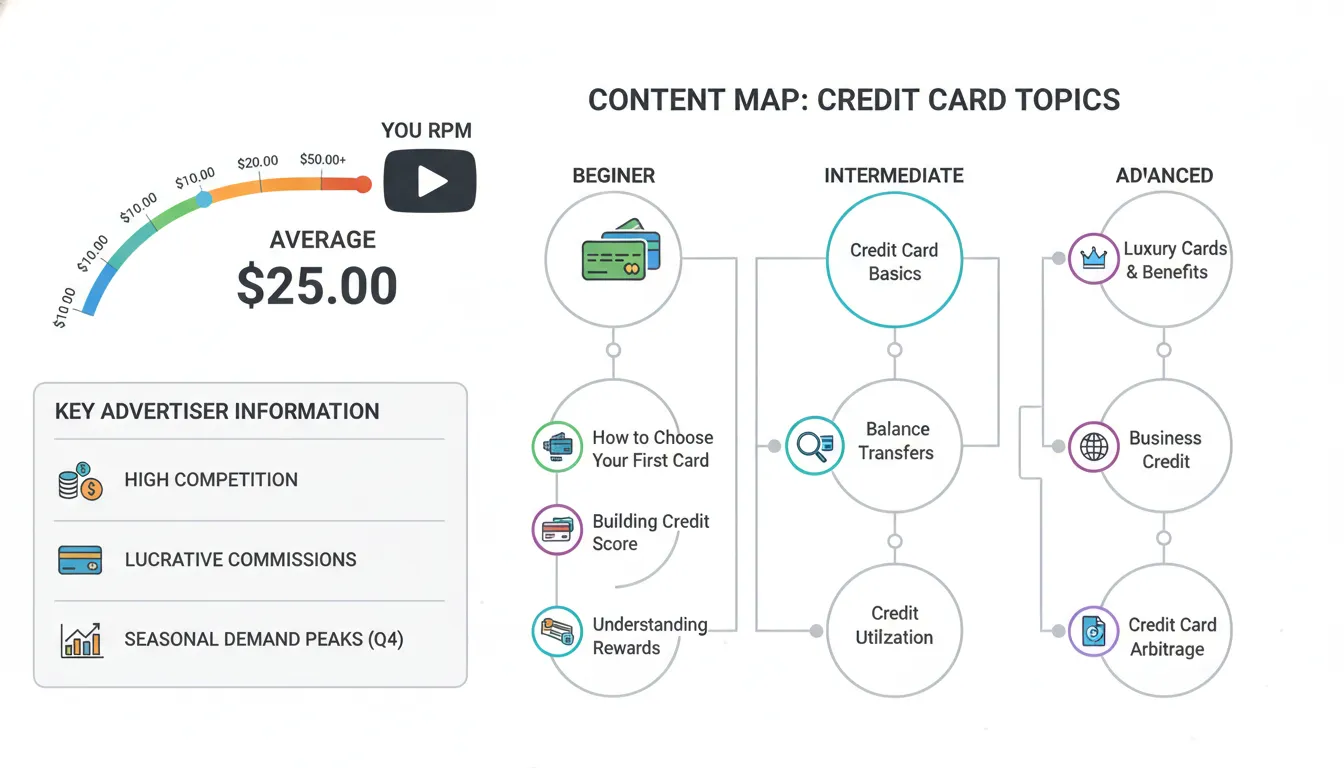
To capitalize on the credit card niche’s high YouTube RPM, it’s essential to develop a content strategy that caters to your audience’s needs and interests. Here’s a three-tiered approach that covers the spectrum from beginner to advanced topics:
Beginner Content: “Best First Credit Card”
At the beginner level, focus on creating content that helps viewers navigate the world of credit cards for the first time. Topics such as “Best First Credit Card for Students,” “How to Choose Your First Credit Card,” and “Credit Card 101: Building Credit from Scratch” can attract a wide audience and establish your channel as a trusted resource.
Intermediate Content: “How to Maximize Points”
As your viewers become more experienced, delve into intermediate-level topics that teach them how to maximize the benefits of their credit cards. Content ideas like “Credit Card Rewards Hacks: Maximizing Points and Miles,” “Best Credit Cards for Travel Rewards,” and “Balance Transfer Cards: Strategies to Pay Off Debt Faster” can help your audience get the most value from their credit card usage.
Advanced Content: “Manufactured Spending 2026”
For your most engaged viewers, explore advanced credit card strategies that dive deep into topics like “Manufactured Spending in 2026: Tactics to Earn Rewards Without Spending,” “Credit Card Churning: A Comprehensive Guide,” and “Credit Card Arbitrage: Exploiting Sign-up Bonuses.”

Mapping Content to RPM Tiers
To help you visualize the content landscape and plan your YouTube strategy, here’s a table of 20 video topic ideas mapped to their respective RPM tiers:
| RPM Tier | Video Topic |
| — | — |
| $20-$30 | – Best First Credit Card for College Students
– How to Build Credit from Scratch
– Credit Card Basics: APR, Annual Fees, and More
– Secured Credit Cards: A Beginner’s Guide |
| $30-$40 | – Credit Card Rewards Strategies: Maximizing Points and Miles
– Best Credit Cards for Travel Rewards
– Balance Transfer Cards: Crush Debt Faster
– Credit Card Signup Bonuses: How to Earn Thousands |
| $40-$50 | – Credit Card Churning: A Step-by-Step Guide
– Manufactured Spending in 2026: Earn Rewards Without Spending
– Credit Card Arbitrage: Profiting from Sign-up Bonuses
– Advanced Credit Card Hacks: Stacking Rewards and Benefits |
| $50-$60 | – Credit Card Portfolio Management: Optimizing Your Wallet
– Credit Limit Increases: Strategies to Boost Your Limits
– Business Credit Cards: Powering Your Entrepreneurial Journey
– Credit Card Utilization: Maintaining the Ideal Ratio |
Remember, these are just estimates based on current trends and may vary depending on factors like your audience demographics, ad competition, and YouTube platform updates. Continuously monitoring your channel’s performance and adjusting your content strategy accordingly will be crucial for maximizing your RPM in the credit card niche.
Key Takeaways
Tools, Resources, and Cost Breakdown
To help you get started, here are some essential tools and resources for success in the credit card niche:
Tools:
– YouTube Analytics: Gain insights into your channel’s performance and audience demographics.
– Google Ads Keyword Planner: Research high-value keywords and monitor CPC (cost-per-click) rates.
– Credit Card Comparison Sites: Use these to create affiliate-friendly content and earn commissions.
Resources:
– Finance Blogs and Forums: Stay up-to-date with industry trends and best practices.
– Credit Card Issuer Websites: Familiarize yourself with the latest card offerings and benefits.
– YouTube Creator Academy: Improve your video production and optimization skills.
Cost Breakdown:
– Video Production: $50-$200 per video, depending on complexity and quality.
– Affiliate Commissions: $50-$200 per approved credit card application.
– Advertising Costs: $3-$15 per click for finance-related ads on YouTube.
Remember, the key to maximizing your YouTube RPM in the credit card niche is to create high-quality, valuable content that resonates with your audience. By combining a strategic content plan, efficient tools, and lucrative affiliate partnerships, you can unlock the full potential of this lucrative finance vertical.

Pros and Cons of the Credit Card Niche
Pros:
– High YouTube RPM: Earn $20-$60 per 1,000 views in the US market.
– Lucrative Advertisers: Chase, American Express, and Capital One are among the top-paying brands.
– Strong Affiliate Commissions: Earn $50-$200 per approved credit card application.
– Evergreen Content Potential: Many credit card topics have long-lasting relevance.
– Diverse Subtopics: Cater to beginners, intermediates, and advanced users.
Cons:
– Competitive Landscape: The credit card niche is saturated, requiring strategic content differentiation.
– Compliance Regulations: Finance content is subject to strict guidelines, necessitating careful review.
– Audience Sensitivity: Credit card topics can be complex and require clear, educational explanations.
– Potential for Abuse: Manufactured spending and credit card churning tactics may be scrutinized.
Real-World Examples and Case Studies
To inspire your content creation and showcase the potential of the credit card niche, let’s explore some real-world examples and case studies:
Example 1: The Points Guy
The Points Guy, a leading travel and credit card rewards website, has a thriving YouTube channel with over 1 million subscribers. Their content covers a wide range of credit card-related topics, from “Best Credit Cards for Travel” to “Credit Card Hacks to Boost Your Rewards.” The channel’s high-quality, informative videos have helped them establish a strong presence in the niche and generate substantial revenue through affiliate partnerships.
Example 2: Credit Shifu
Credit Shifu is a popular YouTube channel focused on credit card strategies and personal finance. Their video “The Best Credit Cards for 2022” has garnered over 2 million views, demonstrating the demand for authoritative credit card content. The channel’s blend of beginner-friendly explanations and advanced techniques has resonated with a diverse audience, leading to impressive RPM and affiliate earnings.
Example 3: Graham Stephan
Graham Stephan, a successful personal finance YouTuber, has incorporated credit card content into his channel’s offerings. His video “The BEST Credit Cards for 2022 (and why)” has amassed over 1 million views, showcasing the power of credit card-focused content to drive viewership and revenue. Stephan’s ability to explain complex financial topics in an engaging and accessible manner has contributed to his channel’s growth and success.
These examples demonstrate the immense potential of the credit card niche on YouTube. By emulating their strategies, leveraging high-value advertisers, and building a loyal audience, you can position your finance channel for long-term success and impressive RPM earnings.
FAQ
1. What is the typical RPM range for the credit card niche on YouTube?
The typical RPM range for the credit card niche on YouTube in the US market is $20 to $60 per 1,000 views. This high RPM is due to the presence of lucrative advertisers, such as Chase, American Express, and Capital One, who are willing to pay top dollar to reach potential customers.
2. How can I maximize my affiliate earnings in the credit card niche?
To maximize your affiliate earnings, focus on creating content that directly links to credit card comparison pages or application forms. Ensure that your content provides genuine value and recommendations to your audience, as this will increase the likelihood of successful credit card sign-ups and approvals. Additionally, stay up-to-date with the latest card offerings, bonuses, and promotional campaigns to highlight the most relevant and enticing options.
3. What are some common credit card-related topics that tend to perform well on YouTube?
Some of the most popular and high-performing credit card-related topics on YouTube include:
– Best first credit cards for students or beginners
– Credit card rewards and points maximization strategies
– Credit card sign-up bonuses and churning tactics
– Balance transfer cards and strategies to pay off debt faster
– Travel rewards credit cards and maximizing airline/hotel benefits
4. How can I differentiate my credit card content from the competition?
To differentiate your credit card content, focus on creating highly specialized, in-depth, and actionable videos. This could include topics like “Manufactured Spending in 2026: Tactics to Earn Rewards Without Spending” or “Advanced Credit Card Hacks: Stacking Rewards and Benefits.” Additionally, consider incorporating personal anecdotes, unique perspectives, or data-driven analyses that set your content apart from the more generic or surface-level videos in the niche.
5. Are there any compliance or legal considerations I should keep in mind when creating credit card content?
Yes, there are several compliance and legal considerations to be aware of when creating credit card-related content:
– Disclose any affiliate relationships or commissions clearly.
– Avoid making misleading claims about credit card benefits or interest rates.
– Ensure that your content does not promote or endorse illegal activities, such as credit card fraud.
– Stay up-to-date with changing regulations and guidelines from platforms like YouTube and credit card issuers.
Conclusion
The credit card niche on YouTube offers a lucrative opportunity for finance creators and affiliates, with the potential to earn impressive RPM rates of $20 to $60 per 1,000 views. By developing a strategic content plan that caters to beginner, intermediate, and advanced users, leveraging high-value advertisers, and building strong affiliate partnerships, you can position your channel for long-term success and substantial earnings.
Remember, the key to maximizing your YouTube RPM in this niche is to consistently create high-quality, informative, and valuable content that resonates with your audience. By following the strategies outlined in this guide and staying adaptable to industry changes, you can unlock the full potential of the credit card niche and take your finance channel to new heights.
Ready to download your content map and start dominating the credit card niche on YouTube? [Download it here!]
Advertisement
