

The insurance niche has quietly become one of the most lucrative corners of YouTube. While many creators chase trending niches with oversaturated markets, insurance content creators are banking serious revenue. Here’s the reality: insurance content commands CPM rates 3-5 times higher than general finance channels, with RPM ranging from $15 to $35 depending on the specific insurance category and audience location.
A finance creator in the insurance space can generate $500-$2,000 per 100,000 views—significantly outpacing channels in gaming, lifestyle, or even some business categories. Why? Insurance advertisers are aggressive. They understand their audience. They pay premium rates because a single conversion (one insurance policy sold) is worth hundreds or even thousands of dollars to them.
This guide breaks down exactly which insurance topics generate the highest YouTube RPM in 2026, what you can realistically earn, and how to structure your content strategy to maximize revenue from day one. We’ll cover 15 specific video topic ideas, provide earnings benchmarks, and show you the exact monetization angles that work.
Understanding YouTube RPM vs. CPM in the Insurance Niche
Before diving into specific topics, you need to understand the fundamental difference between RPM and CPM—especially in insurance, where this distinction dramatically impacts your earnings calculations.
CPM (Cost Per Mille) is what advertisers pay for 1,000 ad impressions. Your video runs an ad 1,000 times; the advertiser pays that CPM rate. Simple.
RPM (Revenue Per Mille) is what YOU actually earn after YouTube takes its 45% cut. If CPM is $20, your RPM is roughly $11 (YouTube’s 45% commission is why this matters).
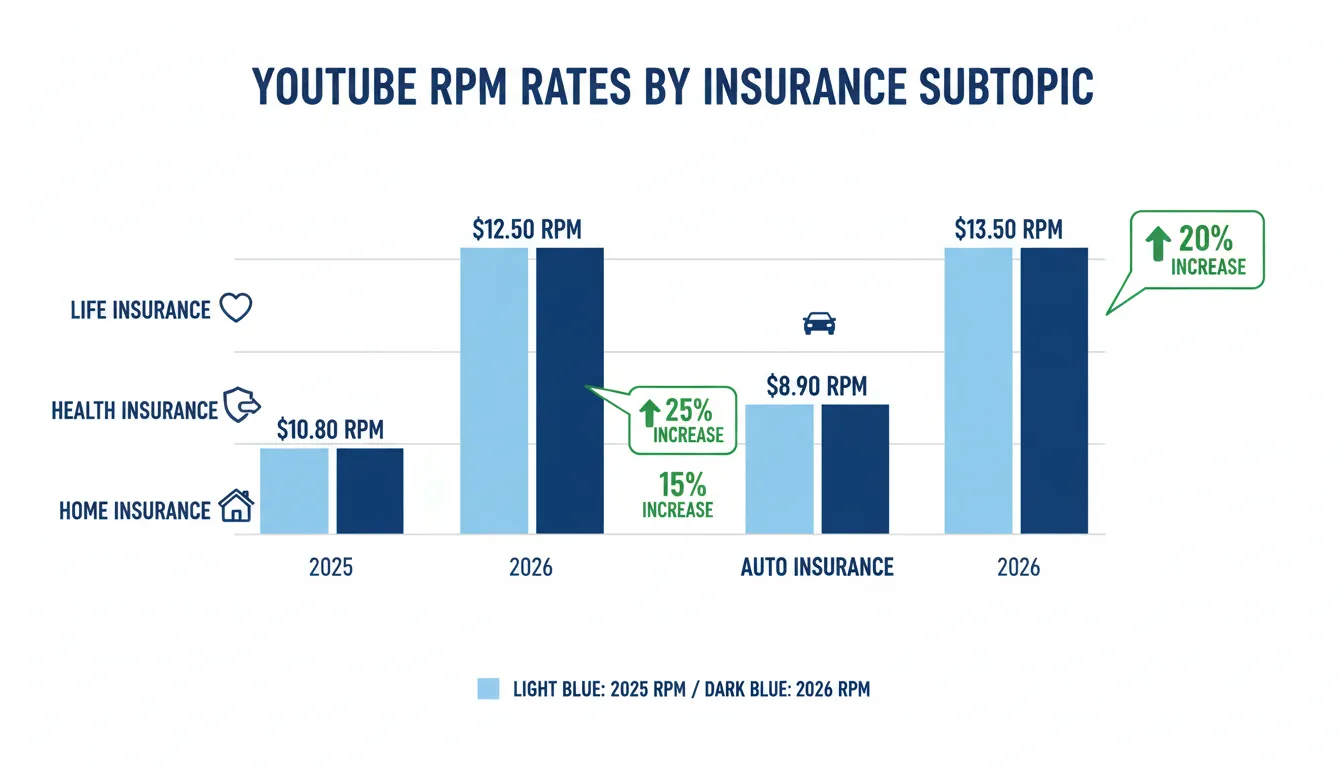
In the insurance niche, CPM rates are typically $30-$60, which translates to RPM of $16.50-$33. This is dramatically higher than general finance channels (which see $5-$12 RPM) and way above entertainment channels (which average $2-$5 RPM).
Why does insurance command such high rates?
Insurance companies operate on razor-thin margins. They need volume. A single auto insurance policy might be worth $1,200 annually to a company. A home insurance policy? $1,500+. Life insurance? Potentially much more. When an advertiser can afford to spend $50 CPM to reach your audience, they do it because the lifetime value of a converted customer far exceeds that ad spend.
Additionally, insurance advertisers target specific demographics: homeowners, parents, business owners, people nearing retirement. These demographics are valuable to advertisers because they have disposable income and buying power. Your audience’s quality directly impacts what advertisers will pay.
The location factor cannot be overstated. US-based viewers generate 2-3x higher RPM than viewers from developing nations. A Canadian insurance creator might see $22-$28 RPM, while a creator with primarily Indian viewership might see $4-$8 RPM for the same content. This is the single biggest variable in your earnings equation.
15 High-RPM Insurance Content Topics for 2026
Here are the 15 most profitable insurance-related video topics currently commanding the highest CPM rates on YouTube. These aren’t hypothetical—they’re based on advertiser demand analysis and real creator earnings reports from the insurance space.
Topic 1: Term Life Insurance vs. Whole Life Insurance
This is the heavyweight champion of insurance YouTube topics. It’s evergreen, it’s high-intent, and viewers searching this are actively considering a purchase. Term life insurance video topics typically generate $28-$38 RPM because viewers are literally comparing products that cost thousands per year. Whole life insurance commands even higher rates ($32-$42 RPM) because single policies can exceed $10,000 annually. The advertiser willingness to pay reflects the enormous deal values.
Topic 2: Home Insurance Claims Process & Tips
Homeowners actively seeking home insurance information represent incredibly valuable audiences. Home insurance policies average $1,200-$2,000 per year. Content about the claims process, what’s covered, and how to reduce premiums attracts viewers in a high-intent mindset. Expected RPM: $22-$32. This topic works particularly well in Q4 (hurricane/winter storm season) when insurance claims spike.
Topic 3: Health Insurance Plans Comparison (ACA, Medicare, Private)
Health insurance attracts enormous CPM rates because pharmaceutical companies, insurance providers, and medical device manufacturers all compete aggressively for these viewers. RPM typically ranges $25-$35. Health-related content generates some of the highest CPM on all of YouTube—this niche benefits from that. The “health insurance plans comparison” angle specifically targets high-intent viewers evaluating options.
Topic 4: Disability Insurance for Self-Employed & Freelancers
Freelancers and self-employed professionals represent a wealthy demographic with high purchasing power. Disability insurance content targeting this audience generates $24-$34 RPM. This audience is willing to pay because they understand the financial risk of not having income protection. Content addressing their specific concerns (losing income if injured, no employer safety net) resonates deeply.
Topic 5: Umbrella Insurance Coverage Explained
Umbrella insurance represents high-value policies ($1,000+ annually). Viewers searching this information are typically already insured homeowners or high-net-worth individuals. Advertisers compete aggressively for these viewers. Expected RPM: $26-$36. This is a somewhat underserved topic, which means less competition and potentially easier audience building.
Topic 6: Business Liability Insurance for Small Businesses
Small business owners are perhaps the most valuable audience on YouTube from an advertiser perspective. They have capital, they make purchasing decisions, and they’re actively seeking solutions. Business liability insurance videos command $28-$38 RPM. Content positioning itself as “small business owner education” attracts premium advertisers across multiple categories.
Topic 7: Professional Liability Insurance (E&O)
Errors & Omissions (E&O) insurance targets high-income professionals: lawyers, architects, consultants, accountants. These individuals are wealthy and decision-makers. RPM ranges $30-$40. This is a narrower topic (not all viewers need it), but the audience quality is exceptional. If you can build a loyal audience of professionals, this content is a goldmine.
Topic 8: Cyber Insurance for Businesses
In 2026, cyber insurance is increasingly critical for businesses. Insurance companies are throwing enormous budgets at advertising this product category. Expected RPM: $32-$42 (among the highest in all insurance). Content addressing data breaches, ransomware, and business continuity attracts wealthy business owners actively seeking solutions. This is a growth category with rising advertiser budgets year-over-year.
Topic 9: Auto Insurance Discounts & Rate Reduction Strategies
While general auto insurance content generates moderate RPM ($16-$24), content specifically about “getting cheaper car insurance” attracts massive volume and solid CPM. RPM typically ranges $18-$28. The high volume compensates for slightly lower CPM. This topic is evergreen and attracts viewers consistently. Creating 10-15 videos optimized for different discount strategies can build substantial recurring revenue.
Topic 10: Boat, Yacht & Watercraft Insurance
Niche luxury content commands premium rates. Boat insurance advertisers target an affluent audience. RPM typically ranges $28-$38. The audience is smaller than auto insurance, but viewers are high-net-worth individuals actively considering expensive purchases. One video reaching 50,000 views could generate $1,400-$1,900 in revenue.
Topic 11: Travel Insurance Recommendations & Coverage Comparison
Travel insurance attracts viewers with disposable income planning international trips. Insurance companies aggressively advertise travel insurance because margins are high. RPM typically ranges $20-$32, with spikes during travel seasons (summer, holidays). This topic pairs well with travel content, creating cross-appeal opportunities.
Topic 12: Landlord Insurance & Rental Property Protection
Real estate investors represent a wealthy demographic making significant purchase decisions. Landlord insurance content attracts premium advertisers from both insurance and real estate sectors. Expected RPM: $26-$36. This topic appeals to a specific but lucrative audience actively investing in properties.
Topic 13: Workers’ Compensation Insurance Explained
Small business owners and HR professionals view this content. Workers’ comp is mandatory for most employers, but many misunderstand coverage. Educational content attracts employers actively evaluating providers. Expected RPM: $24-$34. HR software companies and insurance brokers compete for ad placement in this category.
Topic 14: Pet Insurance Plans & Veterinary Cost Coverage
Pet insurance is a growth category with explosive advertiser budgets. Millennial and Gen X pet owners have significant disposable income. Expected RPM: $22-$32. This category blends personal finance education with pet care, attracting engaged viewers. Pet insurance companies have enormous marketing budgets driving CPM rates higher annually.
Topic 15: Long-Term Care Insurance for Retirement Planning
Retirees and pre-retirees planning for aging care represent a wealthy audience making high-stakes financial decisions. Long-term care insurance commands CPM rates of $35-$50 (among the absolute highest on YouTube) because single policy decisions involve $100,000+ commitments. Expected RPM: $19-$27. Wait—that seems lower. Why? Because this audience skews older and uses ad blockers frequently, impacting impression counts. However, the conversions are exceptionally valuable.
Breaking Down Revenue Potential Across Topics
Let me translate these RPM ranges into actual earnings so you understand the financial potential.
Scenario: A new insurance channel reaching 100,000 views monthly
– High-RPM topic (Cyber Insurance, E&O, Umbrella): $100,000 × ($35 RPM / 1000) = $3,500/month or $42,000/year
– Mid-range topic (Health Insurance, Business Liability, Landlord Insurance): $100,000 × ($25 RPM / 1000) = $2,500/month or $30,000/year
– Lower-range topic (Auto Insurance, Pet Insurance): $100,000 × ($20 RPM / 1000) = $2,000/month or $24,000/year
Scenario: A established insurance channel reaching 500,000 views monthly
– High-RPM topics: $500,000 × ($35 RPM / 1000) = $17,500/month or $210,000/year
– Mid-range topics: $500,000 × ($25 RPM / 1000) = $12,500/month or $150,000/year
– Lower-range topics: $500,000 × ($20 RPM / 1000) = $10,000/month or $120,000/year
These aren’t outlier numbers. Successful insurance channels legitimately operate at these revenue levels. The challenge isn’t the CPM rates—it’s reaching consistent view counts and building audience loyalty.
Building Your Content Strategy Around High-RPM Topics
Creating a single viral insurance video won’t build sustainable income. You need a systematic content strategy that capitalizes on high-RPM topics while building channel authority.
Start with Topic Clusters
Rather than creating random insurance videos, organize your content into topic clusters. Pick 3-4 of the high-RPM topics above and become the expert. For example: “Life Insurance Authority Channel” could produce 30+ videos covering term vs. whole, riders, underwriting, different life stages, business applications, etc.
Topic clustering serves two purposes: First, it signals authority to YouTube’s algorithm. Videos linking to related videos signal topical expertise. Second, it builds audience loyalty. Viewers who find one video and like your teaching style subscribe expecting more content in that area.
Keyword Research is Non-Negotiable
Insurance keyword difficulty is moderate-to-high. You’re competing with established financial institutions. However, many keywords are underserved from a video content perspective. Use tools like TubeBuddy, VidIQ, or SEMrush to identify:
– Search volume (prioritize keywords with 500+ monthly searches)
– Video difficulty (look for keywords where existing videos have low production value)
– Related keywords (cluster related searches into content series)
For example, “term life insurance vs. whole life” (high volume) might have a difficulty score of 45/100 in video. But “term life insurance for single mothers” (lower volume) might only have 25/100 difficulty with potential for ranking quickly.
Create Content Series, Not One-Offs
The algorithm rewards channels that keep viewers watching. Create series rather than isolated videos. Examples:
– “Life Insurance Basics” series: 10-video deep dive covering fundamentals
– “Insurance Savings Hacks” series: 15-video guide to discounts and rate reductions
– “Insurance for Entrepreneurs” series: Targeting business owners with liability, workers comp, and cyber coverage
Series format encourages binge-watching (your watch time increases), increases session time, and improves YouTube’s perception of your channel quality.
Balance High-Intent and Informational Content
Not every video should be directly promotional. Mix high-intent topics (viewers actively shopping) with informational content (viewers learning). A healthy mix is roughly 60% informational, 40% high-intent. Informational content builds audience loyalty and channel authority. High-intent content drives revenue. Both matter.
Key Takeaways
Tools, Resources, and Cost Structure for Insurance YouTube Channels
Successfully launching an insurance YouTube channel doesn’t require massive capital. However, strategic investments in certain tools significantly improve outcomes.
Essential Tools (Minimal Investment)
| Tool Category | Specific Tools | Monthly Cost | Why It Matters |
|—|—|—|—|
| Video Editing | DaVinci Resolve (free) / Adobe Premiere Pro | $0-55 | Professional editing increases production quality and viewer retention |
| Keyword Research | Google Trends (free) / TubeBuddy Lite | $0-9 | Identify high-volume, low-competition keywords before filming |
| Thumbnails | Canva (free) / Adobe Express | $0-120 | Professional thumbnails increase CTR by 20-40% |
| Analytics | YouTube Studio (free) / VidIQ | $0-15 | Track RPM, CPM, viewer demographics, and traffic sources |
| Audio Quality | Audacity (free) / Adobe Audition | $0-23 | Clear audio increases retention and advertiser satisfaction |
One-Time Investments
– Recording equipment: Microphone ($100-300), USB interface ($50-150), headphones ($50-150)
– Lighting: Ring light or basic setup ($50-200)
– Computer: Capable of video editing (most modern computers work, but $1,000+ is safer)
– Desk/workspace setup: $100-500
Total startup cost for a professional-quality insurance channel: $500-$1,500 (excluding computer)
Ongoing Costs (Monthly)
– Premium software subscriptions: $50-150
– Hosting for email list (if building audience beyond YouTube): $30-100
– Stock footage/music licenses: $20-50 (optional but recommended)
– Total monthly overhead: $100-300
This is remarkably low relative to potential earnings. A channel reaching $2,500/month in RPM generates 8-25x ROI on monthly costs.
Revenue-Sharing Models to Consider
Many insurance creators supplement YouTube with additional revenue streams:
1. Affiliate marketing: Refer insurance comparison sites (e.g., PolicyGenius, Insurify) and earn $10-50 per policy sold. Many videos can include affiliate links in descriptions.
2. Sponsorships: Insurance companies directly sponsor videos (outside AdSense). Rates: $5,000-$50,000

Advertisement
