
“`json
“`
Introduction: Why Language Is Killing Your YouTube Earnings (Or Making Them)
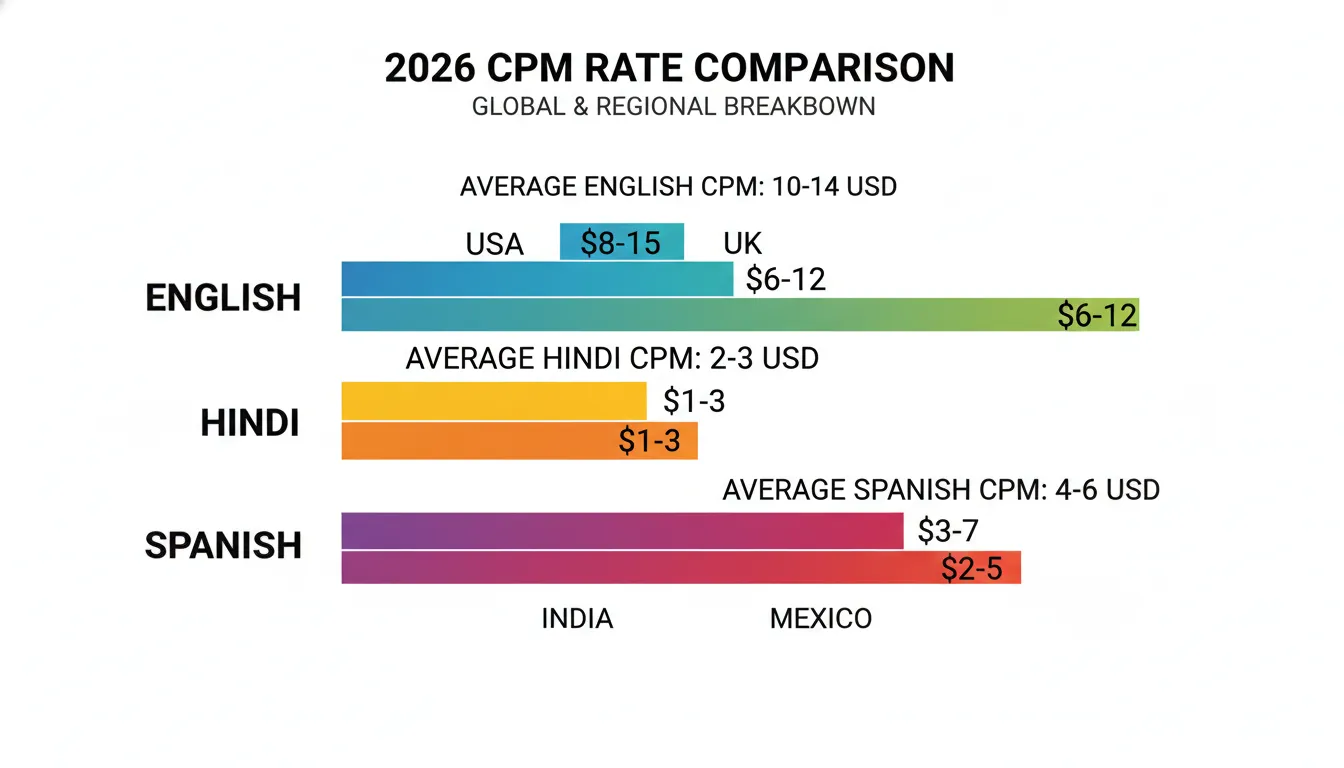
Here’s a hard truth that most creators ignore: the language you create content in can directly affect your earnings by 300-500%. A creator making videos in English might earn $8-15 per 1,000 views, while an equally skilled creator in Hindi might earn just $1-3 per 1,000 views for the same niche and audience size.
According to recent data analysis of YouTube monetization trends, language impacts CPM rates far more than most creators realize. It’s not just about what you say—it’s about where your audience is located and what advertisers are willing to pay to reach them. In 2026, this gap has only widened.
The frustration is real. You can have millions of subscribers in an emerging market and still struggle to earn enough to make YouTube a full-time income. Meanwhile, a creator with 100K subscribers in the US might be pulling in 5-10x the revenue. But here’s what most creators don’t understand: it’s not about the size of your audience, it’s about the purchasing power of your audience.
In this comprehensive guide, we’ll break down exactly how language affects your YouTube CPM rates in 2026, compare earnings across English, Hindi, and Spanish markets, and reveal the highest-paying language-geographic combinations that can transform your channel from a side hustle into serious income.
What Are CPM and RPM? Understanding the Language Factor
CPM stands for Cost Per Mille (thousand impressions). It’s what advertisers pay YouTube for every 1,000 ad impressions on your videos. RPM stands for Revenue Per Mille, which is what you actually earn after YouTube takes its cut (typically 45%).
Here’s why language matters so much:
Advertiser demand varies dramatically by language and region. English-language content, particularly from creators targeting US, UK, Canada, and Australia audiences, commands the highest CPM rates. Why? Because advertisers in these countries have the highest budgets. A company selling premium software might pay $50 CPM to reach US-based professionals but only $2 CPM to reach Indian viewers for the same product.
Language also influences audience purchasing power. The average American has more disposable income than the average viewer in India or most Latin American countries. This creates a cascading effect:
1. Advertisers target wealthy markets
2. They’re willing to pay more for those impressions
3. Creators in those markets earn higher CPM rates
4. More money flows to English-language content creators
But this isn’t universal. The language you use affects:
– Advertiser demand
– Geographic targeting accuracy
– Content category performance
– Seasonal earning fluctuations
– Competition levels
The sobering reality: a Spanish-language channel in Mexico might earn 50% less than an English-language channel covering the same niche, even with identical audience size and engagement metrics.

YouTube CPM Rates by Language in 2026: The Complete Breakdown
English: The Highest-Paying Language (By Far)
English remains the dominant language for YouTube monetization in 2026, but CPM rates vary significantly by target region.
English-language CPM rates by region:
| Region | Average CPM (2026) | RPM Average | Notes |
|——–|——————|————|——-|
| United States | $8-15 | $4-8 | Highest CPM globally |
| United Kingdom | $6-12 | $3-6 | Strong advertiser demand |
| Canada | $7-13 | $3.50-7 | Similar to US, slightly lower |
| Australia | $7-14 | $3.50-7 | Premium market, strong demand |
| Ireland | $5-11 | $2.50-5.50 | Growing advertiser base |
| Singapore | $6-12 | $3-6 | High purchasing power |
| New Zealand | $6-12 | $3-6 | Smaller market, good rates |
| South Africa | $3-7 | $1.50-3.50 | Growing market |
Why English dominates: The United States alone represents 30%+ of global digital advertising spend. Major tech companies (Google, Meta, Amazon, Apple, Microsoft) are based in English-speaking countries and bid aggressively for impressions from US audiences. A single tech advertiser might allocate millions monthly to YouTube ads targeting English-speaking professionals.
Real example: A creator making finance content in English targeting US audiences might earn $12 CPM, while the identical video in Spanish targeting Latin America earns $4 CPM. Same content, 3x earnings difference, purely due to language and geography.
English sub-categories that earn highest:
– Technology & software ($15-25 CPM)
– Finance & investing ($12-20 CPM)
– Business & entrepreneurship ($10-18 CPM)
– Real estate ($8-15 CPM)
– Online marketing ($10-16 CPM)
Hindi: The Lowest-Paying Language (Despite Massive Audience)
India has the second-largest YouTube audience in the world, with over 450 million active users. Yet Hindi-language creators earn a fraction of English creators’ revenue.
Hindi-language CPM rates (2026):
| Metric | Rate |
|——–|——|
| Average CPM | $1-3 |
| Average RPM | $0.50-1.50 |
| Tier 1 cities (Delhi, Mumbai, Bangalore) | $1.50-4 |
| Tier 2-3 cities | $0.75-2 |
| Highest-paying niche (Finance) | $3-6 |
| Lowest-paying niche (Entertainment) | $0.50-1.50 |
Why Hindi CPM is so low: Indian advertisers have significantly smaller budgets than US advertisers. A premium software company spending $100K/month on YouTube ads might allocate only $5K for Indian market penetration. Additionally, there’s massive competition—over 80 million Hindi-language channels exist on YouTube, flooding the market with supply and suppressing rates.
The purchasing power gap is real: The average US viewer has 8-10x the disposable income of an average Indian viewer. For luxury goods, this gap widens to 15-20x. Advertisers naturally allocate budgets where they see better ROI.
However, there’s opportunity in Hindi content:
– Scale matters: With 450M+ Hindi speakers on YouTube, even a $1 CPM can generate substantial income if you reach 10M+ monthly views
– Niche selection is critical: Tech, finance, and education content performs better than general entertainment
– Geographic targeting helps: Targeting tier-1 cities (Delhi, Mumbai, Bangalore, Hyderabad) can boost CPM by 30-50%
Hindi sub-categories that earn highest (2026):
– Technology tutorials ($2-4 CPM)
– Finance & stock market ($3-6 CPM)
– Coding & programming ($2.50-5 CPM)
– Digital marketing ($2-4 CPM)
– E-commerce education ($2-3.50 CPM)
Spanish: The Middle Ground (But Surprisingly Strategic)
Spanish-language content occupies an interesting middle position. It’s spoken by 500M+ YouTube users across Latin America, Spain, and the US Hispanic market. CPM rates vary wildly by region.
Spanish-language CPM rates by region (2026):
| Region | CPM Range | RPM | Population (YouTube users) |
|——–|———–|—–|————————–|
| Spain | $5-10 | $2.50-5 | 30M |
| Mexico | $3-7 | $1.50-3.50 | 85M |
| Colombia | $2-5 | $1-2.50 | 35M |
| Argentina | $3-6 | $1.50-3 | 30M |
| Chile | $4-8 | $2-4 | 18M |
| US Hispanic (English/Spanish mix) | $6-12 | $3-6 | 60M+ |
| Peru | $2-4 | $1-2 | 20M |
| Venezuela | $1-3 | $0.50-1.50 | 15M |
The surprising finding: Spanish content targeting Spain earns nearly as much as English content targeting some regions. Spain has strong advertiser demand and higher purchasing power than most Latin American countries.
The Hispanic US opportunity: Creators targeting US-based Hispanic audiences (bilingual or English-Spanish mix) can earn $6-12 CPM—comparable to English CPM—because they’re tapping into the US advertising market’s budget, not the Latin American market’s budget.
Strategic insight for Spanish creators: If you speak both English and Spanish, targeting US Hispanic audiences often yields better returns than targeting Latin America, despite the Latin American population being larger. This is purely an economics issue: US advertisers pay more.
Spanish sub-categories that earn highest (2026):
– Finance & cryptocurrency (Mexico/Argentina): $4-8 CPM
– Tech reviews & gadgets: $4-7 CPM
– E-commerce education: $3-6 CPM
– Online business (US Hispanic focus): $7-12 CPM
– Real estate (Spain/Mexico): $5-9 CPM
Key Takeaways
Language + Geography = Your Real CPM Rate (The Secret Combinations)
Here’s what most creators miss: your CPM isn’t determined by language alone. It’s determined by the intersection of language and geographic audience location.
The highest-paying combinations in 2026:
Tier 1: Premium Combinations ($10-18 CPM)
1. English + United States – Tech, finance, business content
2. English + United Kingdom – Professional, finance content
3. English + Canada – Business, technology content
4. English + Australia – Real estate, finance, tech
5. German + Germany – Tech, finance, premium niches
6. Swedish + Sweden – Tech, business content
Tier 2: Strong Combinations ($6-10 CPM)
1. English + Singapore – Tech, finance
2. English + Ireland – Tech, business
3. Spanish + Spain – Tech, finance
4. Spanish + US Hispanic targeting – Any niche
5. French + Canada – Professional content
6. Portuguese + Brazil (to US audiences) – Tech content
Tier 3: Emerging Combinations ($3-6 CPM)
1. Spanish + Mexico – Tech, finance
2. Spanish + Argentina – Business, crypto
3. Portuguese + Brazil – Education, tech
4. Hindi + Tier-1 Indian cities – Tech, finance
5. Indonesian + Indonesia – Tech, e-commerce
6. Thai + Thailand – E-commerce, business
Tier 4: Growth Markets ($1-3 CPM)
1. Hindi + General India – All categories
2. Spanish + Colombia/Peru – Tech, e-commerce
3. Vietnamese + Vietnam – Tech, education
4. Bengali + Bangladesh/India – Tech
5. Tagalog + Philippines – Tech, e-commerce

How to Optimize Your Channel for Higher CPM Based on Language Choice
Strategy 1: Language + Audience Alignment (200+ words)
The first step is honest assessment: who naturally watches your content and what language do they speak?
If you’re fluent in English and interested in tech, starting with English-targeted content makes financial sense. You’re tapping into the highest-paying market. However, if English isn’t your native language and your audience is primarily Hindi or Spanish speakers, forcing English content won’t work—authenticity matters for engagement.
Here’s the strategic approach:
Step 1: Identify your natural audience
– What language are you most comfortable speaking in?
– Which regions/countries are you geographically located in or have strong connections to?
– What niche do you want to focus on?
Step 2: Research CPM rates for that language-niche-region combination
Use YouTube Studio analytics to see where your existing viewers are located. This data is invaluable. If 70% of your viewers are in the US, English content is your answer. If 60% are in India, Hindi content likely makes sense.
Step 3: Make a 12-month content plan
Don’t switch languages randomly. Commit to 12 months of consistent content in your chosen language(s). Building an audience takes time, and language switching confuses algorithms and audiences.
Step 4: Test sub-regions and niches
Within your language, test different niches to find your highest-CPM category. An English creator might find that finance content earns $12 CPM while gaming earns $5 CPM. Double down on what works.
The multi-language opportunity: If you’re bilingual, consider launching a second channel in your second language. Keep them separate to avoid audience confusion. Many creators successfully run English and Spanish channels simultaneously, with the English channel generating more income but the Spanish channel building a passionate community.
Strategy 2: Geographic Targeting Within Your Language (200+ words)
Even within English-language content, you can explicitly target specific high-CPM regions.
Method 1: Keyword strategy by region
Use location-specific keywords to attract regional audiences. An English creator focusing on Australian audiences would use keywords like:
– “Australian property investment”
– “ASIC compliance”
– “Melbourne real estate trends”
These keywords attract Australian advertisers willing to pay premium CPM rates. The same video with generic keywords might attract global viewers with lower CPM rates.
Method 2: Timezone optimization
Upload videos at times when your target region is most active. If targeting US audiences, upload between 6-10 AM Eastern Time when US creators and viewers are online. If targeting UK audiences, upload between 8-11 AM GMT.
Method 3: Sponsorship and affiliate focus
Once you identify your highest-CPM region, partner with companies serving that region. A creator targeting Canadian audiences should pitch sponsorships to Canadian banks, real estate companies, and software providers. These partnerships often pay better than AdSense alone.
Method 4: Series and playlists by region
Create content series explicitly designed for regional audiences. “US Tax Planning for Freelancers” vs. “UK Tax Planning for Contractors” vs. “Canadian Tax Deductions” are three separate videos targeting three regions, each commanding higher CPM in their respective territories.
Method 5: Use YouTube’s geographic settings
In YouTube Studio settings, you can restrict comments and recommendations by region and language. You can also use geo-blocking if needed. This helps YouTube understand your target audience and serve relevant high-paying advertisers.
Real case study: A finance creator initially created generic “investing advice” videos earning $6 CPM. After switching to explicitly US-focused content (“SEC filing analysis,” “US stock market trends,” “401k optimization”), CPM jumped to $11. Same skill level, 83% earnings increase purely from geographic targeting.
Strategy 3: Niche Selection + Language Synergy (200+ words)
Not all niches perform equally across languages. This is crucial.
High-performance niche-language combinations:
English + Finance: $12-18 CPM
– Why: US and UK financial services companies have massive budgets
– Example: Stock trading, crypto, personal finance, real estate investment
English + Technology: $10-16 CPM
– Why: Tech companies (Google, Microsoft, Amazon, Apple
Advertisement