

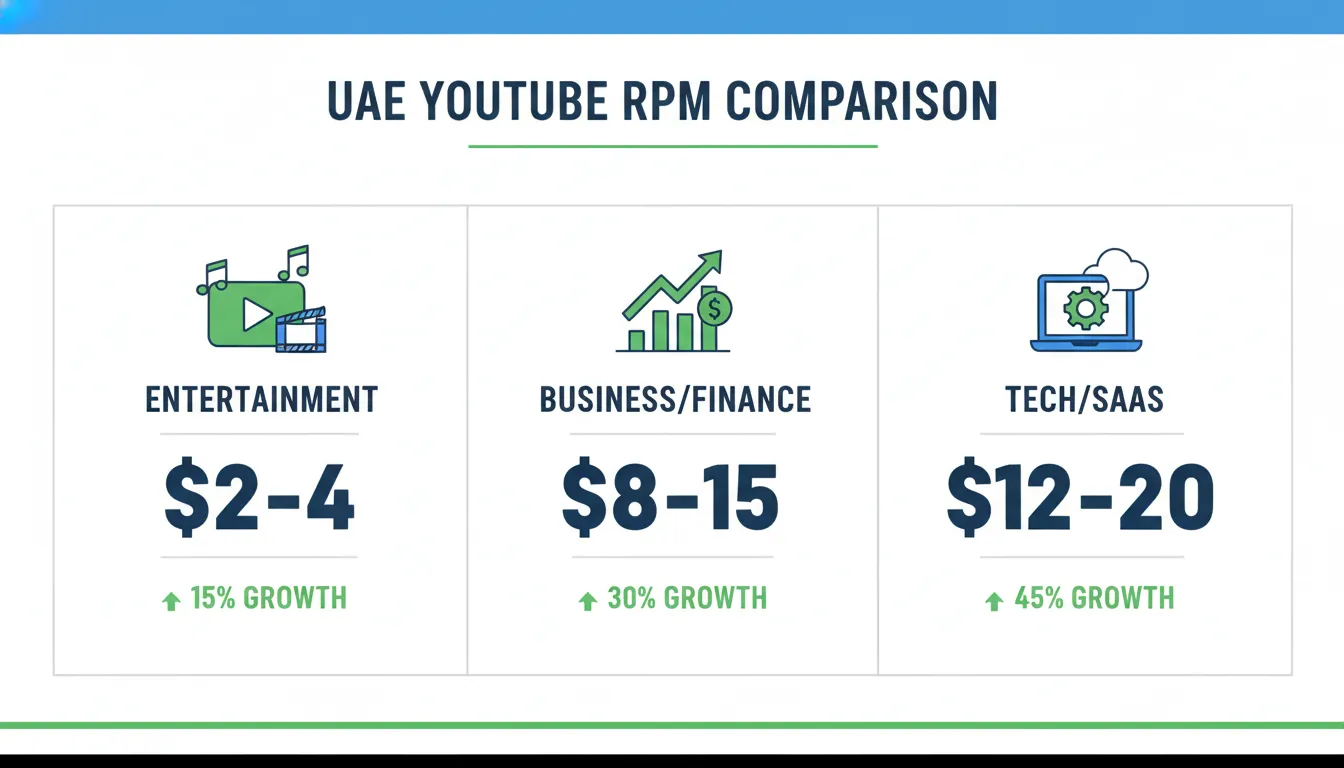
The UAE digital advertising market is projected to reach unprecedented heights in 2026-2027, with YouTube remaining the dominant platform for content monetization. Yet here’s the uncomfortable truth most creators ignore: not all YouTube views are worth the same. A creator in the entertainment niche might earn $2-4 per thousand views (RPM), while a finance-focused creator in the same market could pocket $12-20 RPM for identical traffic. This isn’t random. It’s tied directly to advertiser demand, audience demographics, and purchasing power in the UAE market.
For working professionals considering content creation as a secondary income stream, understanding YouTube RPM (Revenue Per Mille) in the UAE isn’t just useful—it’s essential. The difference between choosing the wrong niche and the right one could mean earning $500 monthly versus $5,000 from the same 100,000 views. This comprehensive guide breaks down real 2026 RPM data, identifies which niches dominate the UAE market, and provides actionable strategies to optimize your earnings before 2027.
The UAE’s advertising spend continues climbing, with brands increasingly targeting high-intent audiences through YouTube. Working professionals have a unique advantage: credibility in lucrative niches. Whether you’re in tech, finance, real estate, or healthcare, your existing expertise becomes your competitive moat. Let’s explore how to leverage it.
What Is YouTube RPM and Why It Matters in the UAE Market
YouTube RPM, or Revenue Per Mille, measures how much money you earn for every thousand video views. It’s different from CPM (Cost Per Mille), which is what advertisers pay YouTube. Your RPM is typically 45-55% of the CPM after YouTube’s cut. Understanding this distinction is critical because it directly impacts your income projections.
The UAE market is unique. With a population of 9.9 million and exceptionally high purchasing power compared to global averages, advertisers willingly pay premium rates for access to UAE audiences. The country’s median household income is among the highest globally, making it an attractive market for luxury brands, financial services, B2B software, and premium e-commerce products.
In 2026, the UAE’s digital advertising market is experiencing compound growth of 12-15% annually. This growth isn’t evenly distributed. Finance, technology, real estate, and professional services sectors command the highest advertising budgets, which directly translates to higher RPM rates for creators in these niches. Meanwhile, entertainment, gaming, and lifestyle niches—though high-volume—attract lower-paying advertisers with smaller budgets.
For working professionals, this creates an unusual opportunity. Your day job knowledge is literally worth money when converted to YouTube content. An accountant explaining UAE tax changes will earn significantly more per view than someone posting entertainment shorts, despite requiring less production time. The barrier isn’t quality—it’s selecting the right niche aligned with advertiser spending patterns.
RPM also fluctuates seasonally. The UAE sees advertising spikes during Q4 (October-December) when retailers prepare for holiday spending and Black Friday. January sees an uptick in finance-related advertising as businesses plan annual budgets. Summer months (June-August) typically see lower RPM as marketing budgets tighten. Savvy creators plan content calendars around these patterns.
High-Paying YouTube Niches in the UAE for 2026
Not all niches are created equal in the UAE market. Based on 2026 data and advertiser spending patterns, certain categories dramatically outperform others. Here’s the breakdown of which niches command premium RPM rates:
Finance and Investment Niches ($10-20 RPM)
The finance sector represents the highest-paying niche for UAE YouTube creators. Banks, investment platforms, cryptocurrency exchanges, and fintech startups are aggressively competing for audience attention. Topics including Islamic finance (Sharia-compliant investments), real estate investment, stock market trading, and personal finance for UAE expats all attract premium advertising rates.
Why? Because a single conversion—opening an investment account, getting a mortgage approval, or signing up for wealth management—can be worth hundreds or thousands of dirhams to the advertiser. They’re willing to pay top dollar for qualified, interested viewers. If your content demonstrates financial literacy and targets the UAE’s affluent demographic, you’re sitting in a gold mine. Creators focusing on UAE-specific finance topics (tax optimization, visa sponsorship costs, expat financial planning) see RPM rates consistently between $12-20.
Technology and SaaS ($8-18 RPM)
Software companies, tech hardware manufacturers, and cloud service providers spend aggressively on YouTube. The UAE’s tech adoption rate is exceptionally high, and businesses here are digitizing rapidly. Content about productivity software, coding tutorials, cybersecurity, artificial intelligence, and business automation attracts premium advertisers.
The beauty of tech niches is the global reach. While your primary audience might be UAE-based, the global tech community watches the same content. This means your RPM is influenced by international advertiser demand too. Creators covering emerging tech like AI integration, blockchain (beyond crypto), and enterprise software regularly report $10-18 RPM rates.
Real Estate and Property Development ($9-16 RPM)
The UAE real estate market is booming. Developers, real estate agents, property technology companies, and investment firms maintain massive advertising budgets. Content about property investment, Dubai real estate trends, villa buying guides, and commercial real estate attracts serious advertisers willing to pay premium rates.
A single real estate transaction in the UAE is worth millions of dirhams. Advertisers in this space understand that a viewer watching real estate content on YouTube is a qualified prospect. RPM rates in this niche consistently range from $9-16, with seasonal peaks during property launch seasons.
Healthcare and Medical Services ($7-15 RPM)
Medical tourism, dental services, cosmetic procedures, and healthcare technology companies advertise heavily on YouTube. The UAE’s expat population frequently searches for healthcare information, creating a valuable audience. Clinics, hospitals, and health tech startups see strong ROI from YouTube advertising.
Content about health tips, medical procedure explanations, wellness trends, and healthcare decision-making attracts quality advertisers. RPM rates typically fall in the $7-15 range.
Professional Services and B2B ($8-14 RPM)
Content targeting business professionals—accounting software, HR solutions, consulting services, business education—attracts high-value advertisers. Companies in the UAE are constantly looking to improve efficiency, and B2B service providers spend accordingly on advertising.
Lifestyle and Entertainment ($2-5 RPM)
In contrast, entertainment, general vlogs, gaming, and beauty content typically earn $2-5 RPM in the UAE. While these niches can generate high subscriber counts, the lower advertiser rates make them less profitable. The gap is dramatic: you’d need 10 times more views in the entertainment niche to match earnings from a finance niche creator.

Step 1: Choose Your High-RPM Niche Based on Expertise
The first critical decision is niche selection. This choice will determine your earning potential more than any other factor. For working professionals, the ideal approach is to leverage existing expertise rather than chase trending topics you don’t understand.
Assess Your Professional Background
List the skills and knowledge you’ve accumulated in your career. Are you a software engineer? That’s tech content. A project manager? That’s business/productivity. An accountant? That’s finance. A healthcare worker? That’s medical content. Your professional credibility is your biggest asset. Audiences trust expertise, and advertisers pay more for qualified audiences that trust the creator.
Don’t underestimate niche specialization. A general “money tips” channel will earn less than a specific “UAE expat financial planning” channel, even with fewer subscribers. Specificity attracts better advertisers.
Research Advertiser Demand
Use YouTube’s Ad Transparency tool to see which advertisers are running ads in your chosen niche. Search for competitor channels in your niche and examine their ad density. If you see ads every few seconds, that’s a signal of high advertiser demand and strong monetization potential.
Google Trends data shows search volume for finance-related terms in the UAE peaks during tax season (August-September) and end-of-year planning (November-December). Real estate searches spike during property launches. Tech queries surge around new product releases. Planning content around these seasonal demand spikes amplifies your RPM.
Validate Market Demand
Before committing to a niche, spend 2-3 weeks researching. Join Reddit communities, LinkedIn groups, and Facebook groups related to your potential niche in the UAE. What problems are people asking about? What questions appear repeatedly? These insights reveal both demand and content gaps.
Search YouTube for existing channels in your niche. Are they gaining subscribers? Reading comments reveals what viewers crave most. If you spot gaps—questions being asked repeatedly but not thoroughly answered—you’ve found content gold. High-value content fills these gaps and attracts quality viewers that advertisers pay premium rates to reach.
Evaluate Competition
Don’t be scared of competition; let it validate market demand. However, look for white space. If 100 channels cover “how to trade stocks,” but none specifically address “how to trade stocks as a UAE expat with tax optimization,” that’s your angle. Specificity beats volume.
Key Takeaways
Step 2: Optimize Your Channel for Maximum RPM Performance
Channel optimization goes beyond aesthetics. Every element influences whether YouTube shows your content to high-value viewers and whether quality advertisers want their ads displayed alongside your videos.
Create Advertiser-Friendly Content
Advertisers have strict guidelines. Controversial content, explicit language, political divisiveness, and sensitive topics cause them to avoid channels. Your content must be safe-for-advertising while remaining valuable and authentic. This doesn’t mean bland; it means strategically avoiding advertiser-unfriendly territory.
Review YouTube’s monetization policies thoroughly. Topics like violence, illegal activities, harmful substances, and hate speech trigger demonetization. Even borderline content gets flagged. Finance content discussing risky trading strategies, tech content showing hacking techniques, or health content promoting unproven treatments all risk demonetization.
The smartest approach: provide value without controversy. A finance channel explaining cryptocurrency can be monetized if it approaches the topic educationally. A tech channel discussing security vulnerabilities can be monetized if it focuses on defense rather than exploitation.
Optimize Metadata for Advertiser Categories
YouTube uses your title, description, tags, and category selection to categorize your content. This categorization determines which advertisers see your videos. Misclassification means lower-paying advertisers get matched to your content.
If you’re creating finance content, ensure your video category is “Finance.” Use tags specifically tied to financial topics. In your description, include keywords that signal to YouTube and advertisers that this is premium finance content. Examples: “investment advice,” “financial planning,” “wealth management,” “portfolio diversification.”
This might seem small, but it’s powerful. A finance video miscategorized as “Entertainment” might be seen by entertainment advertisers paying $3 RPM instead of finance advertisers paying $15 RPM. That’s a 5x difference for identical content.
Build Watch Time and Viewer Engagement
RPM is one metric, but it’s influenced by others. YouTube’s algorithm prioritizes content that keeps viewers watching. Longer average view duration correlates with higher YouTube engagement metrics, which in turn influences advertiser matching quality.
Structure videos for retention. Hook viewers in the first 15 seconds. Break content into digestible sections with clear transitions. Use pattern interrupts (graphics, B-roll, screen recordings) to maintain attention. End with clear value statements so viewers feel satisfied, not clickbaited.
Engagement signals matter too. Videos with high comment ratios, likes, and shares get boosted by YouTube’s algorithm and attract higher-quality impressions. Actively encourage engagement by asking questions, requesting feedback, and responding to comments quickly. This builds community and signals video quality to YouTube.
Maintain Consistent Upload Schedule
Channel consistency influences YouTube’s recommendation algorithm and viewer expectations. Creators uploading on a consistent schedule see better reach than sporadic uploaders. The schedule doesn’t need to be daily; weekly or bi-weekly is sufficient for building momentum.
For working professionals with limited time, consistency matters more than frequency. One high-quality video weekly outperforms three mediocre videos weekly. Set a realistic schedule you can maintain month after month.

Step 3: Create Content That Attracts Premium Advertisers
Content quality directly influences which advertisers bid on your inventory. High-quality, professional content attracts enterprise brands willing to pay premium rates. Low-quality, amateur content attracts discount advertisers.
Research High-Intent Keywords
Not all keywords are equal in advertiser value. Transactional keywords (keywords indicating purchase intent) attract higher-paying advertisers than informational keywords. “Best accounting software UAE” (transactional) attracts higher-paying ads than “what is accounting” (informational).
Use Google Keyword Planner to identify keywords in your niche. Filter for high search volume and high cost-per-click (CPC). These keywords indicate strong advertiser interest and competition, translating to higher RPM.
Create content clusters around these keywords. An accounting software video might lead viewers to follow-up videos about implementation, best practices, and specific feature comparisons. This content cluster keeps viewers on your channel longer, increasing total impressions and revenue per viewer.
Address Buyer Pain Points
Videos that address specific business problems attract B2B advertisers. “How to reduce operational costs using automation” attracts software companies. “How to optimize warehouse logistics” attracts logistics software firms. These audiences are pre-qualified prospects worth significant advertising budgets.
Interview industry professionals, feature case studies, and demonstrate concrete outcomes. Data-driven content that shows ROI attracts businesses thinking about purchasing solutions. They’re willing to pay premium advertising rates for access to these viewers.
Maintain Production Quality
Professional production quality signals content value to viewers and advertisers alike. This doesn’t require expensive equipment—a good microphone and adequate lighting outweigh 4K video quality. Clear audio is non-negotiable; viewers tolerate poor video more than poor audio.
Invest in basic equipment: a USB microphone ($50-150), ring light ($30-100), and a simple backdrop. These fundamentals dramatically improve perceived quality and viewer retention. Better retention means more ad impressions per video, directly boosting revenue.
Use editing software to add graphics, transitions, and B-roll. Polished editing signals professionalism. Tools like DaVinci Resolve (free), Adobe Premiere, or CapCut handle basic editing smoothly.
Step 4: Implement Smart Publishing and Timing Strategies
When you publish affects your RPM and total earnings. The UAE market has unique characteristics that influence optimal publishing times.
Understand UAE Audience Behavior
The UAE has a specific work culture and daily rhythm. Most professionals work 8 AM to 5 PM Saturday through Thursday (Friday is a weekend day). This means peak YouTube consumption happens evenings (7 PM-11 PM), early mornings (6-8 AM), and weekends.
Publishing content Tuesday through Thursday afternoon ensures it gains momentum during evening and weekend viewing when your target audience is active. Avoid publishing Friday and Saturday mornings when engagement is lowest.
Leverage Seasonal RPM Peaks
As mentioned earlier, UAE advertising budgets spike during specific periods. Plan content calendars accordingly:
– August-September: Tax planning, financial year-end preparation, back-to-school related products
– October-December: Year-end planning, holiday spending, Black Friday, New Year resolutions
– January-February: Annual budget planning, New Year’s business goals, performance reviews
– March-April: Mid-year adjustments, summer planning, Ramadan/Eid shopping
Schedule high-effort, high-quality content during these peak periods when RPM is naturally higher. Use off-peak periods for lighter content or content that requires less production effort.
Use YouTube Premiere Feature
YouTube’s Premiere feature allows you to schedule videos and broadcast them live with your audience. This creates a communal viewing experience, boosting initial engagement and watch time. High engagement videos get algorithmic boosts, potentially reaching more viewers.
Premiering content during peak viewing hours (8-10 PM UAE time) maximizes live viewership and early engagement, which influences the algorithm.
Tools and Resources for Tracking and Optimizing RPM
Success requires data
Advertisement
