

The credit card niche has quietly become one of the most lucrative content categories on YouTube in 2026. While most creators focus on entertainment or lifestyle content earning $1-3 RPM, credit card and finance creators are consistently pulling in $5-25 per thousand views. This isn’t luck. It’s intentional positioning in a niche where advertisers pay premium rates because the audience has disposable income and purchasing intent.
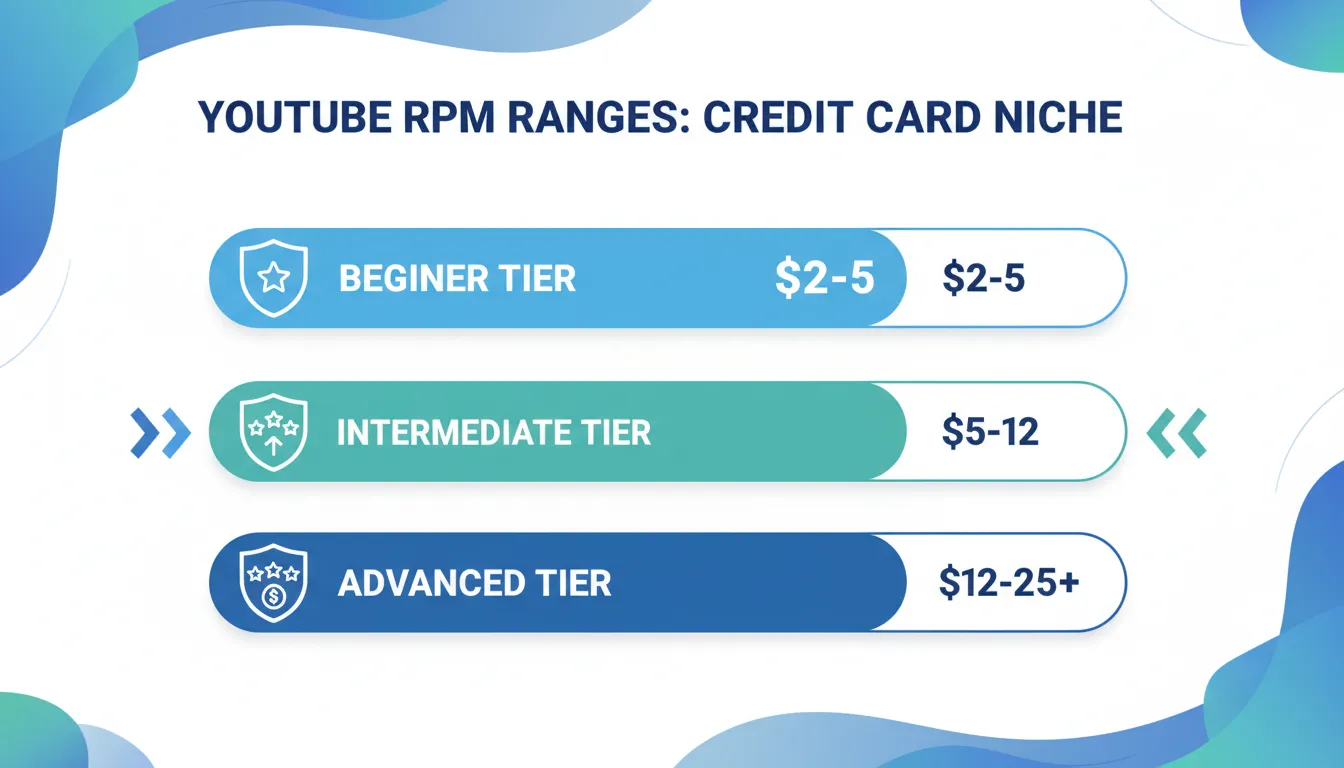
Here’s the reality: YouTube RPM (Revenue Per Mille) in the finance space varies dramatically based on your content tier, audience geography, and specialization. A beginner credit card channel might earn $2-5 RPM. An intermediate creator with solid audience engagement and US-focused content could hit $8-15 RPM. Advanced creators who’ve built authority and optimize for high-intent viewers? They’re seeing $15-25+ RPM consistently. Some top performers even exceed this range.
The challenge isn’t just creating content about credit cards. It’s creating the *right* content at the *right* stage of your channel’s development. This article provides a complete content map—from day one through advanced monetization—so you know exactly what to create, when to create it, and why each piece drives RPM growth. Whether you’re launching your first video or scaling an established channel, this strategic framework will help you maximize every impression.
What Is YouTube RPM and Why It Matters for Credit Card Creators
YouTube RPM is the amount you earn per thousand views *after* YouTube takes its cut. It’s different from CPM (Cost Per Mille), which is what advertisers pay. YouTube typically takes 45%, leaving creators with about 55% of ad revenue. So if CPM is $20, your RPM might be around $11.
For the credit card niche specifically, this metric is crucial because it determines your actual earnings potential. A credit card channel with 100,000 monthly views earning $15 RPM generates $1,500 in monthly ad revenue. Scale that to 500,000 views and you’re looking at $7,500 monthly—enough to be a full-time content creator.
But here’s what most creators miss: RPM isn’t static. It fluctuates based on several factors unique to finance content:
1. Audience Geography
US and Canadian audiences generate significantly higher RPM than other regions. Finance advertisers allocate massive budgets to English-speaking, high-income countries. A US-focused credit card channel can earn 3-4x more RPM than a similar channel targeting India or Southeast Asia.
2. Content Specificity
Broad “credit card reviews” content earns less than targeted content like “best credit cards for business owners” or “premium travel cards for high-income earners.” Niche specificity attracts higher-paying advertiser categories.
3. Audience Intent
Viewers actively researching credit cards to apply represent high-value traffic. Casual watchers learning about credit card features generate lower advertiser rates.
4. Channel Authority
Established channels with proven audience retention and engagement metrics command higher CPM bids from advertisers. A channel with 100K subscribers and strong watch time earns more per view than a brand-new channel with the same content quality.
5. Seasonal Fluctuations
Credit card promotions peak during certain times: back-to-school (August), holiday spending (November-December), and tax season (January-March). RPM can spike 50-100% during these periods.
Understanding these dynamics helps you build a content strategy that doesn’t just generate views—it generates *profitable* views.
Beginner Content Map: Building Your Foundation ($2-5 RPM Range)
When you’re starting a credit card channel, your focus should be establishing credibility and building an audience. You won’t hit high RPM immediately. Most new channels earn $2-5 RPM for the first 6-12 months. This isn’t failure—it’s expected. Here’s why: YouTube’s algorithm favors watch time and audience retention, not revenue. New channels lack both. Additionally, your early audience is likely mixed geographically, with many viewers outside high-paying regions.
Your beginner content pillars should focus on education and discovery:
1. Credit Card Basics Series (Videos 1-5)
Create foundational content that ranks for high-search-volume keywords but doesn’t require extreme niche specialization:
– “Complete Beginner’s Guide to Credit Cards in 2026”
– “Credit Card Terms Explained: APR, Annual Fee, Grace Period”
– “How Credit Scores Work and Why Cards Matter”
– “Building Credit from Zero: Credit Cards for Beginners”
– “Credit Card vs. Debit Card: Key Differences”
These videos establish your expertise and capture viewers early in their credit card research journey. They won’t convert to affiliate sales immediately, but they build watch time and channel authority.
2. Popular Card Reviews (Videos 6-15)
Review established cards with high search volume but moderate competition:
– “Discover IT Card Review 2026: Cashback Breakdown”
– “Chase Freedom Unlimited: Full Benefits Analysis”
– “Capital One Quicksilver: Is It Worth It?”
– “Amazon Prime Visa Card: Complete Review”
– “Blue Cash Preferred: Comprehensive Breakdown”
Focus on cards with affiliate programs available (most major issuers offer these). Even though RPM is low, affiliate commissions become your second income stream.
3. Comparison Content (Videos 16-25)
Comparison videos drive higher engagement because viewers often watch longer, comparing multiple options:
– “Best Cashback Credit Cards Comparison 2026”
– “Travel Rewards Cards Face-Off: Chase vs. American Express”
– “Beginner Credit Cards: Top 5 Options Compared”
– “Business Credit Cards Under $95 Annual Fee”
– “Student Credit Cards Comparison: Which Offers Best Benefits?”
At this stage, your RPM might range $2-5 per thousand views. Don’t get discouraged. You’re building a foundation. Your watch time is increasing. Your subscriber count is growing. These metrics determine future RPM more than anything else.
Key metrics to track as a beginner:
– Aim for 60%+ average view duration (how long people watch)
– Target 4-6% click-through rate on cards in descriptions
– Build toward 10,000 total channel watch hours (YouTube monetization requirement)
– Focus on videos that generate 500+ views in first week
Intermediate Content Map: Increasing Specialization ($5-12 RPM Range)
Once your channel has 10,000 watch hours and 1,000 subscribers, you’ve unlocked YouTube Partner Program monetization. Now it’s time to shift strategy. Your beginner content established authority. Your intermediate content should specialize deeply and attract higher-paying advertiser categories.
At the intermediate stage, you’re seeing CPM increases because advertisers recognize your audience’s purchasing intent. Your viewers aren’t casually learning about credit cards—they’re ready to apply. This behavioral signal pushes you into the $5-12 RPM range.
1. Niche Specialization Content (Videos 26-50)
Pick a sub-niche and own it. This is where serious RPM growth happens:
*Example 1: Premium Travel Cards*
– “American Express Platinum Card: Full Review for 2026”
– “Chase Sapphire Reserve vs. Prestige: Which Luxury Card Wins?”
– “How to Maximize Airline Miles with Premium Travel Cards”
– “Best Premium Travel Cards for International Business Travel”
– “Airport Lounge Benefits Compared: Premium Card Analysis”
Travel and luxury financial products attract high-CPM advertisers (luxury brands, travel companies, premium financial services).
*Example 2: Business Credit Cards*
– “Best Business Credit Cards for Startups 2026”
– “Business vs. Personal Credit Cards: Key Differences”
– “Maximizing Business Card Rewards for Specific Industries”
– “Business Credit Cards with $0 Annual Fee”
– “Corporate Credit Card Programs: Complete Guide”
Business finance content attracts B2B advertisers with massive budgets. RPM can jump to $10-15 in this niche.
*Example 3: Premium/High-Income Focused*
– “Credit Cards Exclusively for $200K+ Income Earners”
– “Centurion Card: The Most Exclusive Credit Card in America”
– “Building a Premium Credit Card Portfolio”
– “Best Credit Cards for High Net Worth Individuals”
High-net-worth content attracts luxury brand advertisers. CPM typically runs $30-50+, translating to $15-25+ RPM.
2. Affiliate Monetization Content (Videos 51-75)
At this stage, you have enough authority to create dedicated content around specific affiliate partners. This content might earn lower RPM but higher total revenue through commissions:
– “How to Get American Express Platinum Card: Full Application Guide”
– “Approved for Chase Sapphire Reserve? Here’s What Comes Next”
– “Step-by-Step: Activating Your New Credit Card Benefits”
– “Maximizing First-Year Sign-Up Bonuses (with current offers)”
These videos get lower YouTube RPM ($3-7) because they’re more commercial. But affiliate commissions often exceed YouTube revenue. A single Amex Platinum card signup might earn $100-300 in affiliate commission.
3. Problem-Solving Content (Videos 76-100)
Create content addressing specific viewer pain points. This drives high engagement and positions you as a solution expert:
– “Bad Credit but Need a Card? Here Are Your Options”
– “Denied for Credit Cards? Here’s Why and What to Do”
– “Credit Score Damage from Multiple Applications: How Long Recovery Takes”
– “Declined at Checkout? Credit Card Troubleshooting”
– “Annual Fee Waiver: How to Get Yours (Scripts Included)”
Problem-solving content generates strong engagement metrics, which YouTube’s algorithm rewards with better distribution. Higher distribution = more views = more RPM, even if individual CPM rates are moderate.
Channel metrics at intermediate stage:
– 50,000+ subscribers
– 500K+ monthly views
– 65%+ average view duration
– Clear subscriber growth month-over-month
– Established affiliate relationships with 3+ card issuers
Your intermediate stage revenue might look like: $5 RPM × 500K monthly views = $2,500 monthly from ads, plus $1,500-3,000 from affiliate commissions = $3,500-5,500 total monthly revenue.
Key Takeaways
Advanced Content Map: Authority Building ($12-25+ RPM Range)
Advanced creators have transcended “just making videos about credit cards.” They’ve become recognized experts. Advertisers seek them out. Viewers trust their recommendations implicitly. These channels earn $12-25+ RPM, often more during peak seasons.
How do you reach this level? It requires strategic content that reinforces authority while maximizing advertiser perception of your audience value.
1. Investigative and Data-Driven Content (Videos 101-130)
Advanced creators produce original research that other channels cite. This builds authority faster than any other strategy:
– “I Analyzed 10,000 Credit Card Applications: Here’s What I Found”
– “Credit Card Industry Report 2026: How Much Banks Make Per Cardholder”
– “Approval Rate Analysis: Which Cards Accept What Credit Scores?”
– “Sign-Up Bonus Trends: Are Banks Getting More Generous or Stingy?”
– “Geographic Analysis: Credit Card Offers Vary by Location (Here’s Proof)”
Investigative content attracts mainstream media attention, creates backlinks, and establishes you as an industry authority. Advertisers pay premium rates for audiences that trust creators with authority status.
2. Advanced Strategy Content (Videos 131-160)
Create content for experienced cardholders optimizing their portfolios:
– “Building a $50K+ Annual Rewards Portfolio Strategy”
– “Multi-Card Strategies: Optimizing for Specific Travel Goals”
– “Credit Utilization Hacks: Gaming Credit Scores (Legally)”
– “Maximizing Sign-Up Bonuses Across 12 Months: Advanced Planning”
– “Business Credit Card Stacking for Maximum Tax Deductions”
Advanced strategy content attracts high-income viewers. These viewers have significant purchasing power, making them attractive to premium advertisers. CPM often reaches $40-60+.
3. Exclusive Content and Partnerships (Videos 161-190)
Advanced creators negotiate exclusive benefits for their audiences:
– “Exclusive: American Express Partnership Offer for My Viewers”
– “Negotiated Bonus: $300 Offer (Card Issuers Won’t Show This)”
– “Viewer-Only Benefit: Enhanced Sign-Up Bonus Details”
– “Behind-the-Scenes: Credit Card Marketing (What You Don’t See)”
Exclusive content drives multiple revenue streams: YouTube RPM increases because the content demonstrates monetization capability (attractive to advertisers), affiliate conversions increase because viewers feel privileged, and you might negotiate direct sponsorships from card issuers.
4. Thought Leadership Content (Videos 191-220)
Position yourself as someone shaping the credit card industry:
– “The Future of Credit Cards in 2027: My Predictions”
– “How Credit Card Companies Should Respond to 2026 Trends”
– “What Credit Card Companies Won’t Tell You About Profitability”
– “Industry Analysis: Why Annual Fees Keep Rising”
– “The Credit Card War: Who’s Winning in 2026?”
Thought leadership content attracts business-to-business advertisers and premium sponsorship opportunities. You might earn $10,000-50,000 for direct sponsorships from fintech companies, financial advisory services, or related industries.
5. High-Engagement Community Content (Videos 221-250)
Advanced creators build genuine communities, not just audiences:
– “Live Q&A: Your Credit Card Questions Answered”
– “Community Spotlight: How Subscribers Optimized Their Cards”
– “Viewer Success Stories: Applied and Got Approved”
– “Mistakes I’ve Made (And You Should Avoid)”
– “What I Got Wrong About Credit Cards (Corrections)”
Community-focused content generates exceptional engagement metrics. Watch time increases. Comments surge. YouTube’s algorithm prioritizes this content for distribution. More distribution drives RPM regardless of the video’s direct monetization value.
Advanced content requirements:
– 250,000+ subscribers
– 2M+ monthly views
– 70%+ average view duration
– Regular backlinks from financial media
– Multiple affiliate partnerships with $10,000+ annual revenue
– Industry recognition or media mentions
Your advanced revenue might look like:
– YouTube Ad Revenue: $15 RPM × 2M views = $30,000 monthly
– Affiliate Commissions: $20,000-40,000 monthly
– Direct Sponsorships: $5,000-50,000 per sponsorship
– Total: $55,000-120,000+ monthly

Tools and Resources to Maximize Credit Card Content RPM
Creating content strategically matters less if you don’t have the right tools to measure, optimize, and amplify your efforts. Here are essential resources organized by function:
Analytics and RPM Tracking:
| Tool | Purpose | Cost | Best For |
|——|———|——|———-|
| YouTube Studio | Native analytics, RPM tracking | Free | Real-time data, CPM monitoring |
| VidIQ | Competitor analysis, keyword research | Free-$99/month | Finding high-RPM keywords |
| TubeBuddy | Video optimization, ranking tracking | Free-$14/month | Pre-publication optimization |
| Social Blade | Historical RPM trends, subscriber growth | Free | Long-term trend analysis |
| Ahrefs | Backlink tracking, content authority | $99-399/month | Authority measurement |
Content Research and Strategy:
For finding what content resonates in the credit card niche, use:
– **
Advertisement
