

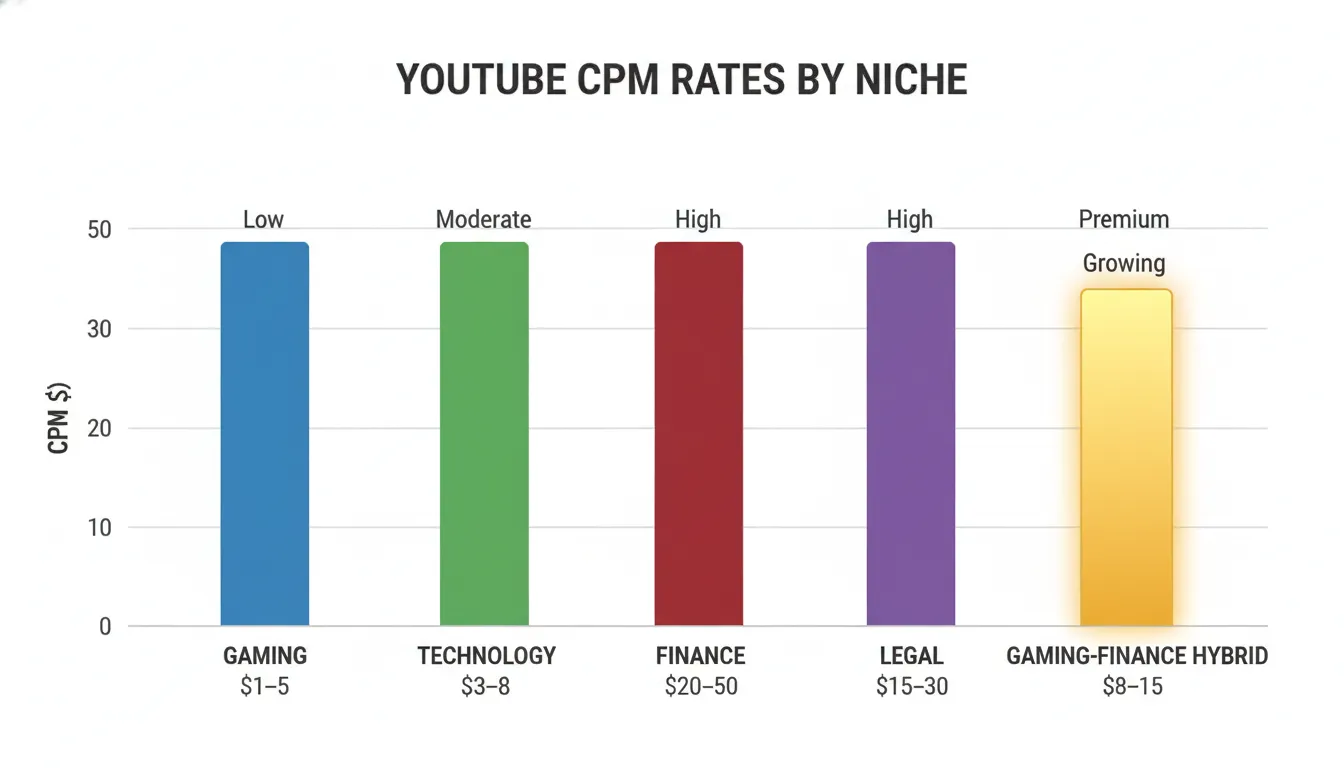
Gaming is the most watched category on YouTube. Over 1 billion hours of gaming content are consumed daily on the platform. Yet gaming creators are making a fraction of what creators in other niches earn per thousand views. A gaming channel might pull in 50,000 views in a week and earn just $50–$250, while a finance creator with the same view count could earn $1,000–$2,500. This isn’t a bug in the YouTube algorithm. It’s the fundamental economics of the advertising market. In 2026, the gaming niche faces a critical challenge: massive audience reach but minimal monetization potential. The average CPM (cost per thousand impressions) for gaming content sits between $1 and $5. Compare that to finance niches at $20–$50 CPM, legal content at $15–$30 CPM, or insurance at $25–$40 CPM, and the gap becomes stark. But here’s what most gaming creators don’t realize: the solution isn’t to abandon gaming. It’s to expand your niche strategically. Gaming creators who integrate finance, investing, tech tutorials, or skill-building content into their channels are seeing RPM (revenue per thousand views) spike to $8–$15—a 200–400% increase. This guide reveals exactly why gaming CPM is so low, how the advertising market values different content, and the specific hybrid strategies that top gaming creators are using to multiply their earnings in 2026.
What Is CPM and Why Does Gaming Rank Last Among All Niches?
CPM stands for “cost per thousand impressions.” It’s what advertisers pay YouTube per 1,000 views of an ad. RPM (revenue per thousand views) is what you keep after YouTube takes its cut—typically 55% goes to creators, 45% to YouTube. The distinction matters because not every view generates an ad impression, and YouTube’s algorithm determines which ads show on which videos based on audience value. Gaming content has the lowest CPM globally because of how advertisers perceive the audience demographic and purchasing power. Here’s the economic breakdown:
Why Gaming CPM Is So Low:
Gaming audiences skew younger—average age 16–24. Younger audiences have less disposable income and represent lower lifetime value to advertisers. A 20-year-old gamer watching gameplay has a different purchase intent than a 45-year-old small business owner watching accounting tutorials. Advertisers pay based on predicted conversion and customer lifetime value. They’ll pay $50 per thousand impressions for finance content because the audience has money to invest. They’ll pay $2 per thousand for gaming because the audience is primarily entertainment-focused. The gaming niche is also volume-driven. Millions of channels compete for gaming viewers. Supply of gaming inventory is massive. Demand from advertisers wanting to reach gamers is moderate. Basic economics: oversupply depresses prices. Finance, legal, and insurance niches have fewer creators, higher barriers to entry, and significant advertiser demand. The advertising market for these niches is smaller but more competitive on the demand side, which drives prices up.
Gaming content is primarily entertainment-focused. Advertisers value intent-driven content—tutorials, education, problem-solving—more than passive entertainment. A viewer watching “how to start investing” is in a buying mindset. A viewer watching gameplay is in a leisure mindset. The brand safety concern compounds this. Game content can be unpredictable. A streamer might encounter explicit language, controversial moments, or content that major brands want to avoid. This causes many advertisers to either reduce bids or opt out entirely from gaming categories. In contrast, finance tutorial creators operate in safer territory where brand safety risk is minimal.
CPM also varies dramatically by geography. A US viewer is worth more to advertisers than viewers from India, Brazil, or Southeast Asia. Gaming has a global audience with significant viewership from lower-income countries. Finance content skews toward developed markets (US, UK, Canada, Australia). This geographic mix compounds the CPM problem for gaming channels.
The Hidden Truth: Volume Can Compensate, But It Requires Scale
While gaming CPM is genuinely the lowest, gaming creators have one massive advantage: volume. A gaming channel with 500,000 subscribers might generate 10 million monthly views. A finance channel with 500,000 subscribers might generate 2–3 million monthly views. Gaming audiences are more consistent, watch longer sessions, and generate more total impressions. Here’s the math:
Gaming Channel (Hypothetical):
– 10 million monthly views
– $2 CPM (realistic average)
– Monthly earnings: $20,000
– Annual earnings: $240,000
Finance Channel (Hypothetical):
– 3 million monthly views
– $30 CPM (realistic average)
– Monthly earnings: $90,000
– Annual earnings: $1,080,000
Even with 3x lower views, the finance channel earns significantly more due to CPM. However, not all gaming creators can build 10 million monthly views. Most gaming channels plateau between 100,000 and 1 million monthly views, which generates $200–$5,000 monthly from ads alone—not enough to be a full-time income. This is where the hybrid strategy becomes essential.
Strategy 1: Add Educational Finance Content to Your Gaming Channel
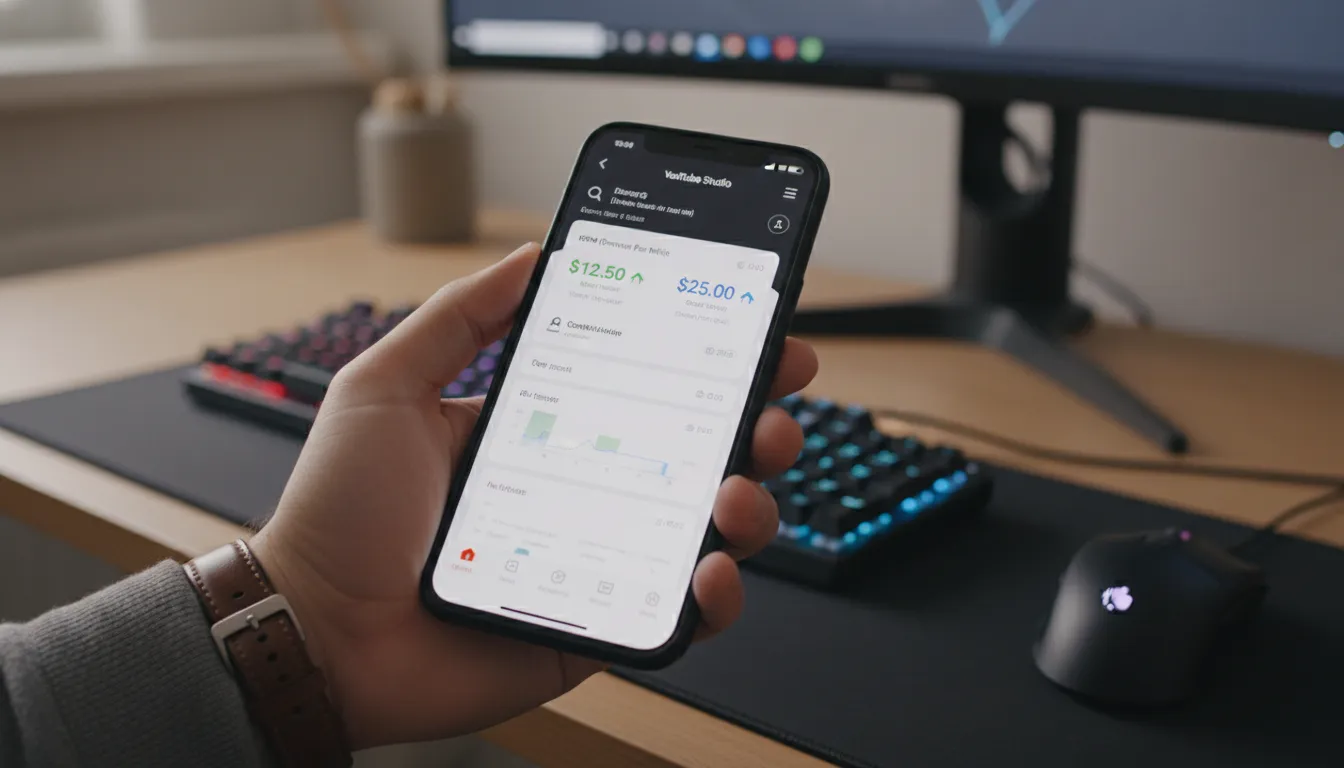
The highest-performing gaming channels in 2026 are those that weave finance education into their content. This doesn’t mean abandoning gameplay. It means creating a dual-value proposition: entertainment plus education. Here’s why this works: you keep your existing gaming audience but trigger YouTube’s algorithm to serve higher-CPM ads. When a video is tagged as “finance education” or includes keywords like “investing,” “portfolio,” “passive income,” or “cryptocurrency,” the platform routes it to finance advertisers who pay 5–10x more. Your audience doesn’t change. The ad category changes.
Specific implementations:
Gaming creators are starting channels about “investing on a gamer’s salary,” “passive income for streamers,” “building wealth while gaming,” or “financial independence for esports players.” These videos maintain gaming context but shift ad targeting. A video titled “How I Invested $1,000 Gaming Winnings Into ETFs” combines your gaming expertise with finance education. It gets gaming views but finance CPM. Hybrid channels that blend gaming and finance content are reporting $8–$15 CPM consistently—a 300–600% improvement over pure gaming. This strategy requires minimal audience shift. You’re not asking gaming fans to watch accounting tutorials. You’re asking them to learn finance in a context they already care about: gaming income and wealth-building. The education angle also improves YouTube’s algorithm treatment. Educational content gets more shelf space, recommendations, and watch time. YouTube promotes educational value. So a “learn to trade with gaming earnings” video will get pushed harder than pure gameplay.
Execution steps:
First, audit your gaming content. Which videos get the longest watch time? Which topics generate the most comments? Start layering finance angles into your top-performing content pillars. If your gaming channel is about esports, create “how pro gamers build wealth” content. If it’s about speedrunning, create “monetizing speedrunning attempts” or “passive income from streaming” content. Second, create dedicated finance mini-series within your gaming channel. One video per week that ties gaming income directly to financial goals. Third, use playlists to group gaming and finance content together, signaling to YouTube’s algorithm that your channel covers valuable, educational ground. This triggers better ad placement on all your content.
Key Takeaways
Strategy 2: Develop Vertical Segments and Separate Channels
Some creators find that pure channel mixing dilutes their brand. An alternative is developing distinct content verticals while maintaining cross-promotion. Gaming creators at scale often have: a main gaming channel (gameplay, streams, reviews), a secondary finance/business channel (earnings breakdowns, investment guides, income strategies), and sometimes a lifestyle channel (fitness, mental health, productivity). This separation allows each channel to optimize for its category while building a cohesive personal brand.
The advantage is algorithmic purity. A finance channel gets better promotion when it’s 100% finance, not 70% gaming and 30% finance. YouTube’s recommendation engine categorizes channels and promotes them within niche communities. A pure finance channel gets recommended to finance viewers, attracting higher CPM advertisers. However, this strategy requires more production work. You’re managing multiple channels, multiple upload schedules, and multiple communities. Most creators find this unsustainable unless they have a team. For solopreneurs, the hybrid-within-one-channel approach (Strategy 1) is more practical.
If you choose the vertical segment approach, ensure strong cross-promotion. Every gaming video should link to relevant finance content. Every finance video should acknowledge your gaming audience. You’re building an ecosystem, not separate silos.

Strategy 3: Monetize Beyond AdSense—Use Sponsorships, Affiliate Marketing, and Memberships
The reality of gaming YouTube is that CPM economics alone can’t sustain a full-time income for most creators. This is why successful gaming creators diversify revenue streams. AdSense might be 40–50% of total income, while sponsorships, affiliate marketing, and memberships make up the rest.
Sponsorships: Gaming channels attract sponsorships from gaming hardware companies (headsets, mice, chairs, monitors), energy drink brands, and VPN services. These sponsorships aren’t tied to CPM. A brand pays a flat rate ($500–$5,000+ depending on channel size) to mention their product. This is where gaming actually wins—gaming brands have massive budgets and actively sponsor creators. A finance channel rarely gets sponsorship offers. A gaming channel gets dozens per month. You can negotiate sponsorship rates that exceed your AdSense earnings significantly.
Affiliate marketing: Promote products you genuinely use—gaming peripherals, software, courses, or financial services—and earn commission on sales. Gaming creators promoting gaming chairs, monitors, or mechanical keyboards can generate substantial affiliate income. Progressive gaming creators are also promoting finance tools (stock brokers, crypto platforms, budgeting apps) to their audience, earning commission while improving CPM simultaneously.
Memberships and Super Chat: YouTube’s membership feature lets viewers pay monthly for perks (exclusive content, badges, emotes). Gaming channels have higher membership uptake than educational channels because the community is more engaged and fun. Combined with Super Chat (tips during streams), this creates direct income that isn’t tied to CPM at all. A streamer with 50,000 channel members earning $5/month generates $250,000 annually—independent of ad rates.
Courses and digital products: Create a course on “how to turn gaming into income,” “streaming setup guide,” or “esports career path.” Sell it to your audience. This is completely outside the YouTube CPM problem. You control pricing and margins entirely.
For 2026, the successful gaming creator model isn’t “maximize AdSense CPM.” It’s “use YouTube as audience-building, monetize through multiple revenue streams.” The hybrid finance strategy improves AdSense CPM, but sponsorships, memberships, and affiliate marketing might become your larger income sources.
Tools, Resources, and Cost Breakdown for Implementing Hybrid Content
Implementing a hybrid gaming-finance strategy requires some tools and resources. The good news: most have free tiers or are inexpensive.
Content creation and analytics:
– YouTube Analytics (free): Track which videos perform best, where watch time drops, and which audience demographics engage. Use this data to decide which finance topics resonate with your gaming audience.
– TubeBuddy ($9–$39/month): Keyword research for finance-gaming hybrid topics. Find search volume for queries like “passive income for gamers” or “investing gaming earnings.”
– VidIQ (free and paid): Competitor analysis. See what gaming creators are doing with finance content.
Finance education resources (to stay credible):
– Investopedia (free): Learn finance terminology and concepts so you can explain them accurately on video.
– Coursera Finance Courses (free audit or $39–$49): Take accredited finance courses to build expertise. This credibility shows on camera.
– ChatGPT or Claude (free or paid): Research talking points, script finance concepts in simple language, and brainstorm video hooks.
Video production:
– OBS (free): Stream or record gameplay with finance content overlay.
– Adobe Premiere or DaVinci Resolve (free or $20–$60/month): Edit gaming footage with finance graphics and B-roll.
– Canva Pro ($13/month): Create finance infographics and thumbnail designs quickly.
Thumbnail and title optimization:
– Canva (free and pro): Design thumbnails that signal both gaming and finance value (e.g., gaming screen + money graphic).
– Answer the Public (free and paid): See what questions people ask about gaming income and finance—use these as video ideas.
Sponsorship and affiliate networks:
– Influencer.com or AspireIQ (free signup, commission-based): Connect with brands wanting to sponsor gaming-finance hybrid content.
– Amazon Associates (free): Promote gaming peripherals and finance books for commission.
– ShareASale or CJ Affiliate (free): Access to thousands of merchants offering affiliate programs, including finance platforms.
Total startup cost: If you already have gaming equipment and YouTube channel, you can implement this strategy for $0 (using free tools) to $100–$200/month (if you invest in paid keyword research tools and design software). The ROI is typically positive within 2–3 months of consistent hybrid content.
Pros and Cons: Should You Pursue the Hybrid Strategy?
Pros:
✅ Immediate RPM boost. Videos that signal finance value get served higher-CPM ads. Results are visible within 30–60 days.
✅ No audience loss. You’re not pivoting away from gaming. You’re expanding within your existing niche. Existing subscribers stay.
✅ Synergistic audience growth. Finance viewers interested in gaming find your channel. Gaming viewers curious about finance watch your educational content. You tap two audiences simultaneously.
✅ Stronger algorithmic promotion. YouTube’s algorithm favors educational content. Hybrid gaming-finance videos get better recommendations than pure gameplay.
✅ Sponsorship opportunities. Finance platforms (brokers, apps, educational companies) actively sponsor creators. Pure gaming channels rarely get finance sponsorships, but hybrid channels do—at premium rates.
✅ Evergreen content. Finance education ages slowly. A video about investing basics is relevant for years. Gameplay videos become outdated within weeks.
✅ Credibility and authority. Teaching finance positions you as an expert, not just an entertainer. This opens partnership and collaboration opportunities.
Cons:
❌ Requires new expertise. You need to understand finance well enough to teach it accurately. Credibility matters. Bad finance advice damages your reputation and could harm viewers.
❌ Alienates some existing audience. A portion of your audience watches purely for entertainment. Finance content might feel out of place to them. Some may unsubscribe.
❌ Production complexity. Creating hybrid content is harder than pure gameplay. You need scripts, research, graphics, and b-roll footage. Production time increases 30–50%.
❌ Algorithm category confusion. If your finance content quality is lower than your gaming content, YouTube might de-prioritize it, or viewers might click away quickly. This signals poor engagement and hurts your overall channel health.
❌ Niche saturation in finance-gaming. As more gaming creators adopt this strategy in 2026, the competitive advantage diminishes. Early adopters see the biggest gains.
❌ Requires consistency. One finance video won’t change your CPM. You need to maintain regular hybrid content (weekly or biweekly) for at least 3 months to see
Advertisement