

The finance YouTube niche has exploded into one of the most lucrative content categories on the platform. Here’s what the numbers tell us: top finance channels are pulling in $25,000 per million views—a staggering figure that most content creators only dream about. But it’s not just luck or being in the right place at the right time. The finance niche attracts premium advertisers willing to pay significantly more than the YouTube platform average. In 2026, CPM rates (cost per thousand impressions) for finance content range from $12 to $40, with top-tier channels consistently hitting $20–$50 RPM (revenue per thousand views). This isn’t theoretical. Real creators are making this money right now, and the opportunity is still wide open for those who understand the mechanics behind it. The key difference? Finance niches attract what the advertising industry calls “Tier 1” advertisers—primarily U.S., Canadian, and Western European companies selling financial products, investment services, and wealth management solutions. These advertisers have massive budgets and they’re competing aggressively for placement on finance content. If you’re thinking about launching a finance YouTube channel or scaling an existing one, understanding how RPM actually works in this niche is the foundation of every strategic decision you’ll make. Let’s break down exactly how to position yourself to earn at the higher end of that spectrum.
What Is YouTube RPM and Why Finance Niches Dominate
YouTube RPM is fundamentally different from CPM, and understanding this distinction is critical. CPM represents what advertisers actually pay for 1,000 impressions. RPM is what you, the creator, keep after YouTube takes its 45% cut. So if CPM is $20, your RPM might be $11. In the finance niche, however, CPM rates are substantially higher than most other categories, which means your RPM is proportionally higher too.
The finance niche dominates YouTube’s earning potential for several interconnected reasons. First, advertiser demand is relentless. Financial services companies—from Fidelity to Interactive Brokers to cryptocurrency exchanges—have enormous advertising budgets and they’re specifically targeting people watching finance content. These are people actively interested in money management, investing, and wealth building. Second, the audience demographics are premium. Finance viewers typically have higher disposable income, better credit scores, and more purchasing power. Advertisers pay a premium to reach these audiences. Third, the content naturally attracts long-form engagement. A 15-minute video essay on compound interest keeps viewers watching, which means more ad impressions per session. The algorithm rewards this with better distribution.
Here’s what separates the finance niche from, say, gaming or lifestyle content: advertiser intent. When someone watches a video about how to start investing, the adjacent ads for investment platforms, financial advisors, and wealth management services are directly relevant. Click-through rates and conversion rates are higher. Advertiser ROI is better. This creates upward pressure on CPM rates across the entire niche. In 2026, we’re seeing the effects of this dynamic play out in real time. Tier 1 advertisers are bidding aggressively for ad placements on finance content, which is why you see channels with 100k subscribers earning what channels with 500k subscribers earn in other niches.
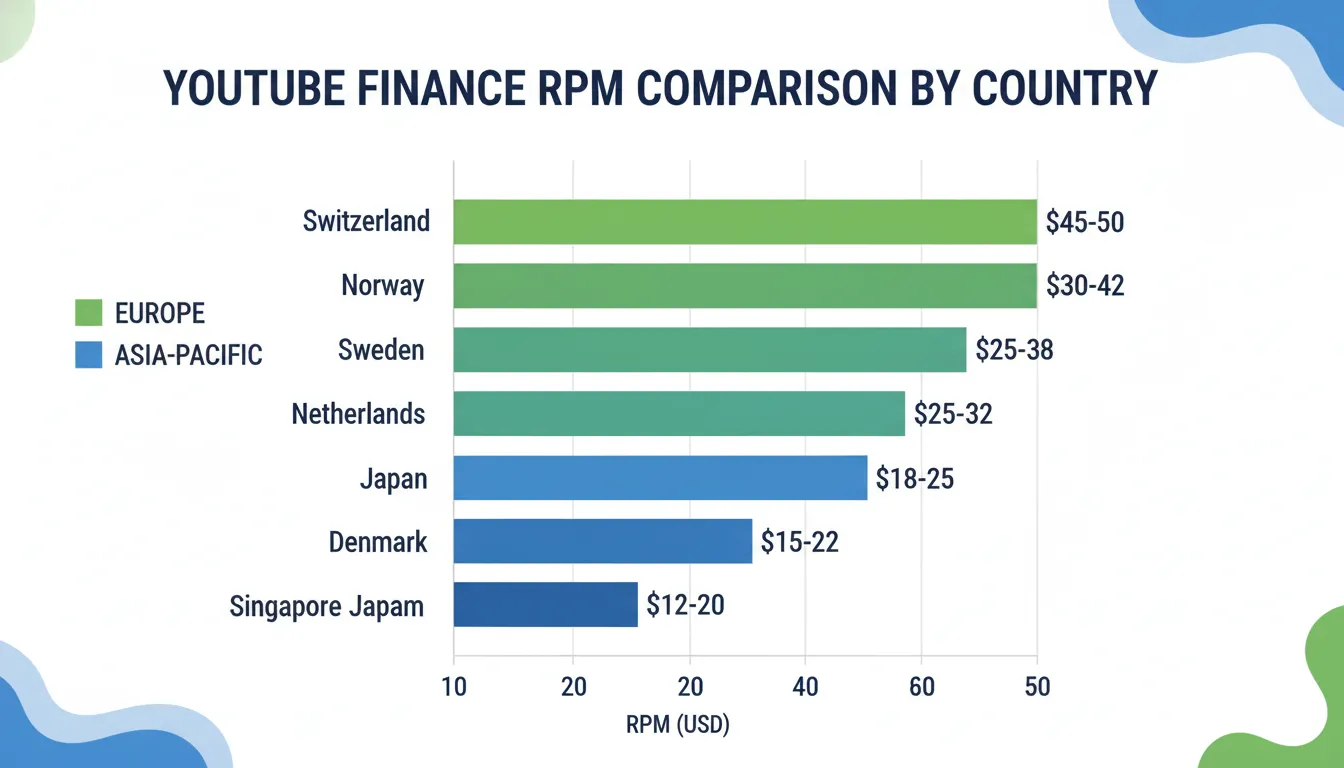
The geographic dimension matters enormously too. A finance video watched primarily by viewers in Singapore, Switzerland, or New Zealand will generate higher RPM than the same video watched primarily in India or Southeast Asia. This isn’t about discrimination—it’s about advertiser budgets and purchasing power. Western advertisers have larger budgets and are bidding higher for placement in Tier 1 markets. If you’re a finance creator targeting U.S., Canadian, Australian, or Western European audiences, your RPM potential is substantially higher. If your audience skews toward emerging markets, your RPM will be lower, even if engagement is identical.
Step 1: Niche Selection and Audience Targeting for Maximum RPM
The first critical decision you’ll make is which finance sub-niche to focus on. Not all finance content earns equal RPM. Your niche selection directly impacts advertiser demand and CPM rates. Let’s break down the hierarchy.
Premium Finance Sub-Niches (Highest RPM Potential)
The absolute top-earning sub-niches are: investing and stock market analysis, real estate investing, personal wealth management, cryptocurrency and blockchain (despite volatility), and retirement planning. These categories attract the highest-spending advertisers. A channel focused on dividend investing, for example, attracts ads from investment brokers, robo-advisors, and financial planning platforms. These companies have demonstrated that they’re willing to pay premium rates for placement. CPM rates in these categories regularly hit $30–$50, which translates to RPM of $16–$27.
Within investing content, the sub-niche matters. A channel dedicated to value investing and fundamental analysis attracts different advertisers than a channel focused on day trading. Value investing channels tend to attract higher-CPM ads because the audience skews older, wealthier, and more serious about long-term wealth accumulation. Day trading channels, while popular, attract some lower-CPM ad categories because the audience is younger and the advertiser perception is different.
Secondary Finance Sub-Niches (Moderate RPM Potential)
Debt management, credit building, budgeting strategies, and financial independence content occupy the middle tier. These still attract premium advertisers, but the CPM rates tend to be $15–$30. Channels focusing on “how to pay off debt” or “credit score optimization” do very well because they serve a specific problem-solving function that advertisers can directly monetize. A debt management channel will attract ads from credit card companies, personal loan platforms, and consolidation services. The CPM is solid—typically $18–$28—because the audience is clearly dealing with financial problems that these companies solve.
Emerging Finance Sub-Niches (Growth Potential)
Fintech reviews, side hustle strategies, passive income funnels, and gig economy analysis are growing categories. They currently generate $12–$25 RPM on average, but the trend is upward as more advertisers enter these spaces. A channel reviewing investment apps or financial software attracts tech-focused advertisers willing to pay for qualified traffic. These niches are less saturated than traditional investing content, which means less competition for advertiser dollars.
The Audience Geography Advantage
If you want to maximize RPM in 2026, deliberately target Tier 1 geographic markets. English-language finance content watched primarily by U.S. viewers will earn 2–3x more than the same content watched primarily by Indian or Indonesian viewers. This isn’t about better content quality; it’s about advertiser purchasing power. Here’s the breakdown: U.S.-focused finance channels average $25–$50 RPM, Canadian channels average $22–$45 RPM, U.K. and Western European channels average $18–$40 RPM, Australian/New Zealand channels average $20–$38 RPM, and Asian-market channels (even developed markets like Singapore and Japan) average $12–$28 RPM.
If you’re just starting out, this is the critical insight: build your audience in Tier 1 markets first. Create content that explicitly targets U.S., Canadian, British, or Australian finance interests. Talk about tax implications for these markets. Reference their financial institutions and regulations. Even though global reach sounds appealing, geographic concentration in Tier 1 markets will substantially increase your RPM. One thousand highly engaged U.S. viewers will generate more revenue than three thousand viewers spread across emerging markets.

Step 2: Creating Content That Attracts Premium Advertisers
Creating content is one thing. Creating content that attracts high-paying advertisers is another. Premium advertisers aren’t bidding aggressively on every finance video. They’re specifically targeting certain types of content because it aligns with their target customer profile. Understanding this distinction is essential.
Authority and Educational Content
Premium advertisers want their ads to appear next to authoritative, educational content. They don’t want their ads on clickbait or overly sensational videos. This is the opposite of what some creators think. A video titled “I Made $50k Trading Options” might get lots of views, but it attracts a completely different advertiser mix than a video titled “How Options Trading Works: A Beginner’s Guide.” The first video might be flagged as investment advice or high-risk content, which causes some advertisers to avoid it entirely. The second video is clearly educational and attracts investment education platforms, brokers trying to build their user base, and fintech companies wanting to establish thought leadership.
The strategic move: frame your content as education first, entertainment second. Your goal is to position your channel as a trusted resource, not a get-rich-quick scheme. This doesn’t mean your content can’t be engaging or well-produced. It means the framing matters. Instead of “How I Got Rich,” try “The Proven Strategies Wealthy People Use.” Instead of “Crypto Made Me a Millionaire,” try “Understanding Blockchain Technology and Its Investment Implications.” This shift in framing attracts substantially different—and substantially higher-paying—advertisers.
Long-Form Content Advantage
Longer videos generate more ad impressions and consequently more revenue. A 20-minute deep dive on compound interest will generate multiple ad placements, while a 5-minute quick tip generates one or two. From an RPM perspective, this matters significantly. Additionally, longer-form content allows you to establish expertise and credibility, which attracts higher-CPM advertisers. Premium advertisers would rather place ads on a 22-minute educational video from a respected creator than on a 6-minute quick tip from an unknown channel.
Target 15–25 minutes as your sweet spot. This is long enough to include 3–4 ad placements (which YouTube’s algorithm allows), short enough to maintain audience retention. The data shows that finance channels in the 15–25 minute range consistently outperform shorter content in terms of RPM, even when view counts are similar.
Compliance and Advertiser-Friendly Content
Here’s what many creators don’t realize: if YouTube’s systems flag your content as potentially problematic, it automatically reduces advertiser bids. Content that makes specific investment recommendations, promotes cryptocurrency in ways YouTube deems risky, or encourages financial speculation gets lower CPM rates. Advertisers simply won’t bid as aggressively on that content because it doesn’t align with their brand safety guidelines.
To maximize advertiser bids, keep your content in the “safe” zone: educational and analytical content that doesn’t cross into investment advice or speculation. Talk about strategies, not specific stocks you own. Discuss investment principles, not whether viewers should buy crypto now. Analyze markets, don’t hype particular assets. This might seem like it limits your content, but it actually expands your advertiser pool. More advertisers are comfortable bidding on your content when it’s clearly educational rather than promotional or speculative.
Key Takeaways
Step 3: Optimizing Your Channel for Higher CPM Rates
Beyond content creation, there are specific technical and strategic optimizations that directly impact the CPM rates advertisers are willing to pay for your inventory. These optimizations are often overlooked but they compound significantly over time.
Channel Authority Signals
YouTube’s algorithm and advertiser systems both evaluate channel authority. Channels with consistent uploads, high subscriber counts, strong engagement metrics, and clean compliance histories attract higher CPM bids. This creates a compound advantage: as you grow your subscriber base and maintain consistency, your CPM rates naturally increase because you’re signaling to advertisers that you’re a reliable, established creator.
Build authority deliberately: maintain a consistent upload schedule (weekly or bi-weekly is ideal for finance channels), create playlist structures that organize your content logically, build a strong channel description and about section that establishes your expertise, and maintain a clean community guidelines record. Channels with strikes or repeated copyright issues attract lower CPM rates because advertisers perceive them as risky.
Audience Composition Optimization
YouTube provides analytics showing your audience demographics. Advertisers can see this too. Channels with audiences skewed toward 18–35 year-old males with higher education levels and Tier 1 geographic location attract premium CPM bids. This isn’t something you can fake, but it’s something you can deliberately cultivate through your content targeting and keyword strategy.
If you’re trying to maximize CPM, focus on attracting viewers who match your target advertiser’s ideal customer profile. For investment platforms, this means younger professionals with disposable income and interest in self-directed investing. For wealth management services, this means older, higher-net-worth individuals. Align your content topics and keywords with the audience that attracts the highest advertiser bids.
Seasonality and Timing Strategies
CPM rates fluctuate throughout the year based on advertiser budgets. Q4 (October–December) is historically the strongest period for YouTube advertising because companies have full-year budgets to deploy before year-end. Q1 (January–March) is also strong because of New Year’s resolutions around finances and new annual budgets. Q2 and Q3 see softer CPM rates. If possible, plan your upload schedule to maximize content during high-CPM quarters. Build your strongest, most promotion-worthy content for Q4 and Q1. This timing leverage alone can increase your annual earnings by 15–20%.
Advertiser-Friendly Categories
Within finance, certain content categories are more “advertiser-friendly” than others. Tax planning content is extremely advertiser-friendly because tax software companies, CPA services, and financial planning platforms bid aggressively. Real estate investment is highly advertiser-friendly because real estate platforms, mortgage companies, and investment groups are active advertisers. Cryptocurrency content is less advertiser-friendly (though this is improving) because major advertisers still maintain restrictive policies around crypto-adjacent content.
Choose your sub-niche with this in mind. A channel focused on tax optimization will naturally attract higher CPM rates than a channel focused on day trading, even if both are “finance” content. This isn’t about content quality—it’s about advertiser demand and brand safety perception.

Step 4: Monetization Beyond AdSense
The highest-earning finance YouTubers don’t rely solely on AdSense. They’ve diversified their revenue streams, which not only increases total earnings but also provides leverage in negotiating better ad rates. When you have alternative revenue sources, you’re less dependent on YouTube’s CPM rates, which gives you more flexibility.
Affiliate Marketing Integration
Recommending financial products, services, and tools generates substantial affiliate commissions. A finance channel recommending a stock trading platform, investment app, or financial software tool can earn $10–$50 per qualified signup depending on the affiliate program. Over a year, affiliate revenue from a mid-sized channel (100k–500k subscribers) can easily match or exceed AdSense earnings.
The key: integrate affiliates naturally into your content. Don’t recommend products just because they have affiliate programs. Recommend products you genuinely use and believe in. When you do, mention your affiliate relationship clearly. Viewers respect transparency, and it actually increases conversion rates. Your affiliate income will be substantially higher if you have a strong relationship with your audience and they trust your recommendations.
Sponsorships and Brand Deals
Direct sponsorships from financial companies are extremely lucrative. A single video sponsorship from a major fintech company, brokerage platform, or investment app can pay $5,000–$50,000 depending on your audience size and engagement. If you have 200k subscribers with strong engagement, you might command $10,000–$20,000 per sponsorship. This is a direct negotiation between you and the brand, with no YouTube involvement.
Start building relationships with brands relevant to your niche. Create a media kit showing your audience demographics, engagement rates, and monthly view counts. Reach out directly to finance companies or use platforms like AspireIQ and Klear that connect creators with brands seeking partnerships.
Advertisement